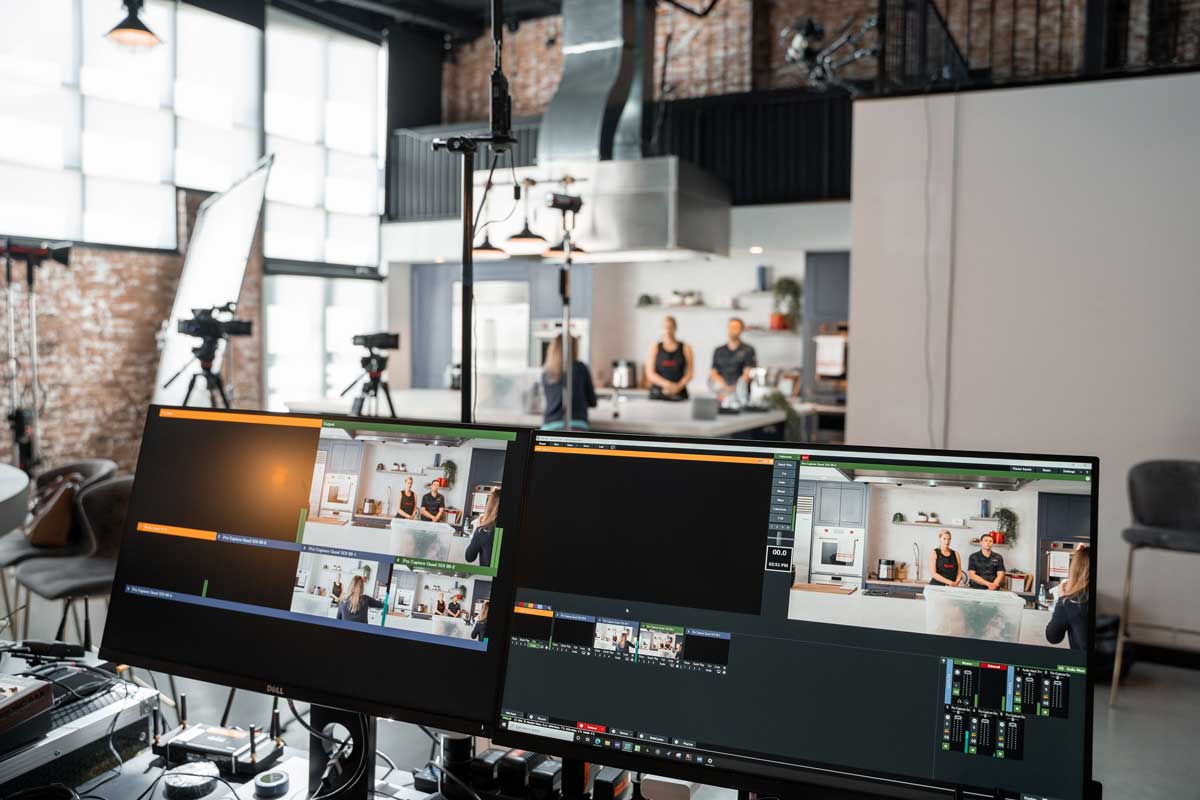
 Photo by Max Ravier on Pexels
Video production in 2026 looks very different from the old studio-heavy process many of us remember. What used to take a team of writers, editors, camera operators, and designers can now be started, shaped, and finished with the help of AI in a much shorter window. That does not mean video has become effortless. It means the work has changed. We spend less time on repetitive production tasks and more time on message, pacing, and audience fit.
For brands, creators, educators, and businesses, this shift matters because video is still the format people pay attention to most. It explains products, builds trust, teaches skills, and turns ideas into something more memorable than plain text. The challenge is that demand keeps rising while time and budgets do not. AI steps into that gap, not as a replacement for creativity, but as a way to speed up the parts that slow us down.
In 2026, the most useful AI video tools are not just generators. They are workflow tools. They help us plan, draft, edit, translate, repurpose, and distribute content with far less friction than before. The real story is not that AI can make a video from a prompt, it is that AI can help us move from rough idea to finished asset without breaking the flow.
Video has become one of the main ways people learn, compare, and decide. We watch product demos before buying, short explainers before signing up, and clips on social platforms before deciding whether something is worth our time. That puts pressure on teams to produce more content, more often, and in more formats.
The old workflow does not handle that demand very well. One idea may need to become a long-form video, several short clips, subtitles, vertical versions, and translated cuts. Doing all of that manually takes time, energy, and money. AI helps us stretch one piece of content into many useful versions without starting from zero every time.
This matters most for smaller teams. A startup, nonprofit, solo creator, or internal marketing group can now make polished-looking content without a large production crew. That lowers the barrier to entry and lets more people compete with bigger players.
AI also helps us reach wider audiences. Dubbing, translation, and voice tools make it much easier to adapt one video for different countries or language groups. Instead of rebuilding content for every market, we can localize it with far less effort.
When people hear “AI video creation,” they often think only about generating clips from text prompts. That is only one part of the picture. In practice, AI supports many stages of the process.
AI can help us shape video ideas, build outlines, draft scripts, write hooks, and create calls to action. This is useful when we already know the goal but want help getting a first version onto the page.
Some tools can create scenes, backgrounds, motion graphics, b-roll, or stylistic footage from text or images. These are helpful for fast experimentation and concept work.
Digital presenters and avatar platforms let us produce explainers, training videos, and company updates without filming a person each time. That saves time and makes updates easier to manage.
AI can trim pauses, remove filler words, detect highlights, reformat footage for different platforms, and assemble rough cuts much faster than manual editing alone.
AI voice tools can narrate videos, clean up audio, or translate content into multiple languages while keeping the timing close to the original version.
One recording can become many assets, short social clips, captions, teasers, and platform-specific edits. This is where AI creates a lot of practical value for teams that need to publish consistently.
AI video is not changing just one part of production, it is changing the whole pipeline. A few major shifts stand out.
The most obvious benefit is speed. Teams can move from idea to working draft far more quickly. That makes it easier to test angles, try new formats, and react to trends while they still matter.
Generated video is much more convincing than it was a few years ago. Faces, movement, lighting, and scene transitions are improving quickly, which makes AI-generated content more usable in real campaigns.
Instead of making one video and hoping it works for everyone, we can adapt content for different audience segments, funnel stages, platforms, or regions. That makes the message feel more relevant.
Language no longer has to be a major production bottleneck. Dubbing and translation tools let us expand into new markets without rebuilding everything from scratch.
A single video often needs to live on YouTube, TikTok, Instagram, LinkedIn, landing pages, or internal portals. AI helps us reshape the same message for each environment instead of recreating every version manually.
The best results often come from blending human footage with AI-generated elements. Real speakers, screen captures, synthetic narration, motion graphics, and generated scenes can all work together in one polished project.
The strongest value from AI shows up when it removes bottlenecks across several stages of the workflow.
This is where a lot of time is lost. AI can help us:
This stage works best when AI speeds up thinking, not when it replaces creative judgment.
Some tools can generate presenters, scenes, animations, and voiceovers. Even when we film real footage, AI can still help with shot lists, teleprompter scripts, and visual references.
This is one of the most useful areas for AI. It can:
That means a rough recording can become a polished asset much faster.
AI can also help after the video is finished by creating subtitles, metadata, thumbnails, versioned exports, and repurposed clips. In some cases, it can even help us choose more effective hooks or formats for specific platforms.
The AI video market is crowded, but most tools fall into a few useful categories.
These tools create scenes or clips from prompts. They are useful for experiments, stylized content, and fast concept generation.
These work well for onboarding, training, product explainers, and internal communication where a presenter is needed but filming is not practical every time.
These are designed to improve real footage. They help with pacing, trimming, captions, and social cutdowns.
These make it easier to localize content for different regions and languages.
These generate narration, improve sound quality, and help produce cleaner audio without studio-level equipment.
Some platforms aim to cover scripting, editing, generation, and export in one place. These are attractive for teams that want a simpler workflow with fewer moving parts.
The right choice depends on what we value most, speed, realism, control, or scale.
AI can make production faster, but speed does not automatically create a good video. The strongest content still depends on human judgment.
We still need to decide:
AI can generate options, but it does not understand our brand the way we do. It can mimic structure, but it does not automatically know timing, tone, or taste. That is why the best teams in 2026 are not automating everything. They are using AI with clear creative standards.
A good video still needs personality. It still needs a point of view. It still needs someone to decide when something feels off, even if the output looks polished.
AI video works especially well when the content needs to be clear, repeatable, and adaptable.
Brands can build ads, explainers, product highlights, and campaign variations much faster. This is one of the biggest wins because marketing always needs more content than it has time to make.
Companies can update internal training videos, onboarding materials, and policy explainers without reshooting everything whenever something changes.
Teachers, coaches, and course creators can turn lessons into visual explainers, narrated videos, or multilingual materials.
Product demos, feature walkthroughs, and short promotional videos become easier to produce and test.
Creators can turn long recordings into short clips, add captions, build stronger hooks, and keep publishing more consistently.
Teams can explain updates, process changes, and announcements in a format that is easier to watch than a long email.
These use cases work well because they reward clarity, repetition, and fast updates, all areas where AI is genuinely useful.
Even with major progress, AI video still has some weak spots.
Some tools still struggle with stable characters, continuity, and repeated details across longer clips.
If we lean too much on templates or automated structures, videos can start to feel flat or repetitive.
Without clear rules, AI output can move away from brand voice, visual identity, or message quality.
We still need to think carefully about copyright, voice rights, likeness rights, and platform policies.
Because AI makes publishing easier, some teams push out too much average content. More volume does not always mean better results.
The strongest outcomes usually come from using AI with discipline, not chasing volume just because it is possible.
Getting better results with AI video is less about clever prompts and more about having a solid process.
We should know who the video is for, what they care about, and what action we want them to take.
The first version is a starting point, not the final product. We can improve the message, tighten pacing, and refine the visuals from there.
Videos usually work better when they focus on one main message instead of trying to cover everything at once.
A specific example, a natural phrase, or a small unexpected observation can make the video feel more grounded and memorable.
AI saves time, but the final version still needs human review for accuracy, tone, pacing, and visual consistency.
Templates for scripts, captions, scene structures, and exports make scaling much easier without losing quality.
If the current pace continues, AI video will keep getting faster, smarter, and more precise. We are likely to see better scene control, stronger continuity, improved editing assistance, and tighter integration between creation and publishing tools.
But the bigger change may be how we think about video itself.
As AI becomes normal in production, people will care less about whether a video used AI and more about whether it is useful, memorable, and worth their time. That shift is good because it puts the focus back on the viewer.
AI is not removing the need for craft. It is moving the craft to a different place. We spend less energy on repetitive tasks and more energy on story, structure, and emotional impact.
AI video creation in 2026 is not about using the newest tool just because it exists. It is about making the video process faster, more flexible, and easier to scale. The teams that benefit most are the ones that combine speed with judgment.
Video still works because it connects with people. AI simply gives us more ways to build that connection without spending all of our time on manual production. When we use it well, we can create more, test more, and reach audiences in formats that fit how they actually watch today.
The future of video is not fully automatic, it is collaborative. That is what makes it worth paying attention to.


Discover our other works at the following sites:
Danetsoft is a global web agency headquartered in Indonesia, specializing in web development, managed hosting, and web publishing platform.


 [email protected]
 Magelang, Central Java
 © 2026 Danetsoft. Powered by HTMLy