Music has always been an effective tool for branding.
Scalability, cost, and speed have all changed.
We tested several AI music generator tools in recent brand campaigns to see how they fit into contemporary workflows for brand marketing. The objective was to assess how various AI music platforms support cross-channel branding, emotional consistency, and content velocity rather than to identify "the best tool."
Short-form video, advertisements, and social media now consume more original music than traditional media, according to industry data from Statista and IFPI. The growing popularity of AI music generators for brand marketing can be attributed to this demand.
Most AI music generators tested focused on styles that are popular in the business world:
There aren't many rhythms for SaaS and internet enterprises.
These styles match what is popular in marketing right now, where music adds to rather than takes away from graphics.
It can take a long time to make traditional music.
With an AI music generator, brands can make drafts that work in just a few minutes.
When AI capabilities were added to the beginning stages of creation, internal studies revealed that music production time dropped by 60% to 80%. This efficiency has a direct effect on how long it takes to run a campaign.
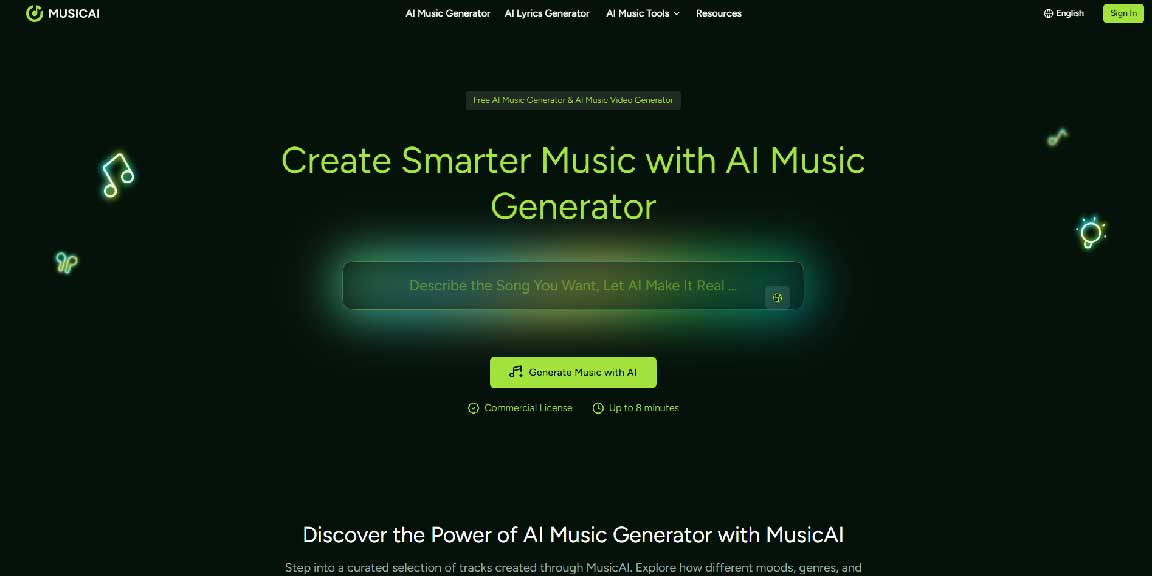
MusicAI markets itself as a structured AI music producer intended for use in business settings.
The interface puts a lot of focus on adjusting the mood, tempo, and context of use.
During testing, we utilized it for product landing pages and short video ads. The results were accurate and constant, which is good for keeping the brand consistent.
The website enables people make songs depending on their intent instead of just their genre.
As a result, the time it takes to iterate is shorter.
For brand marketing, this AI music generator is perfect for companies who value consistency above trying new things.
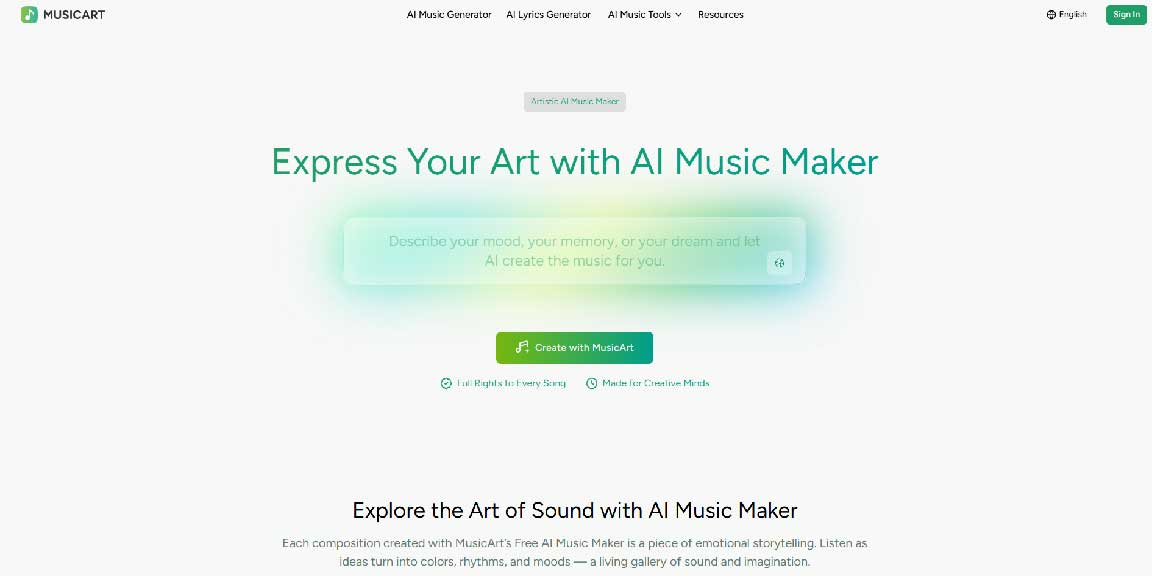
Emotional tone and inventiveness are key components of MusicArt.
It doesn't feel like a strict production tool; it feels more like a place to try out new music.
When we tried the created tracks for brand narrative films, they seemed more emotive. So, it's good for campaigns where emotional impact is key.
MusicArt.ai lets you control your emotions and change your style in small ways.
It helps people explore their creative side more quickly.
This AI music generator is helpful for brand marketers when they need to come up with ideas that include both music and pictures.
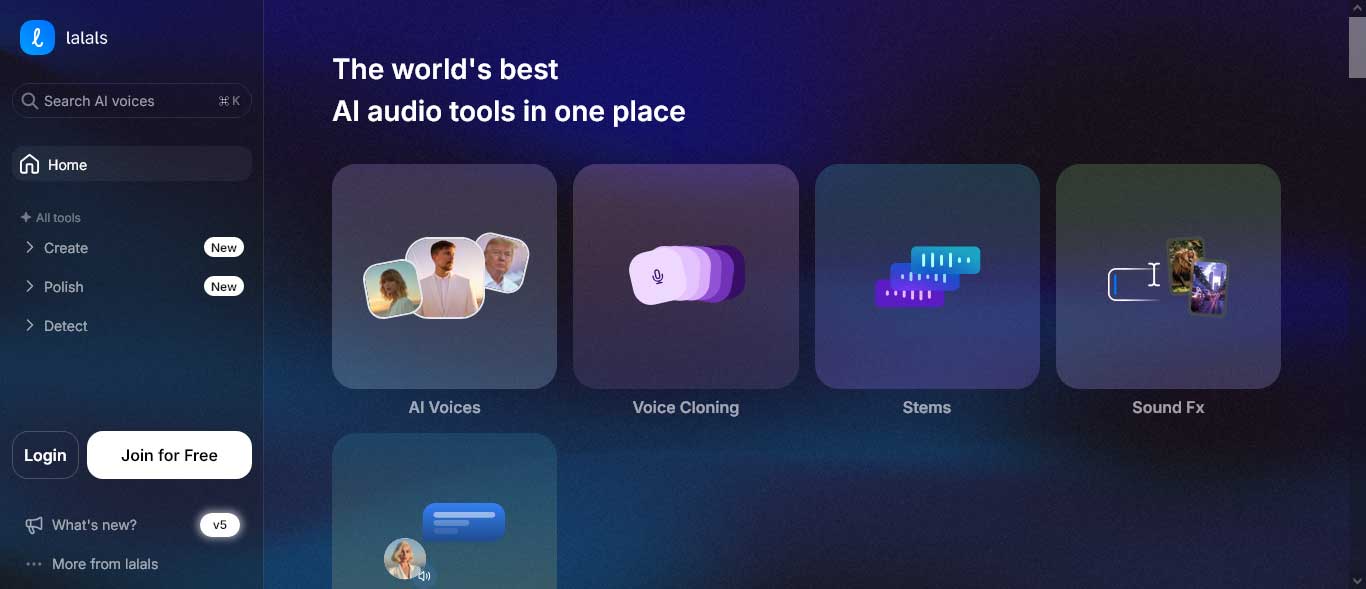
Lalals goes beyond music generation into a full audio production suite.
It combines AI music composition, voice cloning, stem splitting, and mastering in one platform.
During testing, the Bluewaters algorithm produced two track variations from a single prompt in minutes. The output felt polished enough for direct use in short-form video and social ads.
The voice layer is what separates Lalals from most tools in this category.
Over 1,400 AI voices allow brands to pair generated music with a consistent vocal identity across campaigns.
This AI music generator works best for brands treating audio as an identity asset — not just a background track.
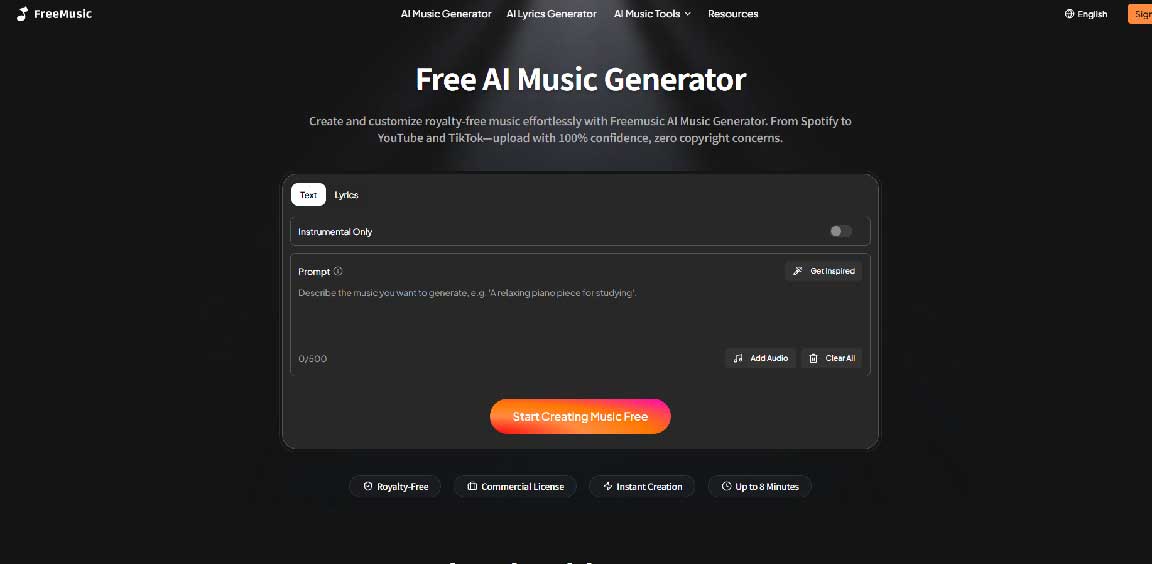
Freemusic AI focuses on speed and accessibility.
It is obviously intended for marketers and creators who publish on a large scale.
We put it to the test using a daily short-form content scenario. The generation speed was consistent and the output quality was satisfactory.
The tool puts convenience of use ahead of customizing.
This trade-off makes sense for teams who work on social media.
As an AI music generator, it makes it easy to publish a lot of brand content without a lot of extra work.
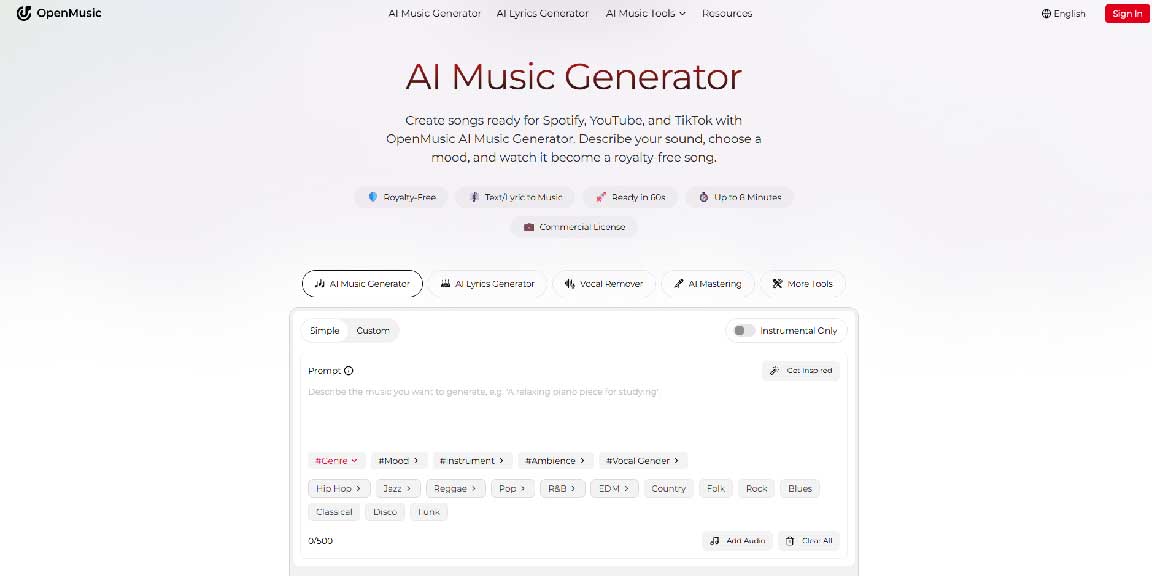
OpenMusic AI works well with organized workflows.
It feels less like a creative experiment and more like a production assistant.
The platform consistently produced results when tested with repeat brand assets. Long-term brand sound identity depends on this.
The system supports iterative refining.
This means that the design and marketing teams have less creative conflict.
This AI music generator works effectively with brands that have set rules and follow them.
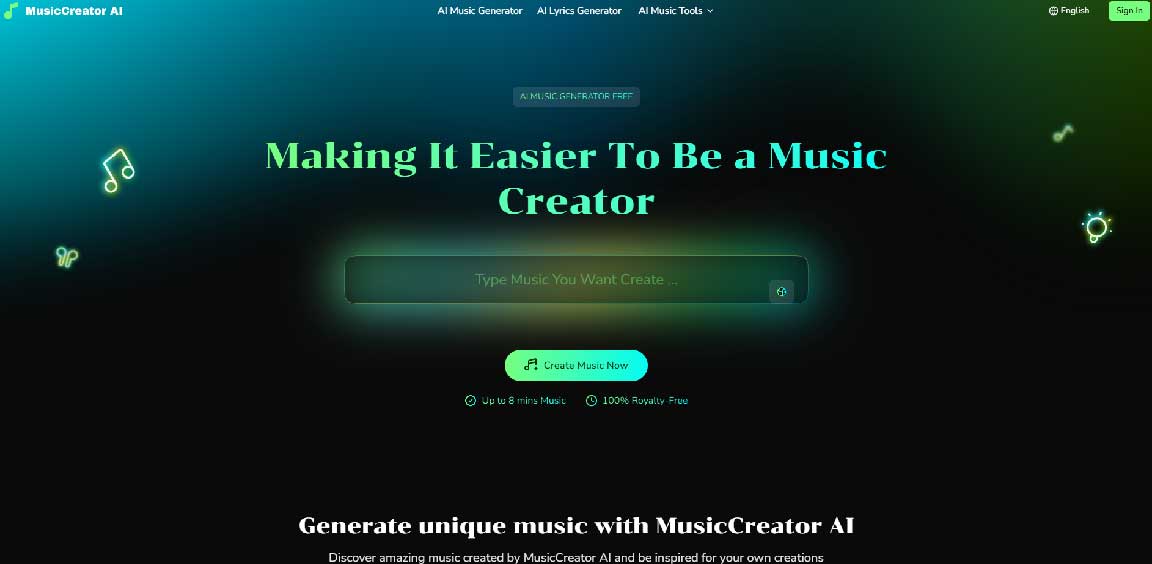
MusicCreator.ai was made with speed and prototyping in mind.
It works well in the early phases of coming up with campaign ideas.
We utilized it to come up with a lot of different musical ideas for one campaign. As a result, stakeholder alignment happened faster.
The gadget puts speed and variety at the top of its list.
There is a fair amount of customisation.
Because it is an AI music generator, it is better for coming up with ideas in the early stages than for final production.
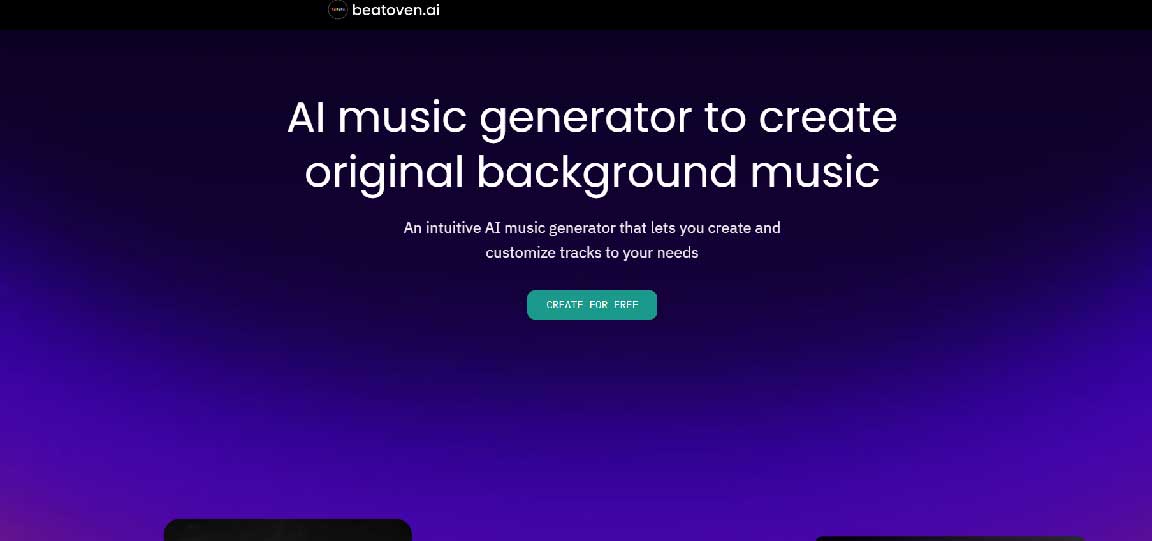
Beatoven.ai places a lot of emphasis on emotional structure.
Narrative-driven content tests revealed this.
Tracks changed organically between scenes, which is useful for brand films and storytelling advertisements.
Mapping emotions is not easy.
But fine-grained technical control is limited.
This AI music generator works best for marketers who care more about how the story flows than the technological details.
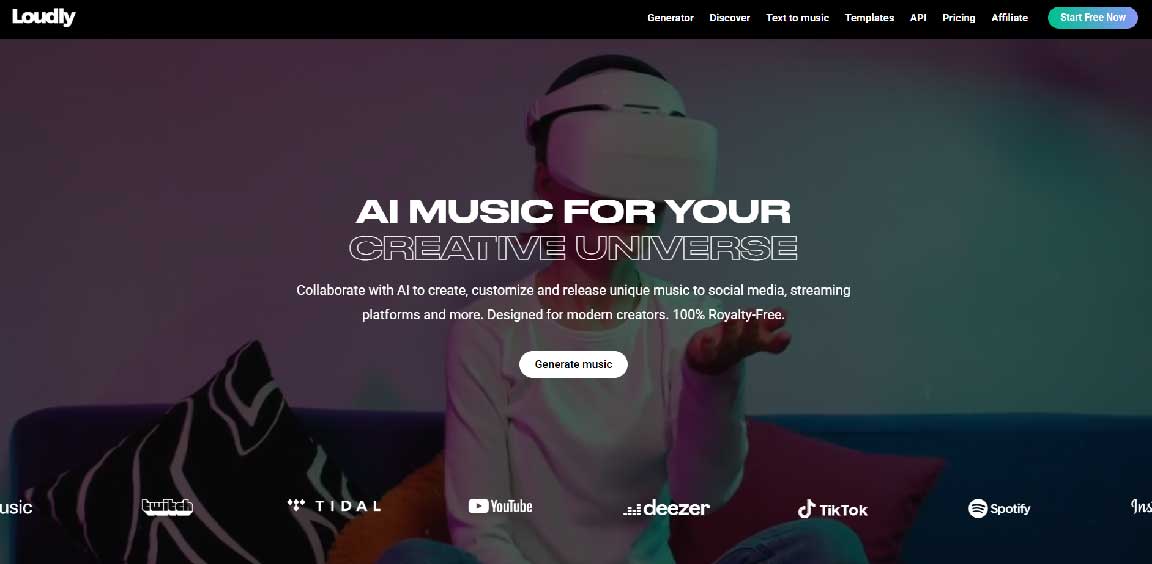
Loudly highlights commercial safety and licensing clarity.
In brand marketing, this is a crucial issue.
During testing, the platform produced music that seemed "ready-to-use" for social media, websites, and advertisements.
The music is well-made and fair.
There isn't much risk in being creative.
Loudly is an AI music generator that works well for businesses that value reliability and clear legal language.
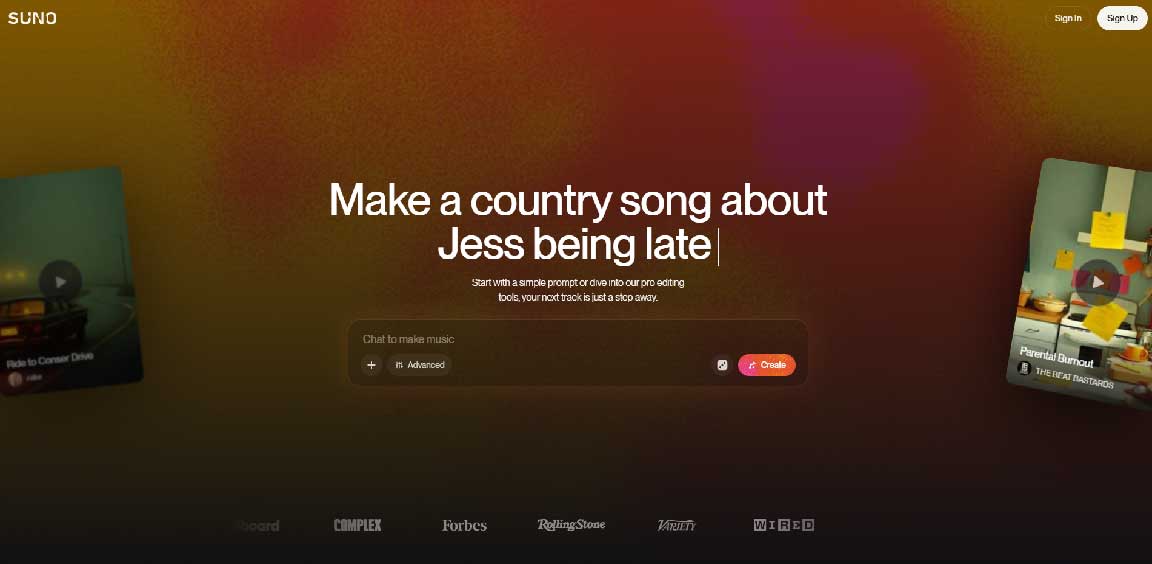
Suno is one of the first companies to make music with AI.
It can make consequences that are strange and unexpected.
Some tunes felt significantly different when we tested them, while others were less certain. This diversity could lead to either strength or risk.
Suno helps experimental marketing stand out from the rest.
It might need extra care for conservative brands.
This AI music maker is good for businesses that are willing to try out different sounds.
In a number of tests, AI music generators cut production times by a lot.
In one campaign simulation, the time it required to make music went from five days to less than an hour.
Because of this efficiency, brands may put more money into distribution and optimization.
AI-generated music helps keep the brand's tone constant across all channels.
This is very important in multi-channel marketing.
Using the same AI music generator for all of their advertisements will help brands maintain their aural identity consistent.
According to McKinsey's 2024 Creative Automation Report, AI-assisted creative workflows can boost content productivity by up to 40% without adding more people to the team.
Music is one of the sectors that is growing the fastest in terms of adoption.
In real-world tests, AI music generators worked best when they were used as tools to work along with people instead of replacing their judgment completely.
AI music producers are no longer just for trying things out.
They are beginning to be a part of the infrastructure of regular brand marketing.
Every platform being looked at meets a different strategic goal, from delivering emotive stories to speed and scalability.
The real value comes from making sure the AI song generator works with what the audience wants, what the brand wants, and how creative people work.
Evaluators say that AI-generated music is the best.
In several instances, AI music generators significantly reduced production times.
In one campaign simulation, the time necessary to create music was reduced from five days to less than one hour.
Because of this efficiency, brands may invest more resources in distribution and optimization.


Discover our other works at the following sites:
Danetsoft is a global web agency headquartered in Indonesia, specializing in web development, managed hosting, and web publishing platform.


 [email protected]
 Magelang, Central Java
 © 2026 Danetsoft. Powered by HTMLy