Agency producers do not lose margin because a cutout looks slightly soft on a laptop. They lose margin when a quote compares yesterday’s greenscreen day-rate to today’s AI path without pricing the length ceiling, the commercial-rights floor, or the free-tier watermark that turns a “cheap” export into unpaid rework. That mis-price is common: the deck shows a $200+ studio-equipment savings story, the client nods, and the producer still ships a watermarked personal-use file into a paid placement. Unscreen Pro enters this conversation as a quoting problem, not as a creative mood board.
I write estimates for clients who want transparent talking heads, product holds, and light pet cameos without booking cloth. My anxiety is simple: free exports look fine in a producer preview and fatal in a brand legal review. In our desk pipeline last quarter, one watermarked “temp” file looked fine until legal locked the folder — then the cut was sent back for rework and that single discard burned an afternoon of unpaid producer time. The account team hears “AI is cheaper than studio.” Procurement hears a monthly line item. Nobody owns the sentence that says commercial rights only unlock on paid plans, or that a deliverable longer than roughly thirty seconds is really several jobs wearing one invoice number. This piece compares the old cost baseline to the floors that actually protect margin.
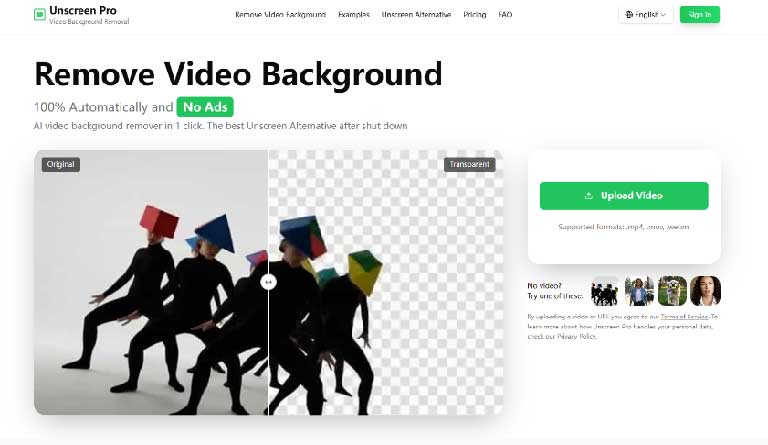
The usual comparison is theatre versus software. Greenscreen means lights, cloth, travel, and a half-day that slips when talent runs late. AI means upload, wait a few minutes, download. Marketing pages lean on a $200+ savings claim against greenscreen equipment for lighter jobs, and that claim is a useful old baseline when the brief truly is a short desk-side cutout. It becomes dangerous when the quote treats that baseline as the whole story.
What gets skipped is the commercial license floor and the length envelope. Free paths keep a watermark and stay personal/non-commercial. Paid paths unlock commercial rights. Plus sits around $4.99 a month with 500 credits, up to 1080p, and Fast processing. Pro sits around $99 a month with 10,000 credits, up to 4K, and Priority processing. Those are not creative opinions. They are the numbers a producer should put next to “client-facing deliverable” before anyone promises a rate card line that assumes infinite free exports.
Skip the comparison and you invent a third cost: rework. A watermark discovered after the client deck is blessed does not cost “a few credits.” It costs a scrubbed timeline, a tense Slack thread, and sometimes a make-good frame that eats the fee you thought you protected by avoiding studio. That is why producers who care about margin treat the free tier as internal comps only — never as the path named on an IO.
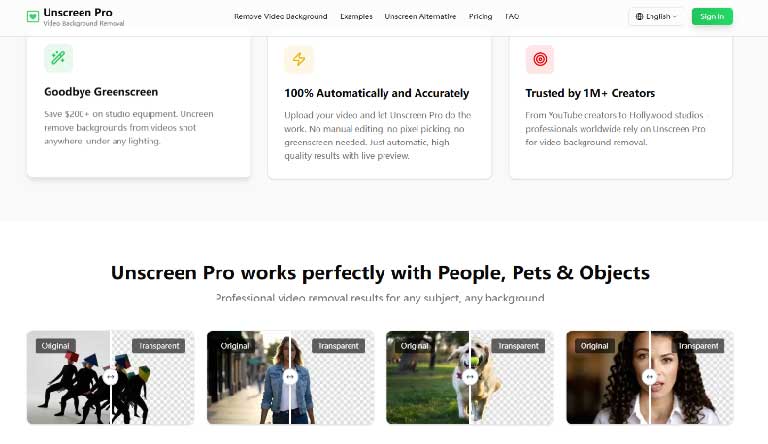
Greenscreen still wins when the brief needs long dialogue, wardrobe continuity across a shoot day, or a policy that demands live capture on cloth. It loses when the deliverable is a fifteen-to-thirty-second product hold, a founder bumper, or a pet insert that only needs a clean plate swap. People, pets, and objects can be separated without cloth; custom backgrounds can be colours, stills, or video plates. The producer’s job is not to declare AI the winner. The job is to pick the cheaper honest path for that brief.
Honest means counting plan floors the way you count studio hours. A client who needs a handful of 1080p cutouts for social often clears on Plus — $4.99, 500 credits, Fast 2x — if commercial rights are included in that paid path and the resolution matches the buy. A client who needs 4K masters, heavier volume, and Priority 3x speed will push you toward Pro at $99 with 10,000 credits. Quoting “AI instead of studio” without naming which floor you are standing on is how agencies underbid themselves. The $200+ studio claim explains why the old path felt expensive. It does not tell you which Unscreen Pro subscription line belongs on this month’s estimate.
Processing time rarely saves or sinks the quote by itself. Most jobs finish in a few minutes; clips under thirty seconds often land under two. Priority matters when the premiere date is fixed and the free queue cannot be trusted. It does not forgive a watermark left on a file the account team already called final.
Use Plus when the buy is mostly 1080p, the volume fits roughly five hundred credits a month, and Fast turnaround is enough for the premiere calendar. Put that $4.99 floor on the estimate as a production tool line, not as a creative hope. If the account team still wants “free AI,” label free exports as internal comps only and keep them off the client drive.
Move to Pro when the brief needs up to 4K, heavier monthly volume near the ten-thousand-credit band, or Priority speed that keeps a same-week premiere honest. The $99 floor is easier to defend than a surprise reshoot invoice after a free watermark lands in legal review. Unscreen Pro earns its place on the estimate when those floors are named before the creative deck goes out.
Agencies mis-price a second way: they sell a ninety-second transparent piece as one line item, then discover the useful input shape sits near thirty seconds. File size can reach 2GB and resolution can reach 4K on the right plan, but duration is the constraint that rewrites scope. A long take becomes a segmentation plan, multiple submits, and an editorial stitch — labour that belongs on the estimate even when the software bill looks small.
Producers who learn this late eat the labour. Producers who learn it early change the brief: shoot the removable action inside roughly thirty seconds, or price the cut-and-stitch explicitly. Source formats stay ordinary — MP4, MOV, WebM — and the upload → AI frame separation → Original versus Transparent preview → download loop stays short. The commercial risk is not the loop. The risk is promising a length the loop will not swallow in one pass, then absorbing overtime when the editor has to invent a plate strategy under deadline.
Cloud retention also belongs in the handoff note. Processed videos are deleted within twenty-four hours. Agencies that treat the service as archive storage will reprocess the same clip twice and wonder where the margin went. Keep masters local; treat the cloud as a pass-through.
This is the floor that destroys invoices when ignored. Free equals watermark plus non-commercial use. Paid equals the commercial path clients actually need for paid media, sponsor integrations, and client social calendars. Mid-estimate, a practical Video Background remover decision is therefore binary for account managers: is this file allowed to leave the building without a mark, or is it an internal comp? If it must leave, the quote already includes a paid plan. If it is only a moodboard, free may be enough — and should be labeled as non-deliverable so nobody “accidentally” uploads it to the brand drive.
Export choice still sits beside licence choice. When the composite needs true transparency, use alpha-capable containers — WebM VP9 or MOV ProRes. When the background is already baked, MP4 H.264 is the correct boring delivery. GIF covers tiny loops. Producers do not need an API lecture to enforce that; they need a one-line export rule on the job bag so editors stop discovering solid plates during client playback. Unscreen Pro is one place that rule can live without reopening a greenscreen calendar for every short cutout.
Paste this into the estimate worksheet before the client sees a single creative frame.
| Quote line | What to put on the estimate | Margin risk if skipped |
|---|---|---|
| Old studio baseline | $200+ greenscreen-equipment claim as reference only | Client expects AI to be “free” forever |
| Commercial rights | Paid path required; free/watermark = comps only | Brand rejects file; unpaid re-export |
| Plan floor (light social) | Plus ~$4.99/mo, 500 credits, ≤1080p Fast | Under-scoped volume or resolution |
| Plan floor (4K / volume) | Pro ~$99/mo, 10,000 credits, ≤4K Priority | Queue delays; credit exhaustion mid-flight |
| Length scope | ~30s plates; longer pieces priced as segment+stitch | Hidden editorial labour eats fee |
The table is deliberately procurement-shaped. Creative can argue about edges after the commercial floor and length scope are true. Unscreen Pro shows up in that table as the paid cutout path when studio cloth is optional — not as a promise that every transparent deliverable costs nothing but optimism.
Compare greenscreen to AI only after you name three floors: commercial rights on paid plans, the Plus versus Pro price band that matches resolution and volume, and the thirty-second plate length that rewrites long deliverables into segmented labour. Keep the $200+ studio claim as historical context for why cloth felt heavy. Do not let it erase the subscription line or the watermark rule. Agencies that quote that way protect margin without pretending every brief still needs a cyclorama.
If the next client asks for a transparent bumper under thirty seconds, price the paid commercial path and the export container on day one. If they ask for a multi-minute transparent interview, price segmentation — or keep the studio. That is the producer decision. It is quieter than a creative pitch, and it is where the invoice either holds or quietly cracks.


Discover our other works at the following sites:
Danetsoft is a global web agency headquartered in Indonesia, specializing in web development, managed hosting, and web publishing platform.


 [email protected]
 Magelang, Central Java
 © 2026 Danetsoft. Powered by HTMLy