Small household appliances rarely get much attention from people who follow technology. Smartphones, laptops, and smart speakers take the headlines, while devices that sit quietly on a kitchen counter are treated as simple tools. Yet some of these appliances pack a surprising amount of engineering into a compact box, and they show how embedded electronics, careful mechanical design, and online retail come together to create a product category almost from scratch.
Automated bottle cleaning appliances are a good example. These machines wash, sanitize, and dry baby bottles and breast pump parts in a single cycle. This article looks at how they work under the hood, the design problems engineers have to solve, the business model behind the category, and the trends likely to shape where it goes next.
For generations, cleaning feeding equipment meant scrubbing by hand and then boiling parts in a pot or soaking them in a chemical sanitizing solution. Electric steam sterilizers simplified the second step, and microwave steam bags made it portable. Each of these solved only one part of the job, though. Parents still had to wash everything first and then find a way to dry it.
The newer generation of appliances tries to automate the whole sequence. In that sense, they follow the same path as dishwashers and washing machines: take a repetitive, multi-step chore and turn it into a controlled, programmable process. What makes the category interesting is the scale. Everything has to fit into a device about the size of a bread maker, run on a standard household outlet, and handle small, oddly shaped plastic and silicone parts.
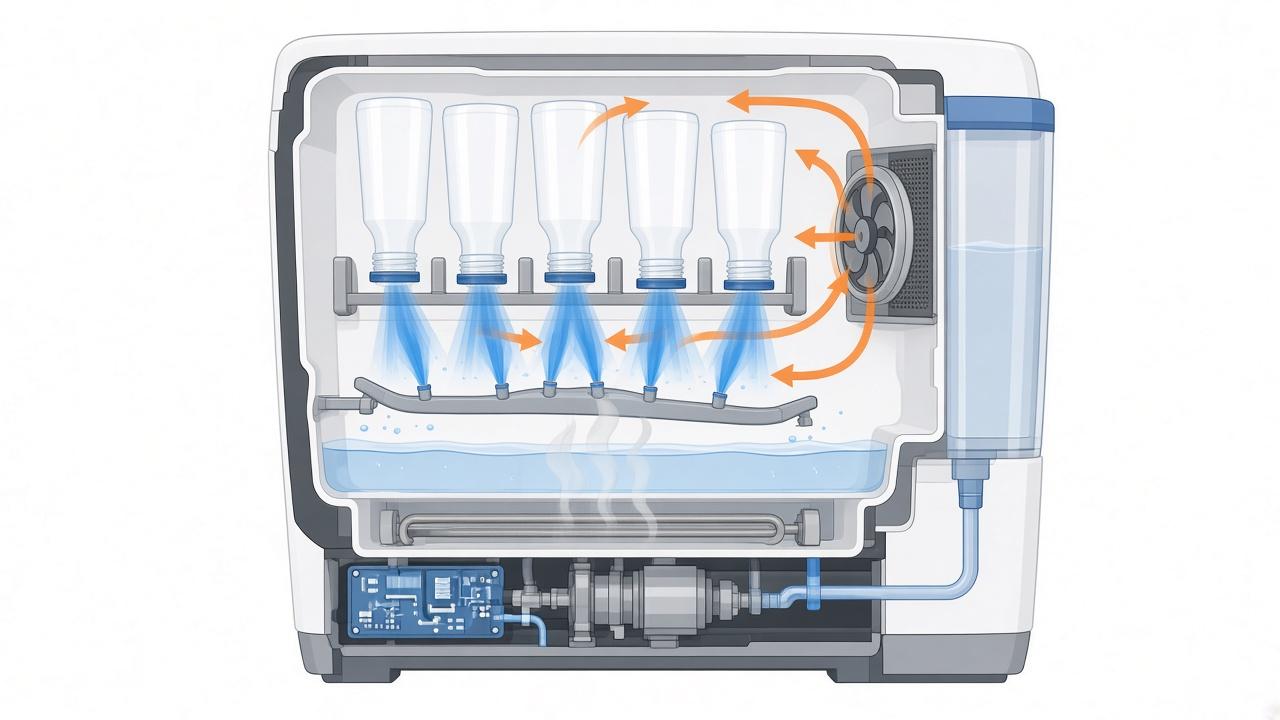
Although designs vary between manufacturers, most of these appliances combine four subsystems: a water delivery system, a heating and sanitizing system, a drying system, and an electronic controller that ties them together.
Washing relies on pressurized warm water sprayed through nozzles or rotating arms. The challenge is coverage. A bottle is a narrow container with threads at the neck, and pump parts include small valves and membranes with tight corners. Engineers have to work out spray angles, pressure, and rack layouts so water reaches the inside of each item rather than just the outside. Many units use a refillable tank instead of a plumbed connection, which means the pump must work efficiently with a limited volume of water and the waste water has to be collected or drained cleanly.
Once parts are clean, the machine needs to reduce the germs left on their surfaces. Steam is the most common approach because hot vapor reaches crevices that light cannot. A heating element boils a small amount of water, and the cycle holds the chamber at a high temperature for a set period. Some devices use ultraviolet light in the UV-C range instead, or in addition to steam. UV-C works by damaging the genetic material of microorganisms, but it only affects surfaces the light can reach directly, so chamber geometry, reflective interiors, and the placement of LEDs or lamps matter a great deal.
Drying is often the slowest stage. Fans push heated air through the chamber, and many designs pass that air through a filter first so the clean parts are not exposed to dust from the room. Getting airflow right is a balancing act: too little and water pools inside upturned bottles, too much heat and plastic parts can warp over time.
Behind the buttons sits a microcontroller running firmware that manages every step. Temperature sensors tell the controller when the water or steam has reached the right level, water level sensors prevent the heater from running dry, and door switches stop a cycle if the lid is opened. Some models add preset programs, such as dry-only or sanitize-only modes, and a few include app connectivity for notifications and cycle tracking. From a software point of view, this is classic embedded development, where reliability and safety checks count for more than feature lists.
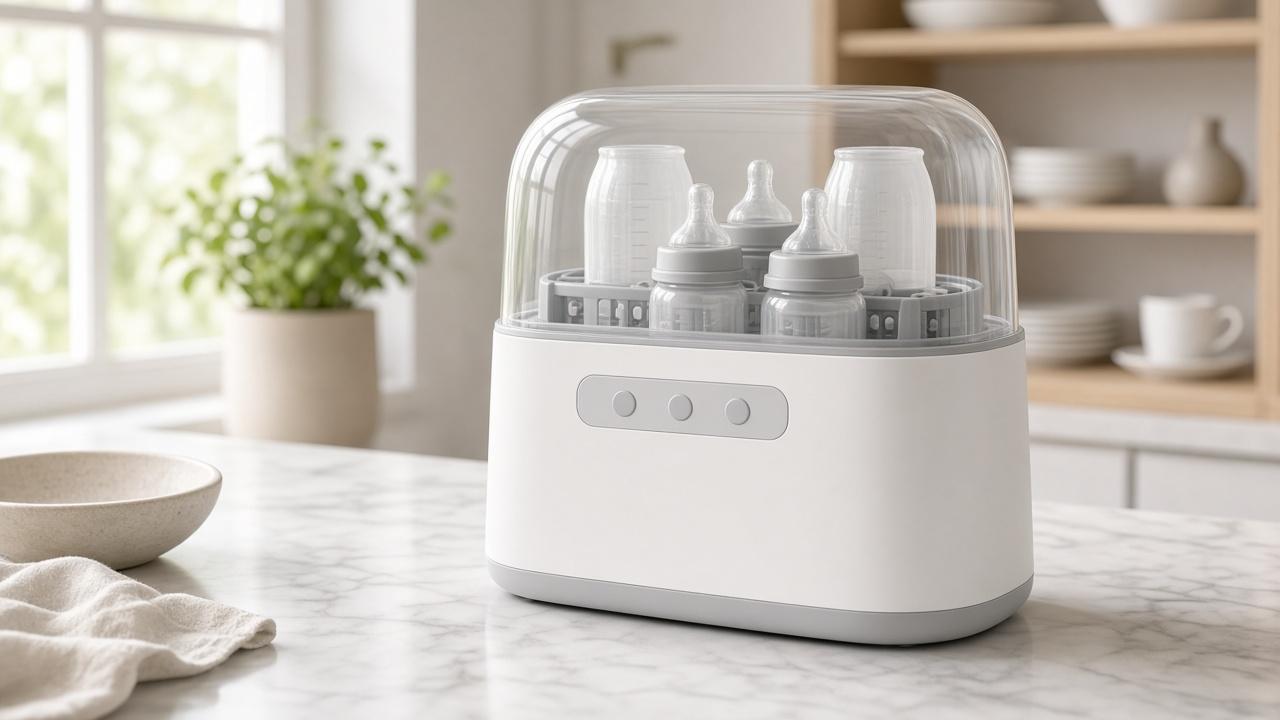
Building a dependable appliance in this category means solving several problems at once. The most common constraints include:
Each of these choices affects cost, size, and reliability. A product that handles every bottle shape perfectly but takes up half the counter, or one that dries quickly but runs loudly, will struggle to win over buyers.
From a business perspective, baby feeding appliances sit in an interesting spot. The customer base renews itself constantly, since new parents enter the market every year, but each household only needs the product for a limited period. That pushes manufacturers to compete hard on convenience and trust rather than on long-term loyalty to a single device.
Many brands in this space started with one hero product, such as a breast pump or a bottle warmer, and then expanded into related appliances. A combined washer and sterilizer fits naturally into that kind of product line because it serves the same customers at the same stage of life. A typical retail listing for a bottle washer sterilizer shows how this works in practice: the device sits alongside other feeding and pumping products, and the selling points focus on time saved, capacity, and hygiene rather than on raw technical specs.
Margins also depend on the ongoing costs around the hardware. Replacement filters, cleaning tablets, and compatible accessories can create repeat purchases long after the initial sale. That approach is common in consumer electronics, and it shapes product decisions as much as engineering does.
Most young parents research purchases on their phones, often late at night. As a result, the category depends heavily on e-commerce and digital marketing. Brands invest in fast-loading product pages, clear comparison information, and helpful content that answers practical questions, such as which bottles fit or how often to descale the machine.
Search visibility plays a major role. Parents tend to search for problems before products, so brands that publish genuinely useful guides on cleaning, sanitizing, and feeding routines are more likely to be found. Reviews, unboxing videos, and parenting communities add social proof that advertising alone cannot provide. Behind the scenes, this requires reliable hosting, good site structure, and content management systems that make it easy to update product information across several regions and languages.
Several developments are likely to influence how these appliances evolve over the next few years:
There is also growing interest in sustainability. Because each household uses these devices for a relatively short time, products that last long enough to be passed on, or that can be repaired, may gain an edge with environmentally minded buyers.
For anyone evaluating these appliances, whether as a buyer or as part of a product team, a few questions are worth asking. Does the machine fit the bottles and pump parts actually in use? How easy is it to clean the tank, filter, and chamber? Are replacement parts and consumables easy to find? What do the instructions say about descaling in hard-water areas? And does the manufacturer explain its sanitizing method clearly, without vague or exaggerated claims?
For product teams, the same questions translate into design priorities: compatibility, maintainability, honest documentation, and dependable after-sales support. These factors tend to shape reviews and repeat recommendations far more than any single headline feature.
Automated bottle cleaning appliances may look like simple kitchen gadgets, but they bring together fluid dynamics, thermal engineering, ultraviolet technology, and embedded software in a compact, safety-critical package. On the business side, they show how a niche consumer product can grow through careful product line expansion, recurring accessory sales, and a strong online presence built on useful content.
As components become cheaper and firmware gets smarter, this category is likely to keep borrowing ideas from larger home appliances while staying focused on one practical goal: making a repetitive daily task faster, more consistent, and more hygienic for the people who have to do it.


Discover our other works at the following sites:
Danetsoft is a global web agency headquartered in Indonesia, specializing in web development, managed hosting, and web publishing platform.


 [email protected]
 Magelang, Central Java
© 2026 Danetsoft. Powered by HTMLy