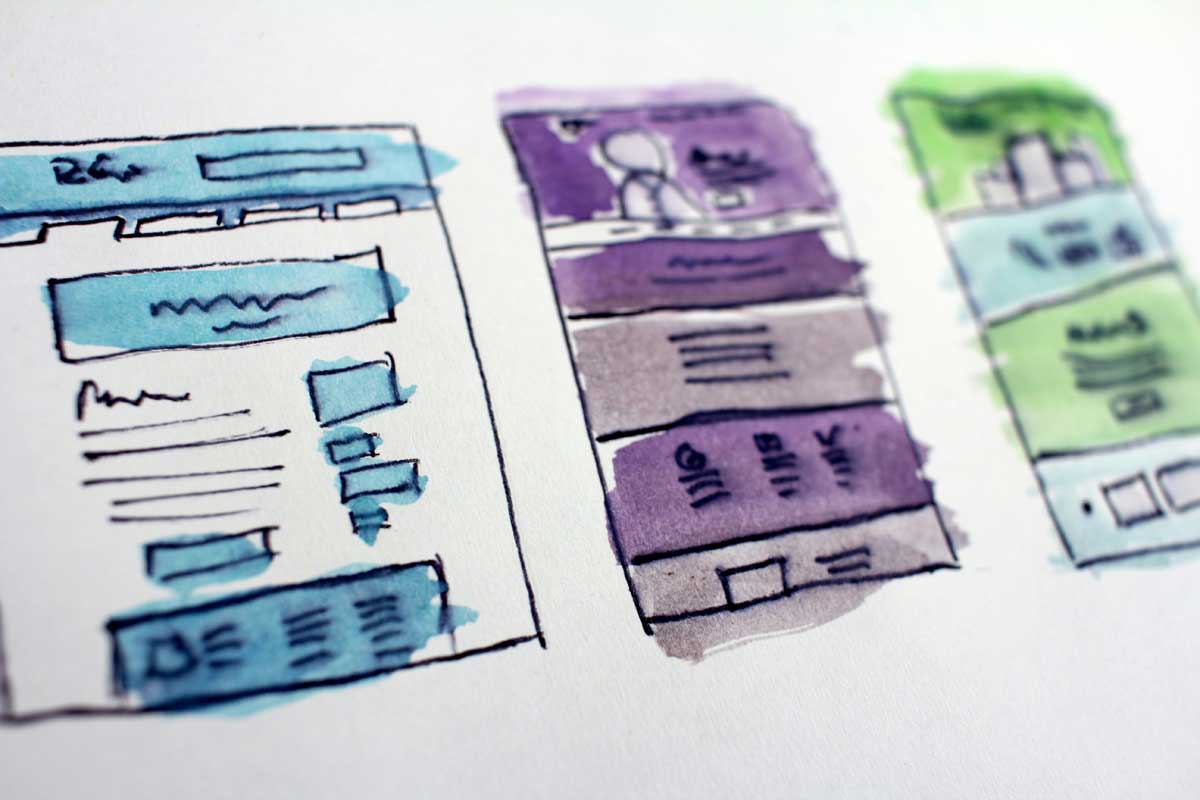
 Photo by Hal Gatewood on Unsplash
A polished interface can still make a product harder to use. A checkout may look elegant but hide shipping costs until the final step. A dashboard may have attractive charts while leaving users unsure which number needs their attention.
The right UI/UX design partner addresses those problems before treating visual design as the finish line. The companies below approach that work from different directions, including research, product strategy, interface design, branding, and engineering. Their suitability depends less on a universal ranking than on the problem a team needs to solve.
| Company | Best suited to | Distinguishing focus |
|---|---|---|
| IDEO | Ambiguous problems and new product concepts | Research-led design and innovation |
| frog | Complex, connected customer experiences | Strategy, experience design, and technology |
| Work & Co | Digital products that need design and development | Cross-functional product teams |
| ustwo | Consumer-facing digital products | Product design and creative execution |
| Fantasy | Visually distinctive digital experiences | Interface and interaction design |
| Clay | Products where brand and interface must work together | Digital product design and brand expression |
| Instrument | Brand-led websites and digital experiences | Creative direction and digital execution |
| Huge | Large-scale customer experience work | Experience strategy and digital transformation |
| UX studio | Teams seeking dedicated UX research and design support | User research and product design |
| Eleken | Software-as-a-service products | Interface design for SaaS teams |
| Ramotion | Startups and technology brands | Brand identity, websites, and product interfaces |
| Designit | Service and experience design across touchpoints | Human-centered design and organizational change |
These are directional comparisons, not claims that any company is limited to one type of work. Services and team availability can vary by project.
IDEO is best known for human-centered design, making it a useful comparison point when the product problem is not yet clearly defined. Its work can begin upstream of interface design, with research into people’s behaviors, needs, and environments.
That approach is particularly relevant when a company is deciding what to build rather than refining an established feature set. For example, a healthcare organization exploring a new patient service may need to understand appointment scheduling, communication, and follow-up care before commissioning a mobile interface.
The trade-off is scope. A research-heavy engagement may be more than a team needs if its immediate requirement is a clearly specified set of production-ready screens.
frog combines design with strategy and technology, positioning it for projects that extend beyond a single screen or product. That breadth matters when the customer experience crosses channels, such as a retail journey involving an app, a website, physical locations, and support staff.
For this kind of work, the interface is only one part of the design challenge. The company may also need to define how information moves between touchpoints and how service teams support the experience.
Prospective clients should distinguish between a broad experience program and a focused UI assignment. The skills, timeline, and decision-making involved can differ substantially.
Work & Co is associated with digital product design and development. It is a strong option to consider when a team wants design and engineering to work closely rather than treating implementation as a separate phase.
That model can be valuable for products with demanding technical constraints. A booking flow, for instance, may need to accommodate live availability, pricing rules, and error states. Designers and developers working together can address those realities before the interface is finalized.
For comparison purposes, it helps to establish how much of the build is included. Product strategy, visual design, front-end development, and long-term maintenance are distinct services, even when one partner can provide several of them.
ustwo works across digital product design and development, with a portfolio that includes consumer-facing experiences. Its product-oriented approach is relevant to teams that want to turn an idea into something people can use, test, and refine.
Consumer products often succeed or fail in small moments: whether onboarding explains the value quickly, whether an important action is easy to find, and whether users understand what happens after they tap. Those details require more than a visually appealing prototype.
For a project in this category, the useful distinction is between a concept demonstration and a release-ready product. The latter needs edge cases, accessibility decisions, and implementation support as well as the primary user journey.
Fantasy is known for digital interface and interaction design. It is worth considering when visual quality and the feel of an experience are central to the brief, especially for consumer products or prominent digital platforms.
Its type of work can be particularly useful when a product’s interface has become visually inconsistent or difficult to distinguish from competitors. Interaction design can also clarify how an experience responds to users, from transitions between views to feedback after an action.
A visually ambitious direction still needs validation against practical constraints. For example, motion should support comprehension without slowing frequent tasks or creating accessibility barriers.
Clay brings together digital product design and branding. That combination can be helpful when a company’s product and public identity need to develop together, such as a new platform preparing for launch or an established product undergoing a repositioning.
The relationship between brand and UX is concrete. Typography affects readability, color choices affect contrast, and a brand’s tone shapes error messages as much as marketing copy. A unified design direction can make those decisions more consistent.
For products with complex workflows, the scope should also account for usability research and detailed interaction states. Strong brand expression does not replace the work of making a difficult task easier.
Instrument focuses on creative and digital experiences, making it particularly relevant to brand-led websites and campaigns where storytelling and execution need to work together.
A large website redesign, for example, may involve more than a new homepage. Content structure, navigation, editorial templates, and responsive behavior all affect whether visitors can find and understand information. Creative direction has to hold up across those less prominent pages too.
Instrument is a useful comparison when the primary challenge sits between brand communication and digital experience. A team seeking ongoing design support for a highly specialized software product may want to compare that need with the scope of a proposed engagement.
Huge offers experience design alongside broader strategy and technology services. It is a potential fit for organizations managing complicated customer journeys, especially where design decisions depend on multiple business units or existing systems.
Consider a financial services company redesigning account management. The customer-facing interface may be only one piece of the work; identity verification, support processes, legal requirements, and legacy data can all shape the experience.
On a large engagement, governance becomes part of the design problem. Clear ownership of decisions and a realistic process for approving changes can matter as much as the quality of individual screens.
UX studio focuses on user research and product design. It is worth considering when a team needs dedicated UX capacity, particularly if it wants to understand user behavior while continuing to develop an existing product.
Research can take several forms. Interviews reveal motivations and context, while usability tests show where people struggle with a specific interface. For an established product, analytics can help identify where to investigate, but they rarely explain the reason for a problem on their own.
The research method should match the decision at hand. Testing a prototype may be enough to compare two navigation concepts; understanding why customers abandon a service altogether may require broader investigation.
Eleken specializes in design for SaaS products, a category with challenges that differ from those of a marketing site or consumer app. SaaS interfaces often serve frequent users, multiple permission levels, complex data, and workflows that continue across many sessions.
That focus makes Eleken relevant for teams designing dashboards, administrative tools, and other software interfaces. In those products, a small improvement to a repeated task can be more valuable than a dramatic visual refresh.
For example, improving a table’s filtering and saved-view behavior may save experienced users more time than redesigning the landing page. The best SaaS design work considers both first-time comprehension and efficiency for people who use the product every day.
Ramotion works across branding, websites, and digital product design. It is a useful option to compare for technology companies that need a coherent identity across a product and its public-facing materials.
This combination can be valuable during a launch. A company may need a website that explains its offer, a visual identity that sets expectations, and an interface that delivers on them. Inconsistencies between those pieces can make the experience feel confusing, even when each one looks polished in isolation.
The important distinction is how deeply the engagement goes into product behavior. A team with a complex workflow should establish whether the work includes user flows, testing, and detailed interaction specifications, not just visual direction.
Designit works across experience and service design, making it relevant when a product is part of a larger operational system. A service journey can include digital interfaces, employee actions, policies, and physical environments.
For example, improving a delivery experience may involve the tracking screen, but it may also depend on the accuracy of status updates and the support process for missed deliveries. Redesigning the screen alone cannot fix an unreliable underlying service.
This perspective is useful for organizations trying to connect customer experience with internal operations. It also means the project may require participation from teams outside product and design.
A portfolio can show visual quality, but it does not always reveal how a company handles constraints. The most useful comparison looks at the work behind the finished screens.
A case study should make clear what the team needed to learn and how it evaluated the design. Evidence might include usability testing, task completion rates, customer interviews, or support-ticket analysis. Not every project needs every method, but claims of improvement are more useful when the underlying measure is clear.
A test with five participants can expose obvious usability issues, for example, but it should not be presented as proof of a precise conversion increase. Likewise, a higher conversion rate does not necessarily show that a design caused the change if pricing or traffic sources changed at the same time.
A design file is not the same as a finished product. A practical scope defines which items are included:
The right list depends on the work. A discovery project may end with research and a prototype, while a product redesign may require detailed specifications and continued collaboration during development.
Accessibility is most effective when it shapes decisions from the start. Color contrast, keyboard access, screen-reader labels, focus order, and clear error messages affect the usability of the final product, not just compliance documentation.
A design system can support consistency, but its value depends on maintenance. A library of buttons and form fields is less useful if nobody owns updates, documents usage, or keeps design components aligned with code.
UI/UX engagements commonly use fixed project fees, time-based billing, or ongoing team arrangements. A fixed fee can make a defined scope easier to budget, while an ongoing arrangement can suit a product whose priorities change as the team learns. Neither model guarantees a better outcome.
The contract should clarify what happens when research changes the direction, how revisions are handled, who owns the resulting work, and whether source files and design-system assets are included. Those details determine how easily an internal team can continue improving the product after the engagement ends.


Discover our other works at the following sites:
Danetsoft is a global web agency headquartered in Indonesia, specializing in web development, managed hosting, and web publishing platform.


 [email protected]
 Magelang, Central Java
© 2026 Danetsoft. Powered by HTMLy