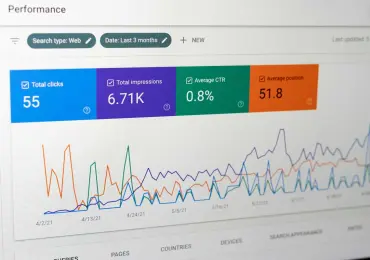
 Photo by Eren Li on Pexels
Every agency and publisher is doing the same calculation: can we leverage AI for content creation, or will our search engine rankings suffer? The former makes economic sense, but if search engines become smarter at detecting AI-generated content, then your investment may not pay off.
For agencies responsible for SEO, site maintenance, and CMS for their clients, this issue has practical implications. Let’s explore it.
This might be an obvious point to many SEOs, but I’ll state it anyway: search engines do not punish content simply for being AI-generated. Google is clear about this.
Instead, it penalizes content that doesn’t meet certain quality standards. It’s unoriginal, lacks value, and exists solely for search engine optimization purposes.
If a search engine detects such content, it’s likely to remove it from its index, whether a machine generated it or not. The point is, search engines aren’t trying to exclude AI-generated content. They’re trying to exclude low-quality content, period.
Therein lies the danger. The issue isn’t whether AI contributed to your content, but whether your content meets high quality standards in terms of E-E-A-T, and whether it’s written to inform a reader, or optimized for search engines.
In short, the agencies getting caught have been publishing entirely automated content, without any human oversight. Such content is typically thin, with no unique insights and poor writing style. The sheer volume of these articles would be impossible for a small team to manually check, and this approach is not new to AI.
Prior to generative AI, agencies employed teams of writers to churn out similar content. However, AI allows them to do it much faster and cheaper, which is why agencies need to be careful. And there’s another factor that makes this even more complicated.
One area of concern that hasn’t received much attention yet is detection software. Not only are search engines analyzing content, but clients are also checking for AI-generated content using their own software.
Editors are reviewing guest posts for the same reason. Platforms are rejecting submissions flagged by detection tools, even if the submitted content is high-quality and relevant.
As a result, an agency could publish well-written and informative content, yet it may be rejected due to its resemblance to AI output. That’s because the features AI detection tools look for are the same features used to identify content generated by machines: bland sentences, standard phrasing, and low word diversity.
These traits are typically associated with AI-generated content, but they also appear in human-written content when the author relies on AI to draft and edit.
Think of it more as a first draft than the finished piece. Good content workflows will leverage AI for research summaries and outlining, then hand off all of that work to an editor to inject original examples, latest information, and a point of view, which is where you get your E-E-A-T signals from, not from the tool you used to write it.
Don’t be uniform. Uniformity isn’t going to serve you well in search, but it’s also not going to fly with AI detectors, which many clients are now using before approving agency content. Varying the structure, cadence, and style within a content set isn’t only a mark of good writing, but also something your content is going to have to pass in order to avoid being automatically flagged for rejection by a tool before a human has even seen it.
Understand where AI detection tools fit into your process. AI detectors are becoming more common as a gatekeeping measure on the client side, and some agencies have started to add an additional step to their process to check that genuinely human-edited, AI-assisted content isn’t going to be auto-flagged by a detector before anyone sees it. StealthGPT’s AI humanizer was originally created to solve this problem, because its purpose wasn’t to hide bad content, but to make sure content that had been properly edited wouldn’t get rejected by pattern-matching that couldn’t differentiate between “AI-assisted and edited” and “AI-generated and unedited.”
Humans still need to be the ones responsible for originality. Unique data, client success stories, first-party screenshots, and actual expert quotes are examples of content that an AI cannot generate with confidence and that search engines are now putting more value on. This content is also very difficult to copy for competitors, AI or human, and therefore valuable regardless of AI detection concerns.
Agencies that will remain competitive in the coming years will be the ones that don’t completely abandon AI tools, nor the ones that embrace them fully without oversight. They’ll be the ones that treat AI like any other tool, such as managed hosting or a CMS, but leave editorial decision-making, original analysis, and quality assurance where search engines and audiences expect it: with people.
For agencies looking to build out larger-scale content solutions, from custom-built websites to managed hosting for large volumes of content, to a custom CMS for managing editorial teams, the rules of the game remain the same that have worked in SEO for the past decade: create for the audience first, and search rankings will follow.
Guidelines regarding AI-generated content on search engines remain fluid and evolving, so agencies are advised to monitor official guidance from search engines directly rather than depending on third-party sources for advice, as the specifics of penalties could change at any time.


Discover our other works at the following sites:
Danetsoft is a global web agency headquartered in Indonesia, specializing in web development, managed hosting, and web publishing platform.


 [email protected]
 Magelang, Central Java
 © 2026 Danetsoft. Powered by HTMLy