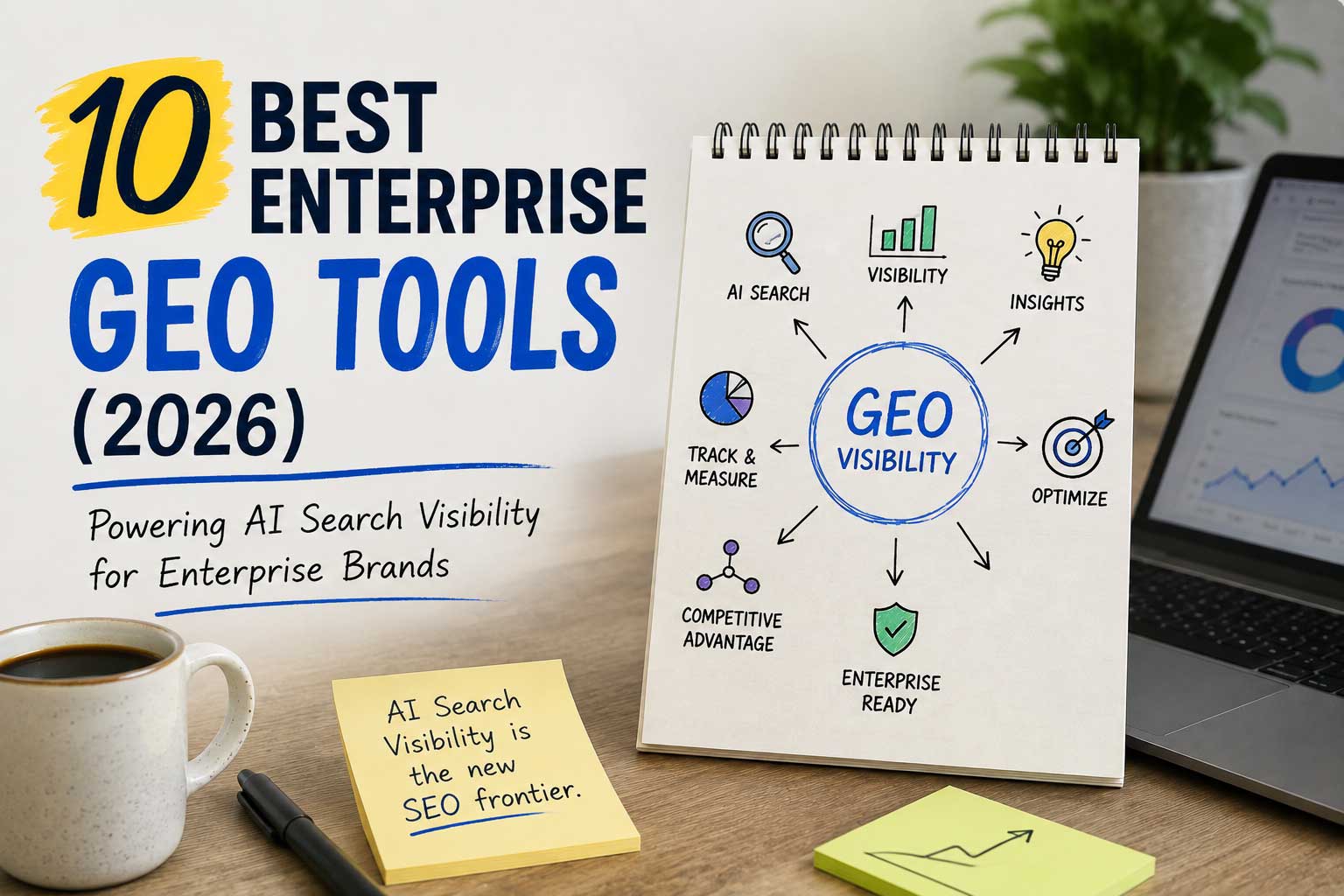
Search behavior has changed. A growing share of buyers now ask ChatGPT, Perplexity, Gemini, and Copilot for recommendations instead of typing a keyword into Google, and if your brand isn't showing up (and being cited accurately) in those answers, you're invisible to that share of demand.
That's the problem Generative Engine Optimization (GEO) tools exist to solve. Unlike traditional SEO, which optimizes for rankings and clicks, GEO focuses on how often AI systems cite, describe, and recommend your brand inside generated answers. For enterprise teams, the stakes are higher: you need visibility across multiple AI engines, multiple markets, and multiple brand portfolios,with the security, governance, and reporting an enterprise procurement team expects.
Below are 10 of the strongest enterprise-grade GEO platforms on the market right now, starting with the one enterprise teams increasingly turn to when they want more than a dashboard.
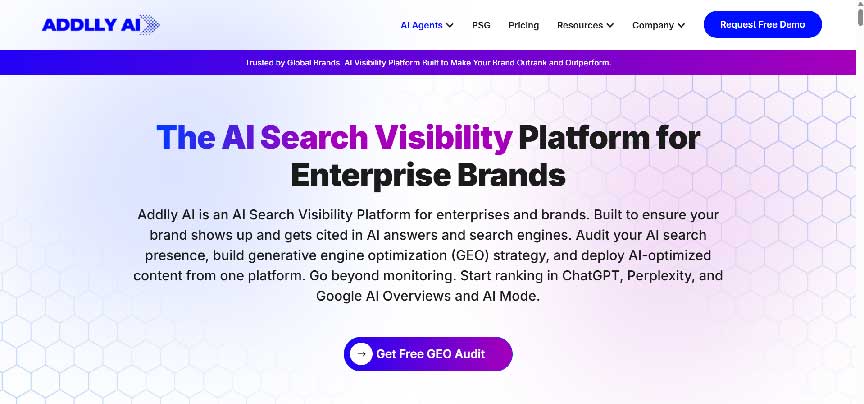
Addlly AI stands out because it doesn't stop at telling you where you stand, it closes the loop between diagnosis and action. Most GEO platforms specialize in one half of the problem: either monitoring how often you're cited, or generating content. Addlly AI combines both in a single enterprise workflow, so teams can identify a citation gap and deploy an optimized fix without switching tools or hiring extra prompt engineers.
Key features:
Best for: Enterprise marketing teams that want to unify AI visibility monitoring and content execution in one platform rather than stitching together a monitoring tool and a separate writing tool.
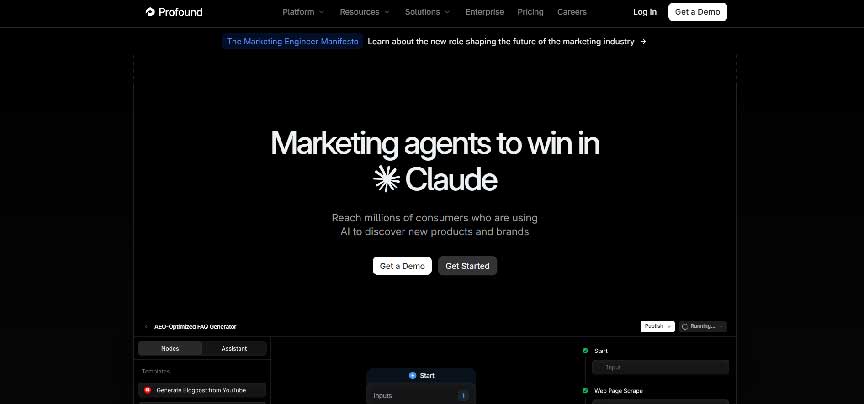
Profound is widely regarded as the category leader for large, regulated enterprises. It runs continuous crawls across ChatGPT, Perplexity, Claude, Gemini, and Google AI Overviews, and layers in governance features, audit trails, role-based access, SOC 2 compliance, that matter to publicly traded or heavily regulated companies. Its "Conversation Explorer" lets teams simulate thousands of synthetic buyer journeys to see how a brand appears across different contexts, not just a single prompt.
Best for: Large enterprises and regulated industries that need governance, compliance reporting, and deep citation analytics, and are prepared for custom, sales-led pricing.
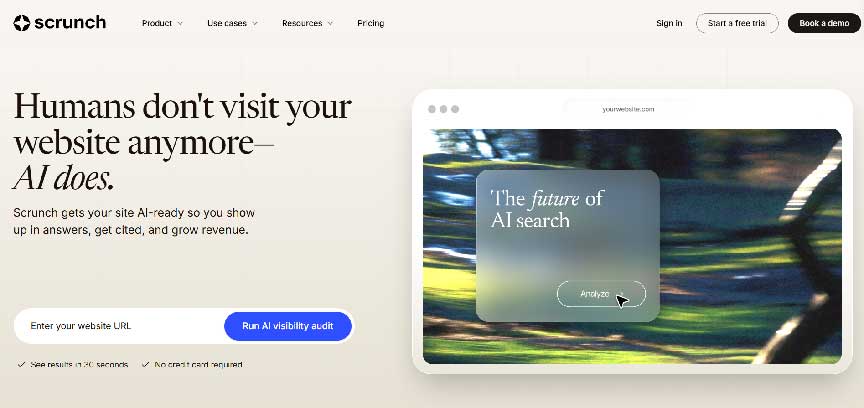
Scrunch is popular with agencies managing GEO across multiple client brands. It offers a broad prompt library, tracks Claude on every plan without gating it behind higher tiers, and has moved into serving AI-optimized content directly at the CDN edge, a more technical approach to making sure AI crawlers can actually parse your site correctly.
Best for: Agencies and mid-market enterprises that need multi-client management, white-label reporting, and technical control over how AI crawlers read their sites.
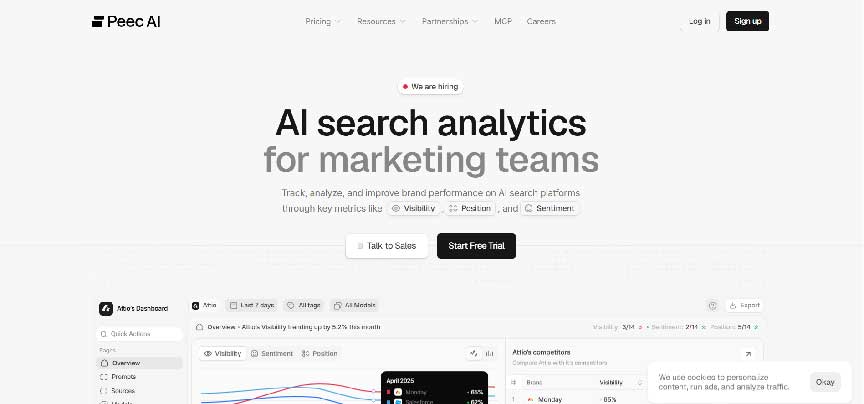
Peec AI is built for fast-scaling growth teams that want a clean, focused monitoring dashboard. It tracks brand mentions and sentiment across a menu of AI engines (self-serve plans typically let you choose three of six models), with unlimited seats on its plans, useful for enterprise teams that want to give broad internal access without per-seat cost creep.
Best for: Growth and marketing teams that want fast, multilingual sentiment tracking without a lengthy enterprise sales process.
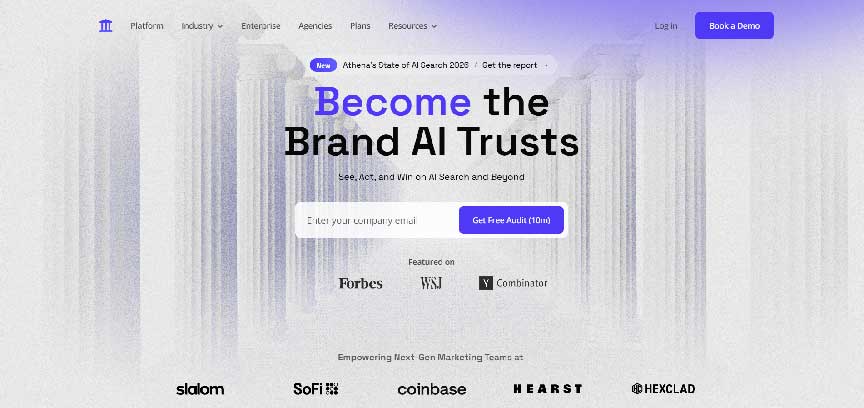
AthenaHQ sits alongside Profound as an enterprise-oriented GEO platform, with a notable focus on connecting AI visibility to revenue, including e-commerce attribution features for brands running on platforms like Shopify. That makes it a good fit for teams under pressure to prove that GEO spend is tied to actual business outcomes, not just visibility scores.
Best for: Enterprise e-commerce and DTC brands that need to connect AI citation data to revenue, not just impressions.
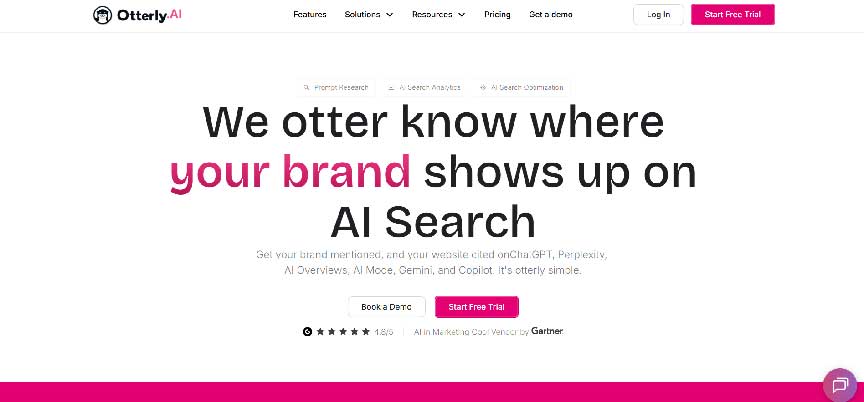
Otterly.ai is a lighter-weight, budget-friendly monitoring tool that's earned a strong reputation (including recognition as a Gartner Cool Vendor) for tracking brand mentions across roughly six AI engines with a straightforward dashboard and Google Analytics integration. It's monitoring-only, it won't generate or fix content for you, but it's a solid low-cost way to start measuring AI visibility before committing to a full enterprise platform.
Best for: Teams that want an affordable first step into GEO monitoring, or a lightweight second opinion alongside a larger platform.
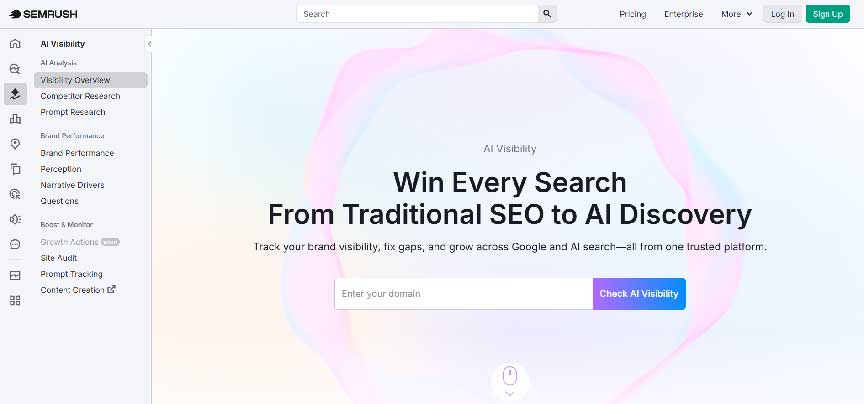
If your team already runs on Semrush for traditional SEO, its AI Visibility Toolkit adds AI search monitoring and auditing directly into a suite your team already knows, with content generation available through Semrush's broader Content Toolkit. It won't match a purpose-built GEO platform on AI-specific depth, but it minimizes new-tool sprawl for teams that want to extend existing workflows.
Best for: Enterprises with an established Semrush deployment that want to bolt on AI visibility tracking rather than adopt an entirely new platform.
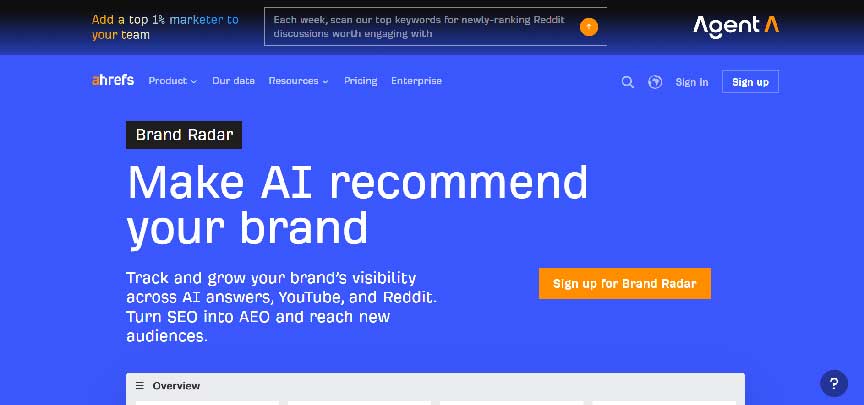
Ahrefs has taken a similar approach to Semrush, extending its well-known SEO crawler and data set into AI citation tracking through Brand Radar. Because it's built on Ahrefs' existing backlink and content index, it can be a strong choice for teams that already lean on Ahrefs data for competitive research and want AI visibility folded into the same view.
Best for: Enterprise SEO teams already standardized on Ahrefs who want AI citation data in the same competitive research workflow.
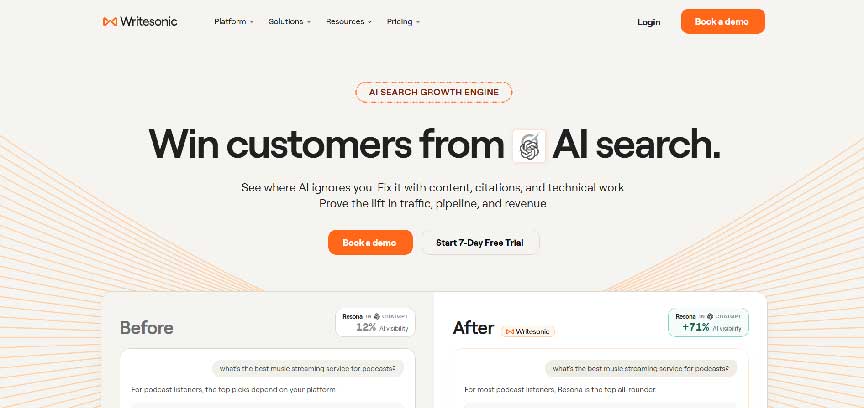
Writesonic has grown from a general AI writing assistant into a full GEO content engine, built around producing long-form, fact-referenced articles designed to perform in both traditional Google rankings and AI-generated answers. It pairs content generation with a real-time SEO checker and a research companion that pulls live data, which helps address the freshness AI engines look for when deciding what to cite.
Best for: Content and marketing teams that need to produce AI-optimized content at scale alongside visibility tracking.
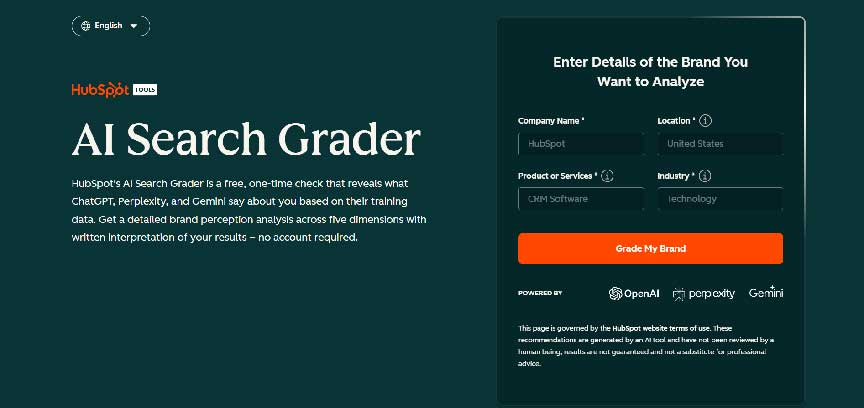
HubSpot's AI Search Grader is a free, no-login diagnostic: enter your site and a target topic, and it gives you a quick read on your current AI visibility and sentiment, along with basic recommendations. It doesn't offer the continuous tracking or governance features enterprise teams eventually need, but it's a useful, zero-cost way to get an initial baseline before evaluating a full platform.
Best for: A fast, free first look at AI visibility before committing budget to an enterprise GEO platform.
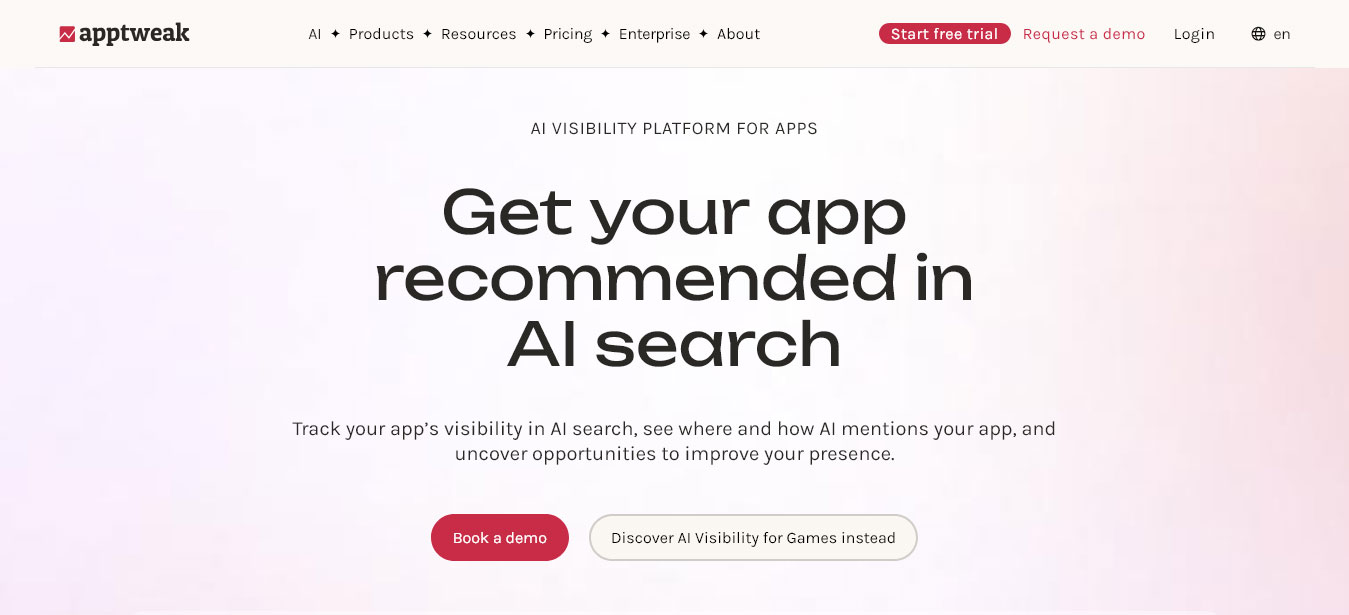
AppTweak brings GEO to mobile apps and games. Its AI visibility product tracks how often ChatGPT and Gemini recommend an app, using non-branded prompts built from real app store search behavior, and matches every mention to an actual App Store or Google Play listing. A Sentiment Score shows how positively AI describes the app, alongside competitor benchmarking by category.
Best for: App and game marketing teams that need to know whether AI assistants recommend their app, and which competitors they recommend for a given prompt.
Most GEO tools fall into one of two camps: pure monitoring (Otterly.ai, Peec AI, HubSpot's Grader) or monitoring bundled into a larger SEO suite (Semrush, Ahrefs). Enterprise-grade platforms like Profound, AthenaHQ, and Scrunch add governance, compliance, and deeper citation analytics on top of monitoring, but most still stop short of actually fixing what they find.
That's the gap worth paying attention to. Knowing that a competitor is being cited instead of you is only half the job; someone still has to rewrite the content, restructure it for AI engines, and republish it, often across multiple markets and languages. Platforms that connect the diagnosis to the fix, like Addlly AI, save enterprise teams from running two or three separate tools just to close a single citation gap.
If you're building (or rebuilding) your enterprise GEO stack in 2026, it's worth starting with Addlly AI. It brings AI Search Visibility tracking, citation forensics, and zero-prompt content execution into one system, with the option of a fully managed service if your team doesn't have the bandwidth to run GEO in-house. For enterprises that want fewer dashboards and faster fixes, Addlly AI is the platform to start with.


Discover our other works at the following sites:
Danetsoft is a global web agency headquartered in Indonesia, specializing in web development, managed hosting, and web publishing platform.


 [email protected]
 Magelang, Central Java
 © 2026 Danetsoft. Powered by HTMLy