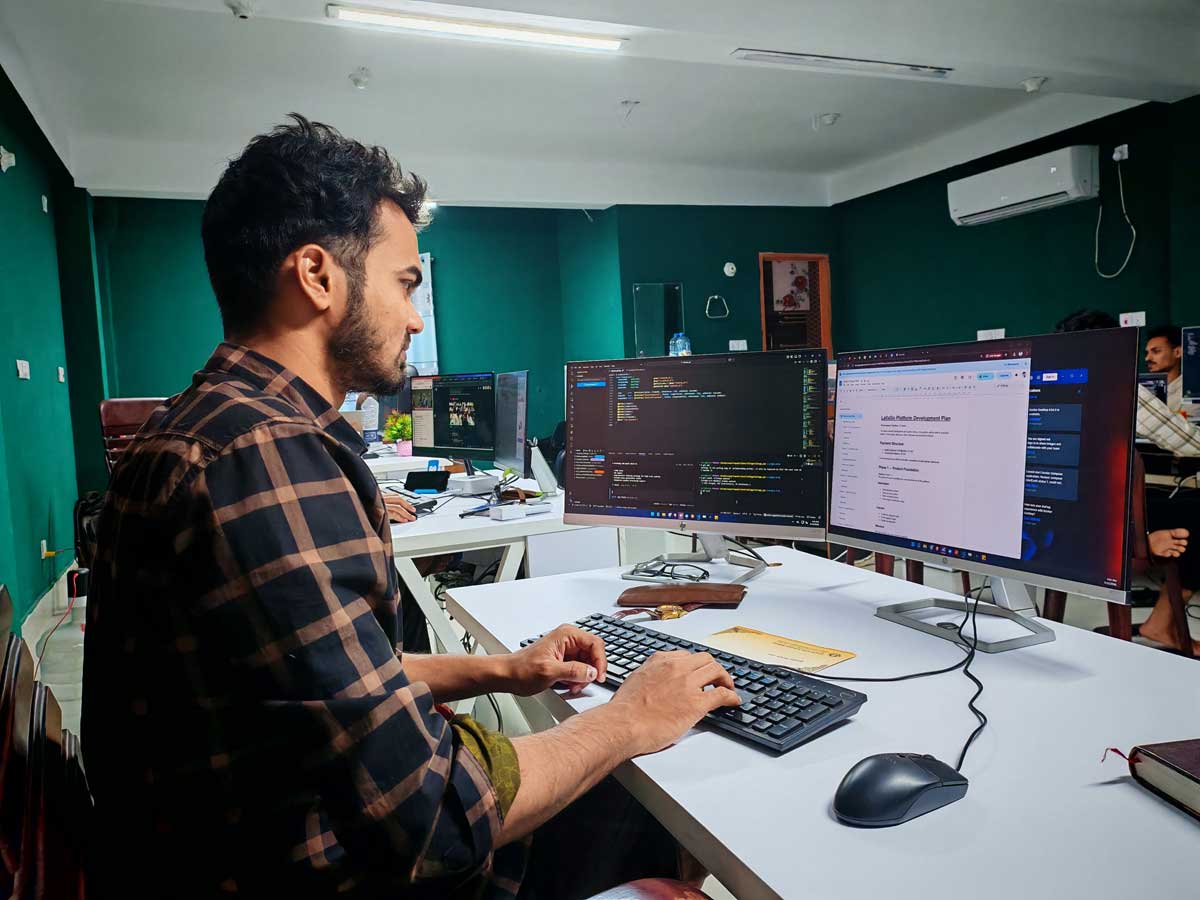
 Photo by Zayed Hossain on Pexels
The global video streaming industry has experienced explosive growth over the past decade. Cable television and traditional broadcasting models are steadily giving way to digital, on-demand streaming. From global media giants to niche sports leagues, fitness brands, and corporate enterprises, organizations worldwide are recognizing the immense value of owning a direct-to-consumer digital broadcast platform.
However, building a high-performance streaming service is fundamentally different from developing a standard mobile or web application. It demands high-concurrency cloud architecture, video transcoding pipelines, complex media security, and seamless multi-device distribution.
To navigate these technical hurdles and launch a broadcast-quality service, partnering with an experienced OTT platform development company is a strategic necessity. This guide breaks down what an OTT development partner does, why custom architecture matters, core features your platform must possess, and how to choose the right technology partner for your streaming business.
An OTT (Over-The-Top) platform development company specializes in building, deploying, and maintaining digital video and audio streaming infrastructure. Rather than relying on rigid, third-party hosting sites, these specialized firms engineer end-to-end ecosystems that deliver content directly over the internet to smart devices.
A full-service OTT development partner handles every layer of the technology stack:
Video Ingestion & Transcoding: Converting raw video master files into multiple resolution formats for seamless playback.
Content Management Systems (CMS): Building intuitive admin dashboards to manage metadata, playlists, categories, and media assets.
Multi-Device App Engineering: Crafting native or cross-platform applications for iOS, Android, Smart TVs (Samsung Tizen, LG webOS, Roku), and streaming sticks (Fire TV, Apple TV).
Security & Encryption: Integrating Digital Rights Management (DRM) and dynamic watermarking to protect valuable intellectual property.
Monetization & Billing Gateways: Engineering flexible revenue models including subscriptions, ad insertion, and pay-per-view options.
When planning a video platform, many businesses consider pre-built SaaS video templates. While SaaS tools offer a fast setup for small-scale creators, enterprise media organizations quickly run into limitations.
Here is why working with a dedicated OTT platform development company to build a custom solution yields a far higher long-term return on investment (ROI):
1. Total Code & IP Ownership
When you rely on a template builder, you rent the infrastructure. If the SaaS provider changes their pricing, alters their policies, or shuts down, your business is vulnerable. Custom OTT development gives you total ownership of the source code, user databases, and brand infrastructure.
2. Tailored User Experience (UI/UX)
Standard templates force your brand into rigid design boundaries. A specialized engineering team builds bespoke interfaces optimized for every screen size, ensuring brand consistency whether a user is watching on an iPhone or a 75-inch OLED Smart TV.
3. Scalable, Custom Backend Architecture
Pre-built SaaS platforms often struggle to handle sudden traffic spikes during major live events or high-profile premieres. A custom development partner builds serverless or microservices-based cloud architectures that auto-scale effortlessly to accommodate millions of concurrent viewers.
4. Zero Revenue Sharing
Many template providers take a percentage of your subscription or advertising revenue on top of monthly hosting fees. Custom-built platforms allow you to connect your own merchant accounts and ad servers, retaining 100% of your earnings.
To compete effectively in today's digital media landscape, your platform must deliver a frictionless, television-grade user experience. When collaborating with an OTT development team, ensure your platform includes these non-negotiable capabilities:
1. Multi-Device Compatibility
Modern consumers expect to start a video on their smartphone during a commute and seamlessly continue watching on their Smart TV at home. Your development partner must build native or highly optimized applications across the entire device ecosystem:
Mobile Platforms: iOS, iPadOS, Android
Living Room Devices: Apple TV, Roku, Amazon Fire TV, Chromecast
Smart TV OS: Samsung Tizen, LG webOS, Android TV/Google TV
2. Adaptive Bitrate Streaming (ABR)
Network conditions fluctuate constantly, especially on mobile connections. Adaptive Bitrate Streaming automatically adjusts video quality (e.g., shifting from 4K to 1080p or 720p) in real time based on the viewer's internet speed. This prevents buffering interruptions and delivers continuous playback.
3. Studio-Grade Content Protection (DRM)
Piracy costs the streaming industry billions annually. To secure licensing rights from major studios—or to protect your own proprietary content—your platform must incorporate multi-DRM frameworks, including Google Widevine, Apple FairPlay, and Microsoft PlayReady.
4. Versatile Monetization Models
Your OTT backend should support dynamic billing logic to adapt to market demands:
SVOD (Subscription Video on Demand): Recurring monthly or annual subscription fees (e.g., Netflix model).
AVOD (Advertising Video on Demand): Free or low-cost content supported by targeted video ads (e.g., Tubi model).
TVOD (Transactional Video on Demand): Pay-per-view or digital rentals for exclusive events (e.g., UFC, festival premieres).
FAST (Free Ad-Supported Streaming TV): Scheduled 24/7 linear channels delivered over the internet.
5. AI-Driven Personalization & Search
Content discovery is key to subscriber retention. Modern OTT platforms leverage artificial intelligence to analyze viewing behavior, generating personalized recommendation rows and intelligent search suggestions that keep audiences engaged.
Understanding the engineering process helps you collaborate effectively with your technical partner. A reputable OTT platform development company follows a structured development lifecycle:
[ Discovery & Strategy ] ➔ [ UI/UX Design ] ➔ [ Architecture & Encoding Setup ]
[ Post-Launch Support ] ◄─ [ Testing & QA ] ◄─ [ Multi-Device Development ]
Discovery & Architectural Strategy: Defining business goals, target markets, content types (VOD vs. Live), and expected viewer concurrency.
UI/UX Design: Wireframing and prototyping intuitive navigation systems specifically tailored for 10-foot television experiences (remote control navigation) and touchscreens.
Backend & Video Pipeline Engineering: Setting up cloud hosting (AWS, Google Cloud, or Azure), media transcoders, Content Delivery Networks (CDNs), and Video CMS databases.
Frontend Multi-App Development: Writing clean, high-performance codebases for web, mobile, and Smart TV applications.
Quality Assurance (QA) & Stress Testing: Rigorous testing across physical hardware devices, network throttling tests, and simulated peak traffic loads.
Deployment & Continuous Optimization: Submitting apps to official app stores (Apple App Store, Google Play, Roku Channel Store) and providing ongoing maintenance.
To ensure you choose a reliable technical team, ask candidate agencies these critical questions:
Do you have a portfolio of live Smart TV and mobile streaming apps? Review their previous work on actual television screens to assess performance and UI quality.
Which Content Delivery Networks (CDNs) and Video Player SDKs do you use? Ensure they utilize enterprise-grade CDNs (like Cloudflare, Akamai, or AWS CloudFront) to guarantee low-latency delivery.
How do you handle live streaming latency? If you plan to stream live sports or news, your partner must support low-latency streaming protocols (such as LL-HLS or WebRTC).
What is your post-launch support and app maintenance policy? Operating system updates (e.g., new iOS or Android releases) can break apps if they aren't maintained continuously.
As technology evolves, forward-thinking OTT platforms are integrating next-generation capabilities:
Server-Side Ad Insertion (SSAI): Stitching ads directly into the main video stream at the server level, rendering them completely immune to ad-blockers and delivering smooth, TV-like commercial breaks.
Low-Latency Live Streaming: Reducing glass-to-glass latency to under 3 seconds, enabling interactive live shopping, polling, and real-time sports betting.
Generative AI for Content Operations: Automatically generating video thumbnails, multi-language subtitles, and localized metadata to accelerate global distribution.
Building a successful video streaming service requires a careful balance of visual design, intuitive navigation, and complex backend engineering. While the technical requirements are demanding, the commercial potential of direct-to-consumer digital broadcasting is virtually unlimited.
Partnering with an experienced OTT platform development company gives your business the technical foundation required to compete with global media giants. By prioritizing custom cloud architecture, multi-device accessibility, robust DRM security, and flexible monetization, you can launch a resilient streaming service that captivates global audiences and generates long-term, scalable revenue.


Discover our other works at the following sites:
Danetsoft is a global web agency headquartered in Indonesia, specializing in web development, managed hosting, and web publishing platform.


 [email protected]
 Magelang, Central Java
 © 2026 Danetsoft. Powered by HTMLy