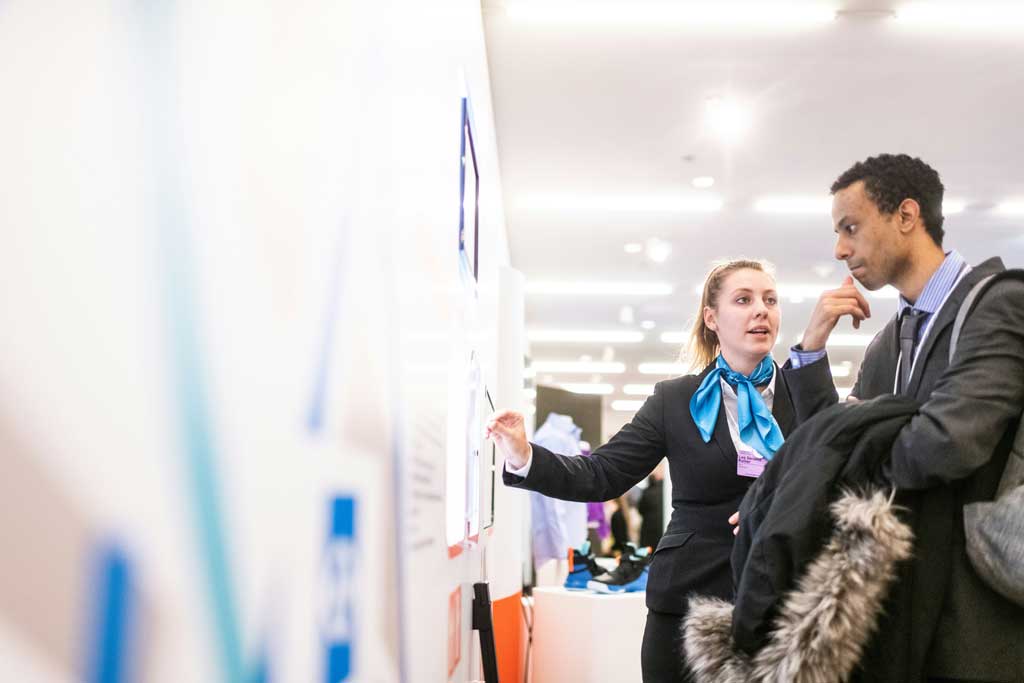
 Photo by Evangeline Shaw on Unsplash
At first glance, industry events can look a little old-school. We register, print a badge, pack a charger, and head into a hall full of booths, panels, coffee stations, and name tags. Meanwhile, our inboxes keep filling up, webinars keep happening, and social platforms keep pushing updates at every hour. So it is fair to ask, in a world that runs on screens, why do industry events still draw so much time, money, and attention?
The answer is simple, but not shallow. Industry events still matter because they bring people together in a way digital channels rarely do. They create concentrated attention, real-time interaction, and a level of human connection that is hard to copy online. We may be able to learn from a video, but we usually trust faster when we meet face to face. We may be able to send a message, but we often build stronger relationships when we share the same room.
That is the real strength of industry events. They are not just about collecting leads or watching keynote slides. They are about creating momentum, turning loose connections into real opportunities, and helping us understand what is happening inside a field while it is happening.
Industry events come in many shapes. Some are huge conventions with thousands of attendees. Some are small meetups in a local office or coworking space. Others are trade shows, summits, expos, roundtables, workshops, award ceremonies, or product launch events. The format changes, but the purpose usually stays the same, bring together people who share an industry, a problem set, or a business goal.
That shared context is what gives these events their value. When people in the same field gather in one place, the conversation changes. We do not need as much background explanation. We can move faster. We can get more specific. We can ask better questions because we are speaking with people who understand the context already.
That kind of density is difficult to recreate online. A virtual event can bring together a large number of people, but it often lacks the same energy, spontaneity, and informal exchange. In person, the official program is only part of the story. The hallway conversations, side meetings, shared meals, and quick introductions often matter just as much, sometimes more.
One of the biggest reasons industry events continue to matter is that they create shared attention. Everyone in the room is focused on the same topic, the same market, or the same set of problems. That sounds obvious, but it has real power.
Online, attention is scattered. We bounce between tabs, scroll past headlines, answer messages, and half-listen during calls. At an event, especially a good one, attention gets compressed. We are in one place, for one purpose, with people who care about the same things. That makes conversations sharper and decisions faster.
A meeting that might take weeks to arrange can happen in a few minutes at an event. A partnership that might otherwise stay stuck in email can move forward after one conversation. A product idea can get tested immediately against the people who might actually use it. That speed matters, especially in industries where timing affects everything from sales cycles to hiring to product development.
We talk a lot about trust in business, but trust rarely comes from one polished message. It grows from repeated signals. We want to know if a person understands the space, listens well, answers honestly, and behaves consistently.
Industry events help us see those signals more clearly.
When we meet someone in person, we notice how they carry a conversation, whether they ask thoughtful questions, how they respond to pressure, and how they interact with others around them. None of that replaces a strong track record, but it does fill in important gaps that a profile or pitch deck cannot show.
This matters especially in fields with long sales cycles, technical products, or complex services. People are less likely to commit quickly when they do not trust the person or team behind the offer. A face-to-face meeting can shorten that distance in ways that a follow-up email rarely can.
The same goes for hiring and partnerships. A resume tells us what someone has done. A live conversation helps us understand how they think, communicate, and fit into a team or project. That is not a small thing.
Another reason industry events matter is that they act like a live pulse check for a sector. We do not just hear what companies are saying in their marketing. We hear what people are asking, worrying about, and getting excited by in real time.
The agenda itself tells us something. If the same themes keep showing up, automation, compliance, cost pressure, artificial intelligence, sustainability, customer retention, supply chain resilience, we get a clearer sense of what is on the industry’s mind. The questions from the audience reveal even more. If several sessions keep circling the same frustration, that is not a coincidence, it is a signal.
We can also learn from what is missing. If a once-hot topic is barely mentioned anymore, interest may be fading. If a new category keeps appearing in booths, panels, and hallway conversations, it may be moving from buzz to real adoption. That kind of early insight can be hard to find in reports alone.
Events let us hear the mood of the market, not just the headlines.
The word networking has a bad reputation for a reason. It can sound forced, transactional, and awkward. Nobody enjoys the image of people trading business cards like coupons.
But real networking is just relationship-building. It is the process of getting to know useful, interesting, trustworthy people in a shared space. Industry events make that easier because the setting gives us a natural reason to speak.
We do not need a perfect opening line. We can start with the session, the speaker, the venue, the product demo, or the challenge everyone seems to be talking about. From there, conversations can become surprisingly useful, and often quickly. We might find a collaborator, a potential customer, a future employee, a vendor, a referral, or simply a person who understands a problem we are trying to solve.
The strongest event relationships are usually not dramatic. They are practical. They start with a good conversation and continue because there is real alignment. A person we meet at a conference might not matter much that day, but six months later they might become a client, a connector, or a trusted peer.
Industry events also matter because they can open doors for people and companies that do not have huge platforms.
A startup without a big marketing budget may not be able to buy broad visibility online. A specialist consultant may not get featured in major media. A newer brand may struggle to cut through the noise. At an event, though, all of those groups can show up in the same room as buyers, partners, and decision-makers who are already interested in the field.
That creates a real opportunity. A booth, a speaking slot, a panel discussion, or even a strong conversation after a session can do more for visibility than weeks of digital posting. The audience is already qualified. They are there for the subject, which means attention is more likely to turn into action.
This is one reason regional and niche events are so important. They often give smaller players access to a focused community that might otherwise be hard to reach. In that sense, events help industries stay fresh by making room for new voices.
Not every event needs to be huge to matter. In fact, some of the best events are the ones that create momentum in a very direct way.
When a product launches at the right event, the audience can see it, question it, and react to it right away. When a new service is explained live, people can ask the practical questions that matter most. When a team presents an idea in front of a room full of relevant people, the feedback comes fast and often in a much more honest form than a polished online comment.
That immediate response is valuable because it helps us improve while the opportunity is still open. We can adjust the pitch, refine the message, and learn what people really care about.
For products that are technical, expensive, or difficult to explain, this matters even more. A live demo or a face-to-face explanation can remove confusion faster than a landing page ever could. People can ask the obvious questions, and we can answer them in a way that feels real.
We should be honest, industry events are not automatically worth it. Some are too broad. Some are overloaded with sponsor messages. Some are full of weak sessions and recycled talking points. Some look impressive on the outside but do very little for the people attending.
That is why intention matters. We get more from events when we know why we are going. Are we looking for leads, partnerships, learning, visibility, hiring, or market intelligence? The answer should shape which events we attend and how we use our time there.
A conference with great content may not be the best place for selling. A trade show with a crowded expo floor may be better for business development than learning. A niche meetup might be more useful for building relationships than a large, expensive summit. If we do not know our goal, the event can feel disappointing even when it is not objectively bad.
There is something about being in the same space that changes how people act. Physical presence creates a different kind of attention. We notice body language, pauses, reactions, and group energy in a way that digital settings rarely allow.
That matters because business is still deeply human. We read people as much as we read data. A shared lunch, a quick handshake, a room going quiet during a keynote, a cluster of people around a demo table, these moments carry weight. They shape memory. They shape trust. They shape how we talk about the event later.
This is why some events stay with us long after the badge is tucked away. We may forget the exact slide from a panel, but we remember the person who made a sharp point, the conversation that opened a new possibility, or the moment when we realized the industry was moving in a new direction.
The atmosphere is part of the value.
It is easy to treat industry events as purely commercial tools, but they do more than support business goals. They also build community.
For newcomers, events can provide a way in. For experienced professionals, they can renew a sense of connection to the broader field. For teams, attending together can build shared language and alignment. For speakers and organizers, events can create a sense of purpose around the work they do.
That community function matters more than we sometimes admit. Fields can be lonely. Specialization can make it hard to see beyond our own roles. Events remind us that we are part of something larger, a network of people solving related problems, making similar decisions, and trying to move the field forward.
That sense of belonging can be just as valuable as a lead or a new client.
When an industry event is genuinely useful, it usually has a few things in common.
The audience is relevant, not just large.
The content is practical, not just polished.
The conversations feel real, not scripted.
The room has energy, not just noise.
People leave with ideas they can use, people they can call, or a better understanding of where the field is headed.
In other words, a strong event does not just look impressive. It helps us do something better afterward.
That is what separates a meaningful event from a crowded one. Substance matters more than spectacle.
Industry events still matter because they do something digital channels struggle to do at the same scale, they gather the right people in the same place, at the same time, with enough shared context to make conversations useful.
They help us build trust faster. They reveal trends early. They give smaller voices a chance to be heard. They support launches, partnerships, hiring, and learning. They create community as well as business value. And when they are well designed, they leave us with more than brochures and follow-up emails, they leave us with momentum.
That is why these events continue to hold their place. Not because they are traditional, but because they are effective in a very human way. They remind us that business is still made by people, and people still do their best work when they meet in a room that matters.


Discover our other works at the following sites:
Danetsoft is a global web agency headquartered in Indonesia, specializing in web development, managed hosting, and web publishing platform.


 [email protected]
 Magelang, Central Java
 © 2026 Danetsoft. Powered by HTMLy