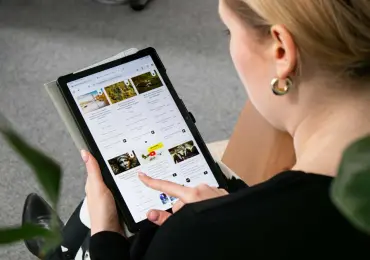
 Photo by Christin Hume on Unsplash
Hybrid work is here to stay, and for many organizations, that is a good thing. We get more flexibility, better access to talent, and a work model that can fit different needs across a team. But hybrid work is not successful just because we split time between home and office. It works only when we design it with care.
If we treat hybrid work as a scheduling problem, we usually end up with confusion. People do not know when to come in, meetings feel awkward, some employees get more visibility than others, and the office slowly becomes a place people visit without much purpose. To avoid that, we need to think about hybrid work as a full workplace design challenge, one that includes people, space, tools, habits, and leadership.
A strong hybrid workplace should help us do three things well, work productively, stay connected, and feel included. That sounds simple, but it takes intentional planning to get there.
One of the biggest mistakes we can make is treating hybrid work as a scheduling problem only. It is not just about who comes in on which days. It affects collaboration, communication, performance management, inclusion, office design, and even company culture.
If we do not create a clear strategy, hybrid work can drift into inconsistency. Teams may show up without a plan, meetings may become confusing, and managers may make decisions based on habit instead of purpose. A good hybrid model gives us a common direction, so people know what to expect and how to work together.
Before we choose tools or rewrite policies, we need to ask a basic question, why are we doing hybrid work in the first place?
Different organizations have different reasons. Some want to keep great talent. Some need to use office space more efficiently. Some want to protect focus time while keeping collaboration strong. Others are responding to employee expectations around flexibility and balance.
When the purpose is clear, the rest becomes easier. We can decide which days matter for in-person work, which tasks belong in the office, and which ones can happen anywhere. Without that clarity, hybrid work can become a loose arrangement that satisfies nobody.
Not every team functions in the same way. A sales group may need more regular overlap for planning and client coordination. A product team may need shared office days for brainstorming and problem solving. A finance or data team may do more deep work and less live collaboration.
That is why one rigid hybrid policy rarely fits everyone. The best approach is to think about the actual work first, then design the schedule around it. The strongest hybrid model is not the one that sounds the most modern, it is the one that fits the real day-to-day needs of the team.
Hybrid work changes daily life in very personal ways. Commutes, childcare, energy levels, home setups, and personal working styles all come into play. If we want hybrid to last, we have to design it around real people, not just around company convenience.
Most people value flexibility, but flexibility without structure can become frustrating. If everyone picks their own days with no coordination, collaboration gets harder and the office loses its rhythm. On the other hand, if the schedule is too strict, hybrid work starts to feel like a dressed-up version of the old office routine.
A strong hybrid workplace finds a middle ground. We can set shared office days for collaboration while leaving room for personal control on other days. That gives teams a dependable pattern without removing choice altogether.
Predictability helps with planning. People know when to come in for meetings, workshops, or team time. Flexibility helps with focus, errands, caregiving, and managing energy. Both matter.
Not everyone works the same way or has the same home environment. Some of us have quiet home offices, others work from shared spaces. Some roles demand access to equipment, labs, or clients, while others are highly digital and independent.
A fair hybrid system acknowledges those differences. We should avoid assuming that one pattern works for every role or every person. Instead, we should ask what each team needs to do its best work, and design around that reality.
This also means paying attention to inclusion. A hybrid workplace should not quietly favor those with the best home office, the shortest commute, or the most schedule freedom. The model has to work for a broad range of situations, not just the easiest ones.
If people are coming into the office only because they are told to, the office will always feel like an obligation. To make hybrid work meaningful, the office has to offer something valuable.
The office should not be just a place where people sit at desks and join video meetings. If that is the main experience, we are wasting the space and the commute.
The office works best when it supports things that are harder to do remotely, such as brainstorming, mentoring, onboarding, relationship building, strategy sessions, and complex problem solving. These are the moments when being in the same room can really help.
That may mean rethinking the layout. Instead of rows of assigned desks, we may need flexible collaboration areas, quiet rooms, shared project spaces, and small rooms for private conversations. The office should feel like a place for interaction and energy, not just storage for laptops.
If the office is difficult to use, people will avoid it. Simple problems can create a lot of frustration, such as poor Wi-Fi, awkward room booking systems, weak audio setups, or not enough power outlets.
A hybrid office should feel easy. We should be able to find a room, connect a device, join a meeting, and move between tasks without wasting time. Good signage, strong internet, flexible seating, and thoughtful acoustics all matter more than we sometimes admit.
When the office works well, people are more likely to see it as a place that supports useful work instead of interrupting it.
Technology is the backbone of hybrid work. It connects people across locations, supports communication, and keeps work moving. But technology only helps when it is simple, reliable, and consistent.
Every hybrid workplace needs a dependable set of tools for video meetings, messaging, file sharing, calendar coordination, and project tracking. We do not need every app available. We need a core set that people understand and use consistently.
When teams use too many disconnected systems, information gets scattered. Messages are missed, updates are duplicated, and work slows down. Standard tools create shared habits and reduce confusion.
Hybrid meetings can break down fast when remote participants cannot hear clearly or are treated like second-class attendees. Good microphones, cameras, and room setups help everyone contribute on equal footing.
Audio quality matters especially. If remote people cannot hear side conversations or if in-room participants talk over each other, the meeting becomes unbalanced. We should design the meeting setup so every person can speak and be heard without struggle.
Not every update needs a live meeting. In hybrid work, asynchronous communication becomes essential. Written updates, shared documents, project boards, and recorded summaries help people stay aligned without forcing everyone into the same time slot.
This approach gives us more flexibility and reduces meeting overload. It also helps teams across different schedules or time zones keep moving without delay.
Meetings are often where hybrid work succeeds or fails. A meeting designed for a full in-person room does not automatically work when some people are remote.
If even one person is joining remotely, we should treat the meeting as hybrid from the start. That means sharing documents ahead of time, using good microphones, and making sure people in the room do not dominate the conversation.
We also need to make remote participants visible in the discussion. Someone should watch for raised hands, chat comments, or signs that a remote attendee wants to contribute. Small actions like introducing everyone clearly and repeating key points help prevent people from being left out.
Hybrid work gives us a chance to be more selective. Not every update requires a meeting. Many status checks can happen in writing, and many decisions can be prepared in shared documents before a live discussion.
When we reduce unnecessary meetings, we save time and energy for the ones that actually matter. The goal is not to fill calendars, but to create space for real collaboration and decision making.
One of the quiet risks of hybrid work is proximity bias, the tendency to favor people we see more often. If we ignore this, the system can become unfair without anyone meaning for it to happen.
People should not have to guess how they are being judged. If managers rely too much on visibility, hybrid work can reward people who are physically present rather than people who are doing strong work.
Clear goals and measurable outcomes help solve this problem. When expectations are transparent, people can focus on results instead of trying to look busy.
A person working remotely should not miss out on key decisions, informal updates, or new opportunities. That means important information should be shared broadly, documented clearly, and not kept only in hallway conversations or private office chats.
Fairness in hybrid work does not happen naturally. We have to build it into the way we communicate and make decisions.
A healthy hybrid culture is not created by posters or mission statements. It grows from repeated actions that make people feel connected, informed, and respected.
Some traditions depend too much on being physically present. In hybrid settings, we need rituals that work both online and in person. That could include weekly team check-ins, shared demos, recognition moments, monthly learning sessions, or regular cross-team updates.
These rituals give people a sense of rhythm and belonging. They remind us that we are still part of one team, even if we are in different places on different days.
A lot of workplace trust grows in casual moments, quick conversations near a desk, shared coffee breaks, or brief chats after a meeting. Hybrid work reduces some of that natural connection, so we need to be intentional about replacing it in useful ways.
We can create time for informal conversation through team lunches, virtual coffee sessions, or office days built around collaboration and connection rather than only formal meetings. The point is not to force socializing, but to make space for it.
Managers have a huge influence on whether hybrid work feels smooth or frustrating. Leading a hybrid team takes different skills from managing everyone face to face.
Managers need to set priorities clearly, give regular feedback, and trust people to do their work without constant checking. In hybrid settings, micromanagement often gets worse because distance makes some leaders nervous. That usually creates more problems, not fewer.
Good managers also pay attention to participation patterns. Some people are more vocal in person, while others contribute more through writing. A strong manager makes room for both styles.
Hybrid work can blur boundaries. Some people keep working too long because home and work feel mixed together. Others feel isolated because they spend too much time alone.
Managers should be aware of these signs and talk about workload, energy, and connection openly. A good hybrid workplace is not only productive, it also protects well-being.
A hybrid workplace should not be treated as complete once the policy is announced. The best models keep evolving based on real feedback.
Attendance numbers alone do not tell us much. We should look at engagement, retention, meeting load, project progress, collaboration quality, office use, and team feedback. The exact measures will depend on the organization, but the point is to understand how the system is working, not just whether the office is full.
People will usually tell us where the friction is if they feel safe speaking honestly. Maybe office days are not useful. Maybe the meeting load is too heavy. Maybe the tools are awkward. These are all solvable issues if we hear about them early enough.
Hybrid work works best when improvement is part of the culture.
A hybrid workplace that works well is built with intention. It is not just a calendar arrangement, it is a full system that includes purpose, design, technology, communication, fairness, and leadership. When we build around real work instead of assumptions, the model becomes easier to manage and more rewarding for everyone involved.
The strongest hybrid workplaces do not treat remote and in-office work as two separate worlds. They create one connected experience that feels consistent across both. When we get the design right, we can enjoy the best parts of each setting, flexibility without chaos, collaboration without constant interruption, and connection without forcing everyone into the same place at the same time.


Discover our other works at the following sites:
Danetsoft is a global web agency headquartered in Indonesia, specializing in web development, managed hosting, and web publishing platform.


 [email protected]
 Magelang, Central Java
 © 2026 Danetsoft. Powered by HTMLy