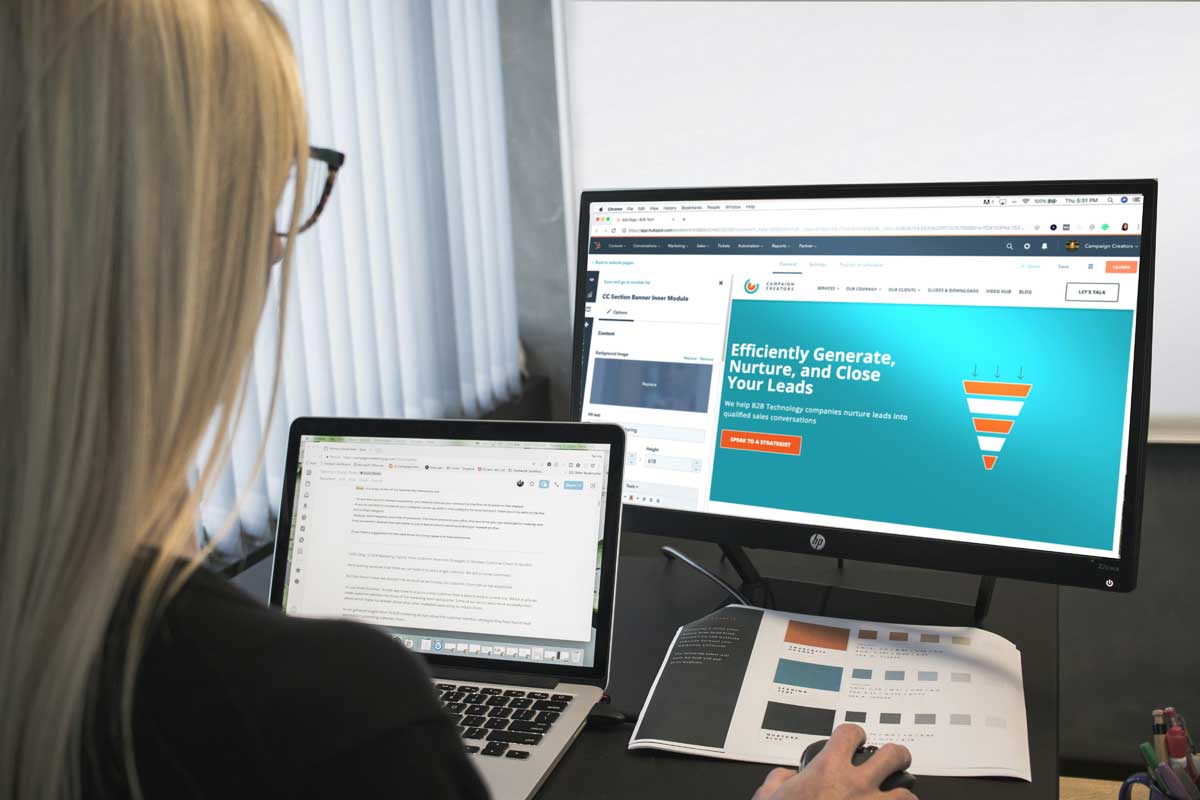
 Photo by Campaign Creators on Unsplash
Most businesses treat website design and branding as two separate boxes to check. Hire a designer, get a nice-looking site, done. Branding becomes an afterthought, maybe a logo tacked on, maybe a color scheme picked because it "looked nice" rather than because it says anything about the business.
Visitors don't see it that way. To them, your website design and your brand are the same thing. If the site looks polished but feels like it could belong to any business in your industry, that's not a design problem, it's a branding problem. And it's a more common one than most business owners realize. Because a site can check every technical box, fast, mobile-friendly, well laid out, and still leave visitors with nothing to remember it by.
This is not just a hunch; research backs it up. A landmark study on web aesthetics found that 94% of a visitor's first impression of a website is design-related. It means almost none of that snap judgment comes from reading your copy. Design is the first thing a brand identity has to win or lose.
Branding is not just your logo. It's the tone of your copy, the colors you use, the photos you choose, and the overall feeling a visitor gets within the first few seconds on your site. For businesses establishing their visual identity, free logo design can also be a practical starting point for creating a recognizable brand presence. It's the difference between a website that says "we're a business" and one that says "we're this business, and here's why we're different."
A site can be fast, clean, and mobile-friendly, and still fall flat if there is no personality behind it. Visitors might not be able to name what's missing, but they'll feel it, the same way you can tell when a store feels generic versus when it feels like it was built by people who actually care about what they sell.
This is why two businesses in the exact same industry, offering nearly identical services, can leave completely different impressions online. One feels like a template. The other feels like a real business with a real point of view. The difference almost always comes down to branding, not design skill.
The businesses that stand out online are usually the ones where design and branding aren't separate projects. The visual content, the voice, and the story all work together to create something visitors actually connect with, rather than just scroll past.
Take Bizango, for example, a web design and branding agency that builds both at the same time rather than treating them as separate services. Their approach centers on storytelling, using design choices that reflect a business's personality and goals, not just a template that looks nice.
That combination is what makes a site feel intentional instead of generic, every color, headline, and layout choice reinforcing the same identity instead of existing in isolation.
This matters because design without branding is just decoration. It might look good in a portfolio, but it won't necessarily make a visitor feel anything. Branding is what turns a website from something people glance at into something people actually remember.
Some websites quietly signal that branding was an afterthought, even when the design itself isn't bad. A few common signs worth checking for:
None of these are dealbreakers on their own. But together, they add up to a site that visitors forget the moment they close the tab, which defeats the purpose of having a website at all.
You don't need a full rebrand to fix this. A few focused changes can make a real difference without a major overhaul:
Note: When MarketingExperiments A/B tested a real customer photo against their top-performing stock image on the same page, the real photo generated 35% more sign-ups. Swapping out generic imagery is not just a branding nicety, it's a conversion lever.
The goal is not perfection. It's consistent, so that every page feels like it belongs to the same business with the same personality, rather than feeling like a collection of disconnected pages built at different times.
A strong website design and brand identity does more than make your site look nice. It builds trust faster, because a consistent, intentional presence signals that you take your business seriously. Visitors are quicker to trust a business that feels put together than one that feels thrown together, and that trust is often what decides whether they reach out or move on to a competitor.
It also makes everything else easier down the line. Marketing gets easier when there is already a clear voice and look to build campaigns around. Social media gets easier when your posts already have a consistent visual identity to follow. Even hiring gets easier, because a strong brand helps the right people recognize your business and want to be part of it.
In Marq's State of Brand Consistency report, 60% of companies said that presenting their brand consistently added 10–20% to their revenue growth. That's real money left on the table by a site that looks different from page to page
In short, branding is not a nice extra layer on top of a website. It's part of the foundation that everything else, marketing, growth, and customer trust, gets built on.
A great website needs more than clean design. It needs a clear identity behind it, one that shows up consistently in the colors, the copy, and the overall feel of every page. Design gets visitors to stay for a few seconds. Branding gives them a reason to remember you.
If your site currently looks good but doesn't feel like anything in particular, that's worth a second look. Start small, tighten your colors, clarify your voice, swap out a few generic photos, and see how much more intentional your site starts to feel. The businesses that get remembered aren't always the ones with the biggest budgets. They are the ones that look, sound, and feel like themselves, consistently, on every page a visitor lands.


Discover our other works at the following sites:
Danetsoft is a global web agency headquartered in Indonesia, specializing in web development, managed hosting, and web publishing platform.


 [email protected]
 Magelang, Central Java
 © 2026 Danetsoft. Powered by HTMLy