The modern $131 trillion real estate market moves entirely too fast for traditional, paper-heavy underwriting. For years, independent landlords and institutional investors alike were forced to endure weeks of bureaucratic delays just to secure financing for a new property. Today, a digital-first approach to borrowing has completely transformed how capital is deployed in the housing market.
Automated platforms have replaced traditional paperwork for independent landlords, compressing closing timelines from months to days. This shift is driven by the reality that deals in competitive markets disappear if financing drags on. Investors no longer tolerate legacy banking friction when agile digital solutions can verify assets and analyze property cash flow almost instantly.
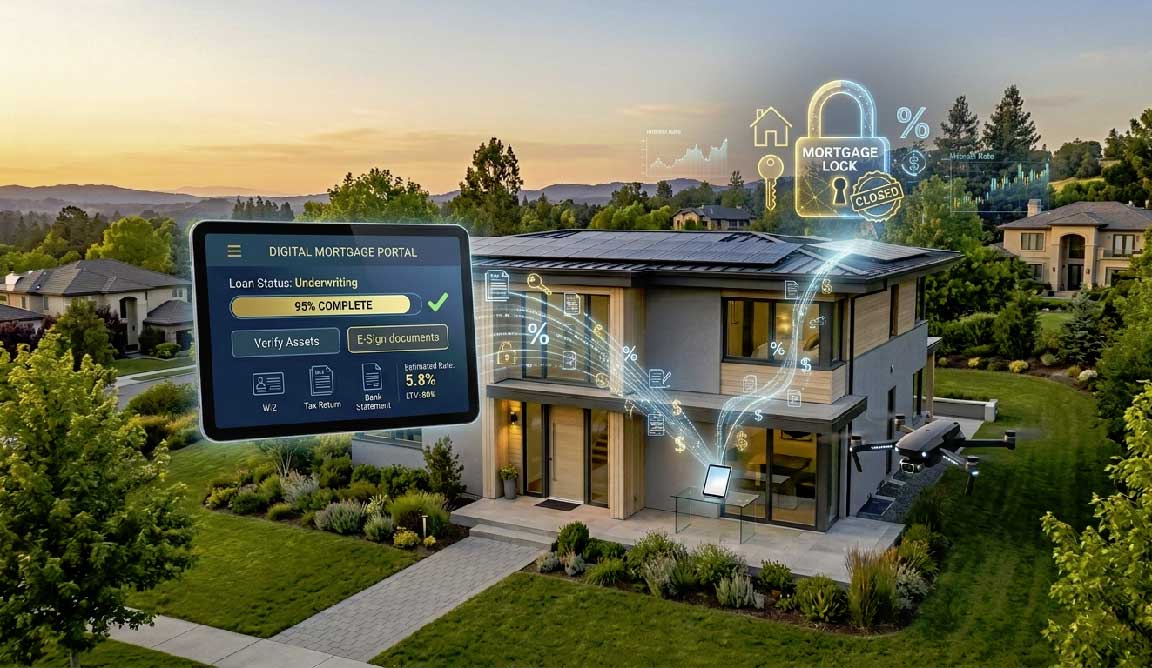 Image Source: Google Gemini
Speed is the primary currency in modern property acquisition. Digital mortgage platforms leverage automated underwriting systems to evaluate risk without requiring a mountain of tax returns or personal income verification. Instead, these systems rely on advanced algorithms that scan bank data and analyze the asset itself rather than the borrower’s personal debt-to-income ratio.
Hundreds of real estate transactions are delayed due to manual verification of paperwork. For an investor looking to scale a portfolio, that delay represents a massive opportunity cost. Digital lending ecosystems solve this bottleneck by integrating directly with financial institutions to verify liquidity and creditworthiness in real time, drastically shortening the closing window.
The evolution of non-QM lending spaces has further accelerated this digital transformation. Tech-driven lenders can now analyze a property's financial health using proprietary algorithms, assessing whether its rental income covers the monthly mortgage payments.
When market conditions shift, having access to streamlined DSCR loan refinance options allows investors to pull equity or lower their rates without restarting a grueling underwriting cycle. A DSCR loan is a mortgage tailored for real estate investors that qualifies borrowers based on a property’s rental income rather than their personal income, tax returns, or employment history.
Unlike traditional residential mortgages that rely heavily on your personal debt-to-income (DTI) ratio, lenders utilizing a DSCR model care primarily about whether the asset can pay for itself. If the property's monthly rental revenue covers its underlying debt obligations, including principal, interest, taxes, insurance, and association fees, the loan is well-positioned for approval. This level of liquidity management is essential for sustaining long-term portfolio growth.
The traditional mortgage process was built for single-family homeowners, not active business operators. By shifting to digital-first underwriting, lenders can evaluate a property's actual income potential rather than the owner's personal salary. This change is clearly reflected in modern proptech and digital mortgage trends that are shaping real estate investing in 2026.
Investors who utilize digital mortgage tools consistently benefit from a more predictable acquisition pipeline. Efficient capital allocation requires visibility, and digital dashboards provide real-time updates on loan progress.
The transition away from manual data entry delivers several distinct operational advantages for property buyers:
Removing the administrative burden allows landlords to focus on finding undervalued assets rather than managing loan processors. At a time when automation is overhauling everything from sales and marketing to web app testing, it’s not surprising to see similar benefits in a mortgage approval context.
Managing a growing real estate portfolio requires a deep understanding of leverage and asset performance. Digital platforms excel here by offering analytical tools that show exactly how a refinance or a new acquisition impacts overall cash flow.
When capital markets are volatile, the ability to pivot quickly separates profitable operators from those who get stuck with underperforming assets. Digital mortgage infrastructure ensures liquidity is always within reach, enabling strategic reinvestment exactly when market opportunities arise. Exploring our blog can provide deeper insights into how digital tech is impacting all sorts of industries, not just real estate.


Discover our other works at the following sites:
Danetsoft is a global web agency headquartered in Indonesia, specializing in web development, managed hosting, and web publishing platform.


 [email protected]
 Magelang, Central Java
 © 2026 Danetsoft. Powered by HTMLy