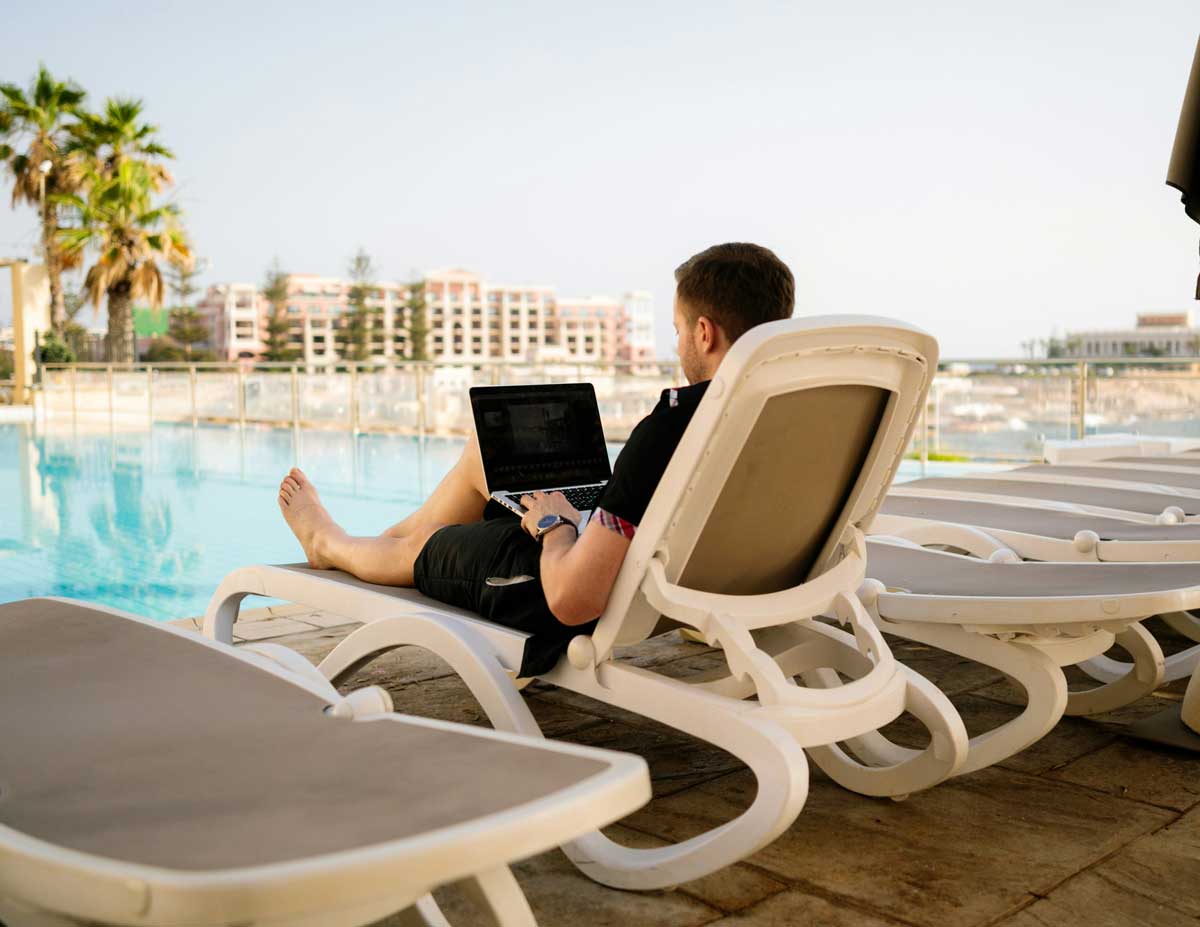
 Photo by Humphrey M on Unsplash
The dream of writing code from a beachside cafe or a bustling co-working space in a new city has become a tangible reality for many web developers. The transition from traditional office setups to fully remote environments has accelerated rapidly over recent years. Armed with cloud-based collaboration tools, developers no longer need to be tethered to a physical desk. In fact, according to Buffer's State of Remote Work report, an overwhelming 98% of professionals desire to work remotely for the rest of their careers, cementing this transition as a permanent shift rather than a temporary trend.
This shift is mirrored globally, including across Australia. Web development is uniquely suited to this transition. The asynchronous nature of coding, combined with the high global demand for digital skills, means developers can seamlessly collaborate with clients from almost any time zone. However, while the freedom to design your own working environment is undeniably exhilarating, this lifestyle brings a unique set of financial challenges that require careful, proactive management.
For digital nomads, everyday expenses look vastly different than they do for the average stationary professional. You might find yourself paying for web hosting in US dollars, booking short-term accommodation in Euros, and buying your morning coffee in Australian dollars. Navigating these constant currency conversions can quickly eat into your hard-earned profits if you are not careful with international transaction fees and fluctuating exchange rates.
Choosing the right financial products is essential for keeping your travel costs under control. Comparing travel-friendly options is a great place to start, and reviewing products like the credit cards can help you find tools that minimise overseas fees while streamlining your lifestyle spending. Using a dedicated card for your travel and business expenses also simplifies your end-of-year accounting, ensuring you never miss out on valuable tax deductions. Furthermore, having a reliable backup card stored securely in a separate bag can be a genuine lifesaver if your primary wallet is lost or stolen while you are transiting through foreign airports.
Freelance web developers and location-independent contractors often experience wildly fluctuating income. Some months might bring in highly lucrative, large-scale website builds, while others involve waiting weeks on delayed payments from international clients. This feast-or-famine cycle makes budgeting significantly more complex than relying on a predictable fortnightly salary from a traditional employer. To address these financial risks, many developers pivot toward nearshore agencies where companies hire dedicated dev team specialists to maintain consistent product development and stable payout cycles.
To survive and thrive on the road, you need to establish a robust cash flow buffer. A standard rule of thumb for remote tech professionals is to maintain three to six months of living and business expenses in a highly accessible savings account. To further stabilise your income, consider implementing strict milestone payment structures for your development projects. Requesting an upfront deposit before writing a single line of code, followed by scheduled payments tied to specific deliverables, dramatically reduces the financial risk of a project stalling. You can also explore pitching ongoing maintenance retainers to past clients, providing a reliable baseline of recurring revenue each month. This safety net provides total peace of mind when a major client pays late or when you experience unexpected hardware failures. After all, a broken laptop in a foreign country is a major emergency for a web developer, and having the immediate liquidity to replace your gear is strictly non-negotiable.
Taking control of your finances while travelling requires a highly organised approach. By setting up automated systems and clear financial boundaries, you can focus your energy on writing great code instead of stressing over your bank balance. Consider adopting these essential strategies to protect your long-term financial health:
Separate personal and business finances: Never mix your everyday lifestyle spending with your server hosting costs or software subscriptions. Keeping these entirely separate makes tracking your professional expenses much easier and keeps your accountant happy.
Set aside tax automatically: Transfer a fixed percentage of every paid invoice into a separate savings account immediately. This ensures you are never caught off guard when tax season arrives, no matter which country you are currently calling home.
Leverage multi-currency accounts: If you regularly invoice clients in different countries, utilise accounts that allow you to hold and receive multiple currencies. This gives you the flexibility to convert your funds only when exchange rates are most favourable.
Prioritise retirement savings: Without a traditional employer automatically contributing to your superannuation, it is entirely up to you to fund your future. Make regular, automated contributions to your retirement fund a permanent fixture in your monthly budget.
Invest in comprehensive insurance: Quality health and travel insurance are critical. Medical emergencies abroad can be financially devastating without the right coverage, so never skip this vital expense.
Embracing the digital nomad lifestyle as a web developer offers unparalleled freedom and creative inspiration. However, location independence demands a high level of financial discipline. By choosing the right financial tools, building a reliable emergency buffer, and automating your money management, you can build a sustainable, exciting career that seamlessly spans the globe.


Discover our other works at the following sites:
Danetsoft is a global web agency headquartered in Indonesia, specializing in web development, managed hosting, and web publishing platform.


 [email protected]
 Magelang, Central Java
 © 2026 Danetsoft. Powered by HTMLy