Monetizing an AI influencer is no longer a secret, but reaching the top tier of creators has become significantly harder. The old playbook—generating a single AI model and posting static photos or 3-second glitchy clips—is saturated.
To stand out on TikTok, Reels, and Shorts today, you need to tap into the formats algorithms actually push. Right now, that means group dance challenges and music videos (MVs).
Historically, AI dance videos felt like a gamble. You wrote a prompt, hit generate, and prayed the video survived the first body roll. Faces morphed, outfits changed, and hands glitched. But creators are no longer just experimenting; they are building real businesses. Dance content needs identity, rhythm, continuity, and a repeatable workflow.
By leveraging a structured AI workflow, you can move away from random motion and create highly controlled, 30-second AI girl group choreography. Here is the step-by-step production system using the APOB AI platform to build your own virtual pop group.
A single impressive AI dance clip might grab attention, but it won't build a loyal audience. When AI video was a novelty, stitching together short, disconnected 3-second clips was enough.
For a music video or a viral TikTok dance, random motion fails. You need a system that retains character consistency across multiple models simultaneously and sustains complex motion for longer durations. This requires treating AI not as a one-click magic button, but as a multi-agent production studio.
A strong dance video starts with recognizable performers. Not just generic dancers with good outfits, but distinct characters. The audience needs to recognize the same faces, styling, and attitude from one video to the next.
Instead of starting from zero for every generation, use an AI Influencer Generator to create your group members. For a girl group workflow, you need to define details that matter for movement and group dynamics: body type, height, signature hairstyles, cohesive group outfit styles, and performance energy.
Build 3 to 5 distinct models. These AI influencer models become the identity base for your entire content series. They turn from one-off images into reusable creative assets.
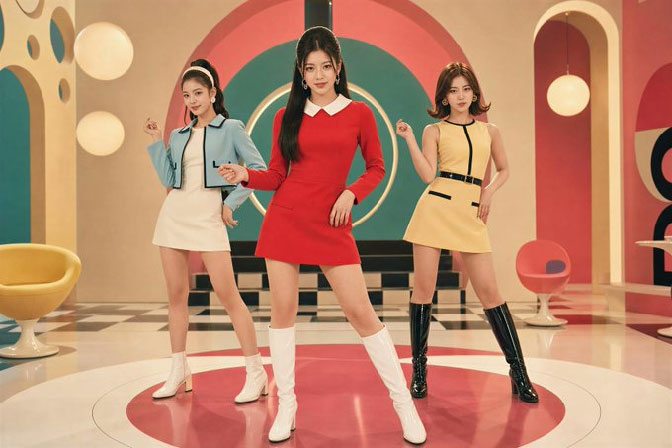
Once your group is cast, the next move is creating the opening shot. If the first frame is weak, the video model has to guess too much. If the first frame is clear, the AI already has a visual anchor.
Using a tool like Chat to Generate (powered by GPT Image 2.0 inside), you can combine your custom influencer models into a single, controlled opening shot. This frame anchors the group's positioning, camera angle, lighting, location, and overall mood.
Pro Tip: Position your main "center" dancer clearly, with the other members forming a cohesive V-formation or staggered line. This mimics real K-pop and TikTok dance setups and gives the video generation model clear depth cues.
You cannot rely on a text prompt alone to direct a complex group dance. You need to choreograph.
Instead of jumping straight to video, use an editing agent to turn your perfect first frame into a 16-panel dance storyboard. This visual guide maps out the movement frame-by-frame.
Think of the storyboard as your choreographer. It tells the system exactly how the group should transition from a standing pose to a body roll, and where their arms should be on the beat. This prevents the AI from inventing unrelated movements halfway through the video.
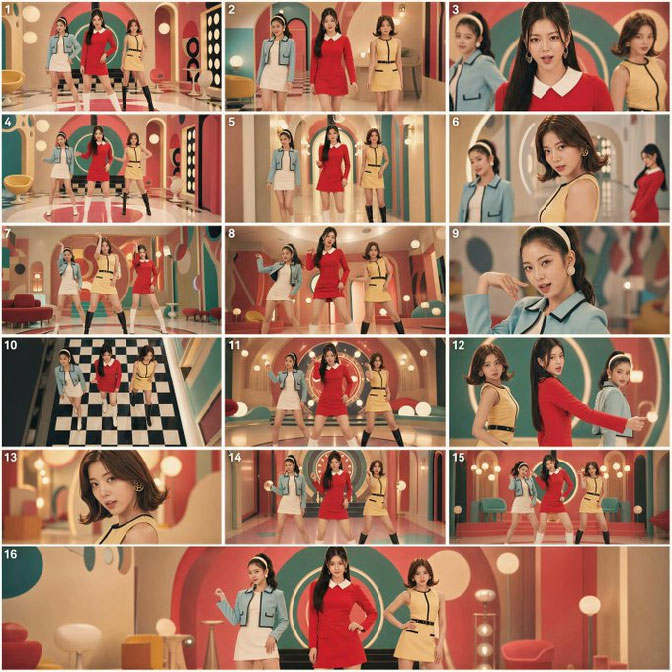
With your influencers cast, the first frame set, and the storyboard mapped out, your video has a real foundation. Now, it is time to generate the actual motion.
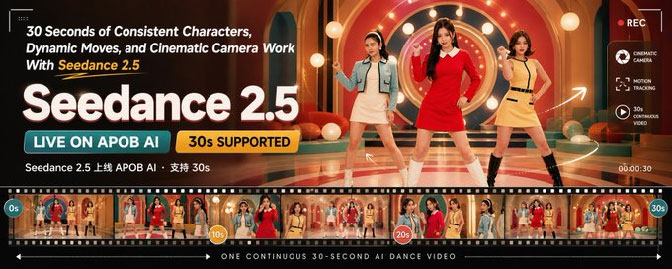
This is where the workflow shifts from stitching short clips to generating actual long-form content. Using advanced video models like Seedance 2.5 (accessible via APOB's Image to Video Ultra S), you can generate up to 30 seconds of continuous choreography in one go.
When writing your final video prompt, remember: do not compete with your storyboard. Your text prompt should reinforce the visual plan, not rewrite it.
When the influencer models, first frame, storyboard, and prompt all point toward the same outcome, the engine can deliver smooth choreography, clear camera moves, and consistent facial details across a full 30-second performance.
The shift from prompt -> short clip to influencer models -> storyboard -> 30-second guided video changes everything for AI creators. A 30-second canvas gives choreography time to build, hit multiple beats, and finish as one practical piece of social content.
Add a trending TikTok audio track, a hook, and a caption layer, and you have a repeatable, scalable system for building an AI Girl Group empire. The technology is here; the creators who master the workflow will be the ones who dominate the feed.


Discover our other works at the following sites:
Danetsoft is a global web agency headquartered in Indonesia, specializing in web development, managed hosting, and web publishing platform.


 [email protected]
 Magelang, Central Java
 © 2026 Danetsoft. Powered by HTMLy