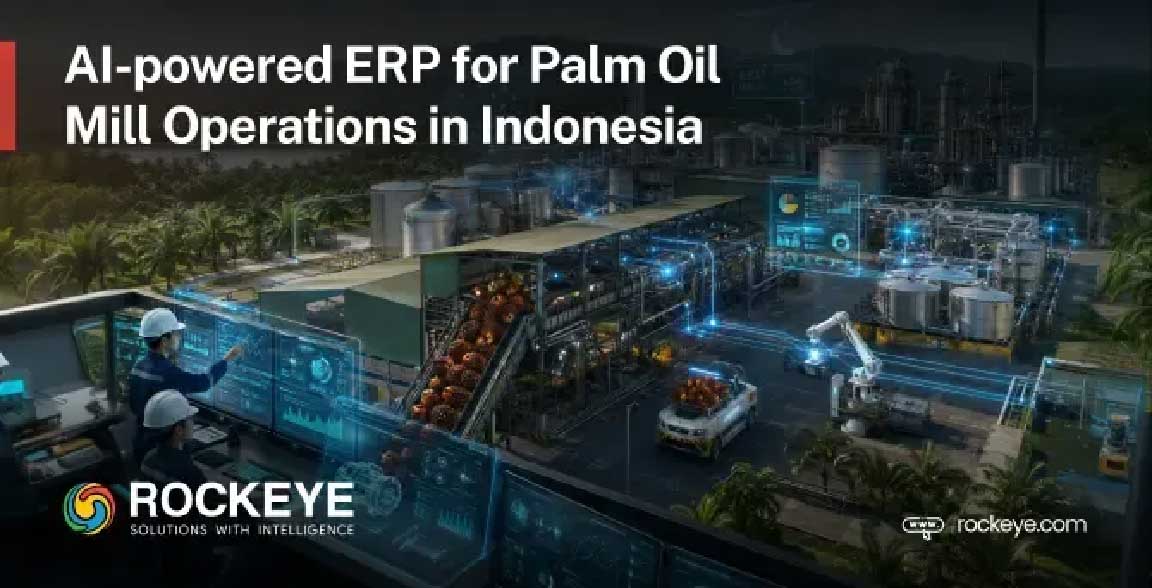
Indonesia is the biggest producer of palm oil in the world. The country provides a considerable part of the global demand. As the industry is constantly expanding, there appears to be a need for improvement of efficiency, quality standards, cost management, and sustainability in palm oil operations.
Conventional management tools and disconnected software systems are not enough anymore.
That is why AI-powered ERP for palm oil mills is becoming so popular. Combining enterprise resource planning features with artificial intelligence gives enterprises full visibility into operations, automation of routine tasks, and the possibility of making more efficient decisions based on data analysis.
From sourcing and mills operations to refining, inventories, and distribution, AI-enabled ERP systems make Indonesian palm oil companies more efficient and competitive.
Palm oil production includes several interconnected operations. Fruit bunches should be processed immediately; the extraction rate should be constantly monitored; there should be regular maintenance of machines; refinery operations have to be conducted following strict standards.
However, many palm oil mills and refineries use spreadsheets and disconnected systems. As a result, companies have problems such as:
When rivals multiply and profits shrink, firms turn to tools that tie work together with clear guidance. Because they link teams and tasks through one shared system, artificial intelligence built into business software solves such pressures.
A company currently runs its finances, purchases, inventory, production, maintenance, and staff operations through an ERP setup. With artificial intelligence built into that system, performance jumps sharply - decisions speed up, patterns emerge clearly, and effort drops noticeably.
Artificial Intelligence does not just store information; it looks at what's happening and finds patterns that help the people in charge make decisions faster and make better choices.
For palm oil mills, this can lead to:
AI algorithms can examine historical production data, seasonal trends, and raw material availability to create better production schedules. This helps mills optimize capacity use, reduce bottlenecks, and make sure that processing resources are allocated effectively.
Managers no longer have to wait for end-of-day reports. AI-powered dashboards offer real-time insights into:
Having runtime information at one’s fingertips allows multiple teams to assist immediately when issues come up.
Starting with people, machines, or supplies often drains budgets fast. When AI spots weak points, it quietly nudges adjustments into place. Steady output stays possible even as excess slips away.
One of the valuable uses of Artificial Intelligence in industrial operations is predictive maintenance. Palm oil mills rely heavily on machines like sterilizers, digesters, presses, boilers, and turbines. When these machines break down unexpectedly, it can lead to downtime and production losses.
There are two types of maintenance:
Neither of these approaches is perfect.
With maintenance, artificial intelligence continuously analyzes data from machine sensors and operational systems. It can identify signs of machine failure and recommend maintenance before a breakdown occurs.
The benefits of maintenance are:
Palm oil work in Indonesia runs better when machines get fixed before they break. Fixing things early keeps profits steady by avoiding downtime. Machines last longer if problems are caught ahead of time. Staying ahead means less money lost to delays. Running smoothly comes from noticing signs early. Early alerts help avoid big repairs later on.
Processing fresh fruit bunches keeps mills busy, whereas refineries deal with tougher daily hurdles.
Refineries must manage:
Software made for today’s palm oil refineries brings everything together in one place. This kind of system smooths out operations by linking key tasks behind a single interface. Instead of scattered tools, teams find clarity through unified control. Where steps once dragged, they now move with less resistance. A different rhythm takes hold when data flows without breaks. Efficiency grows not from speed alone but from better connections between actions.
Out of nowhere, patterns in output begin revealing hidden flaws when smart systems step in. These tools spot irregularities before they grow, simply by watching how things flow. Instead of guessing, refineries adjust routines using live feedback from machines that learn. Efficiency rises because decisions shift based on what actually happens, not old assumptions.
Take pattern spotting by AI - spots inefficiencies early, tweaks procedures ahead of time. That way, problems never reach the output stage. Fewer mistakes mean less material tossed out, and every batch coming out nearly identical.
Out there where palm oil moves fast, keeping track of what you’ve got makes all the difference. Stock levels for raw fruit bunches sit alongside half-made batches, final outputs, replacement tools, and daily-use supplies - everything must be seen clearly. With smart software built on artificial intelligence, updates happen now, not later, showing exactly where things stand across warehouses and lines. Predictions about future needs shape up automatically, guided by live data flows instead of guesses.
By analyzing historical consumption patterns and production plans, AI can:
One platform moving data helps teams in different places work together better. Businesses running mills might sync up better now with those handling refining, storage, or shipping. How things move between these groups could actually start flowing smoother than before. Teams spread across different spots may find it easier to stay on the same page. Working apart often caused hiccups - maybe that changes a bit now. The whole chain, from raw material to delivery, stands to gain if everyone lines up their efforts.
Every day, palm oil firms collect tons of data just by running their operations. When proper tools are missing, that data sits unused. With AI-driven ERP platforms, what was once raw numbers turns into clear insights for decision making.
From the front desk to the boardroom, live views unfold on screens showing what matters. Behind every update, a stream of decisions takes shape quietly. Where numbers meet real time, understanding grows without noise. Across departments, clarity arrives through windows into performance. Not just data, but meaning comes clear when patterns speak louder than totals.
When facts are clear, choices follow without guesswork. What happens next depends on data that arrives when it matters. Clear sight comes not from hunches but from what is known right now. Action steps forward because details are real and fresh.
Better foresight shapes how resources get set aside. Choices made today carry further because of it. Down the road, directions feel less like guesses.
These days, the world’s palm oil business pays close attention to lasting environmental impact. More than before, people who buy it, officials watching over it, and everyday customers want clear information plus proof of ethical supply chains.
From tracking daily tasks to logging financial moves, ERP setups keep everything on file. A single platform stores what happens across departments. This paperless trail shows how work gets done. Rules are followed because every step leaves a mark. Information stays visible when checks happen later. Operations stay within boundaries through consistent recording. Following standards becomes simpler with each saved detail.
AI can further support sustainability initiatives by:
When Indonesian palm oil makers supply global buyers, stronger systems help meet rules while building buyer confidence. Their ability to follow standards more reliably tends to support smoother trade relationships. Meeting requirements consistently often leads to steadier demand. Trust grows when proof of responsible practices becomes easier to show. Clear processes sometimes make audits less disruptive. Confidence on the buyer’s side usually follows transparency on the producer’s. Reliable operations quietly signal dependability over time.
Generic ERP is not a one-stop solution for palm oil businesses. Operations that are mill and refinery specific require industry-specific feature coverage for the additional challenges inherent to mill-and-refinery-based operations.
ROCKEYE is a cloud ERP platform for process industries with integrated business management, real-time visibility, intelligent automation, and AI optimization. It integrates the important business functions in one system, like production, procurement, inventory management, maintenance, finance, transportation, warehouses, etc.
For palm oil operations, ROCKEYE helps organizations:
ROCKEYE comes with intelligence, real-time reporting, workflow automation, and integration features that enhance productivity while minimizing manual processes. Its ERP solutions provide operational efficiencies, enhance productivity, and promote data-driven decisions in industrial operations.
Indonesian palm oil mills and refineries interested in modernizing operations can get the visibility and control needed to drive transformational growth and long-term competitiveness with an industry-focused ERP platform like ROCKEYE.
The transition of the Indonesian palm oil industry to a digital transformation stage. Those companies that are sticking to manually driven processes or entirely disconnected systems may find it increasingly hard to fulfill the growing operational demands and market expectations.
The AI-powered ERP for palm oil mills connects businesses with operations, improves organizational efficiencies, cuts costs, and helps you to make better decisions using real-time data.
From production planning and inventory management to palm oil refinery management software capabilities, AI-enabled ERP solutions are helping mills and refineries improve their performance with better operational excellence while being driven by predictive maintenance.
As the industry transforms, companies adopting intelligent ERP technology will be more equipped to enhance productivity, comply with regulations, and remain competitive in domestic and foreign markets.


Discover our other works at the following sites:
Danetsoft is a global web agency headquartered in Indonesia, specializing in web development, managed hosting, and web publishing platform.


 [email protected]
 Magelang, Central Java
 © 2026 Danetsoft. Powered by HTMLy