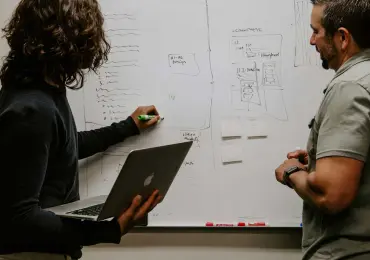
 Photo by Shoper on Unsplash
In the early days of an online store, packing orders was almost fun. Each sale is a small win, and boxing it up feels like proof the whole thing is working. Then the orders keep coming. What used to take an hour on a Sunday afternoon now eats the entire weekend, and every jump in sales brings a knot of dread instead of a celebration. If that is where you are, the business is doing something right. The problem is no longer demand. It is that ecommerce fulfillment has quietly become a whole second job, and it is the one nobody warned you about.
The good news is that this is a solvable operations problem with a clear path through it. Scaling fulfillment is not about working more nights. It is about building a setup that ships more orders without demanding more of your time. Here is how to think about that transition, drawn from years of helping growing businesses make it.
The clearest sign that you have outgrown your current setup is not a number on a dashboard. It is a feeling. The work has started to control your schedule instead of the other way around. A few specific signals tend to show up together:
You are packing orders late into the night or across the entire weekend.
Mistakes are creeping in, like the wrong item shipped or an order missed, usually because you are rushing.
A big sales day fills you with dread rather than excitement.
Taking a single day off means coming back to a pile of unshipped orders.
None of these mean you are doing anything wrong. They mean your volume has outgrown a setup that was built for a smaller version of your business.
The instinct when fulfillment gets painful is to jump straight to a bigger space or an outside provider. Sometimes that is the right move. Often, though, the weekend problem is a process problem wearing a space problem costume, and fixing the process is faster and cheaper.
Before anything else, get the basics tight. Know exactly what inventory you have and where it sits by using an inventory management system instead of relying on manual spreadsheets. Set up one dedicated packing station with everything you need within reach, so you are not walking back and forth for tape and labels. Give every product a fixed home, and put your bestsellers in the easiest spots to grab. Follow the same steps for every order instead of improvising each time. A surprising number of sellers discover that a disciplined process buys them another year of growth before they need anything bigger.
You cannot make a good decision about the next stage without a clear picture of where you actually are. Before you weigh your options, get honest about a few things: how many orders you ship on an average day and on your busiest one, how fast that volume is climbing, how many items go into a typical order, and how many different products you carry. Then add the number most founders ignore, which is what an hour of your own time is genuinely worth to the business.
Those numbers turn a vague sense of overwhelm into a decision you can actually make. They tell you whether you are close to a ceiling or years away from one, and they frame the choice ahead.
Once you have truly outgrown doing it all yourself, there are three real ways forward. Most businesses use one for a while, then shift, and many end up blending them.
The first path is to keep fulfillment in house and do it properly. That means moving into a dedicated space, adding real shelving and racking, bringing on help, and systematizing the whole flow. This path fits businesses that want control over the customer experience and have the volume to justify the investment.
The second path is to hand fulfillment to an outside provider, often called a third party logistics partner or 3PL, that stores your stock and ships your orders for you. This frees up enormous time and space and lets you focus on product and marketing. The downsides are cost, less direct control over how orders go out, and the work of integrating their systems with your store.
The third path is a blend, and it is the most underrated of the three. Many growing brands keep the complex or valuable orders in house, such as custom, fragile, or subscription items, and send the bulk of simple, everyday orders to an outside provider. Done well, a hybrid gives you control where it matters and relief where it counts.
If you keep fulfillment in house, the setup matters far more than most sellers expect, and it is the single biggest lever on whether your weekends come back. The goal is a space where a small team can ship a large volume without wasted motion.
That is where it helps to work with people who build professional warehouse solutions for a living. The right layout, shelving, and racking are not just about fitting more product into a room. They are about shortening the path an order travels from shelf to box, which is what actually determines how many orders one person can ship in an hour. Getting the space designed around the work, rather than around whatever furniture you happen to have on hand, is often the difference between a setup that scales and one that stalls.
The season that breaks a growing store is almost never the average week. It is the holiday rush or the viral moment, when order volume jumps and the setup that felt fine suddenly cannot keep up. The businesses that protect their weekends plan for that peak in advance. Look at your history to anticipate when the spikes land, stock up on bestsellers early, and make sure your space, your process, and your help can absorb the surge before it arrives. Preparing for the busiest day is what keeps the busiest day from becoming a crisis.
Scaling ecommerce fulfillment is really about one thing: building an operation that runs without you personally touching every order. Whether that means a tighter process, a properly designed space, an outside partner, or some mix of all three, the goal is the same. The founders who keep growing are the ones who stop treating fulfillment as a chore to survive and start treating it as a system to design. Build that system, and you get to scale the business and keep your life at the same time.


Discover our other works at the following sites:
Danetsoft is a global web agency headquartered in Indonesia, specializing in web development, managed hosting, and web publishing platform.


 [email protected]
 Magelang, Central Java
 © 2026 Danetsoft. Powered by HTMLy