Your website should bring in great clients, not steal billable hours.
Most “best builder” lists gush over templates and AI copy, yet gloss over portal security, FTC Safeguards duties, and sneaky add-on costs. We looked closer.
We scored each builder against ten accountant-focused criteria, then matched each winner to the job it does best.
Quick reminder: SSL and a login page don’t make your firm compliant. Use the site to attract prospects; move tax documents through a purpose-built client portal.

Need the quick answer? Scan this table, match the “Best for” column to your goal, and note the real-world plan and portal path before you dive into the deeper reviews.
| Builder | Best for | Score* | Real-world plan | Portal path | Main caution |
|---|---|---|---|---|---|
| Spark | Selling courses, memberships, simple paid tools | 56.6 | Starter $25 / mo + 10 percent sales fee | Customer accounts; no tax portal | Not a tax-document portal |
| Wix | Overall DIY public site | 83.5 | Core $29 / mo (annual) | Link to external secure portal | Add-on costs |
| Duda | Multi-location governance | 80.9 | Basic from $19 / mo | External portal link | Agency layers raise TCO |
| Zoho Sites | Firms on the Zoho stack | 78.0 | Basic $8 / mo per site (annual) | External portal or Zoho Member Portal | Key features live in other Zoho apps |
| GoDaddy Website Builder (Airo) | Fast one-page launch | 76.0 | Professional $24.99 / mo (annual) | External portal link | AI credits cap monthly building |
| Squarespace | Polished brochure site | 75.7 | Basic $19 / mo (annual) + Acuity | External portal link | Acuity billed separately |
| Webflow | Designer-led custom site | 75.4 | Premium $25 / mo (annual) | External portal link | Steeper learning curve |
| Rocketspark | Xero-focused firms | 75.4 | Website Builder Pro $39 / mo (monthly) | External portal link | Confirm what the Xero integration syncs |
| Hostinger Website Builder | Low upfront budget | 73.4 | Premium $1.99 / mo (48-month prepay) | External portal link | Renews at $10.99 / mo |
| GetNetSet | Hands-off managed site | 73.1 | Website & File Portal $79.99 / mo | Built-in secure file portal | HTTPS costs extra ($81.40 / yr) |
| TaxDome | Website + practice management | 71.7 | 150-client plan $1,500 / yr | Native client portal | Expensive if you only need a site |
| B12 | Website + client engagement | 71.3 | Website $24 / mo; Website + Client Engagement $78 / mo | Built-in client tools | Portal tools only on the higher plan |
| CPA Site Solutions | Accounting content library | 66.5 | Silver $90 to Diamond $166.50 | Built-in secure firm portal | HTTPS extra below Diamond |
*Score out of 100 using the ten-factor rubric explained next.
Every DIY builder keeps tax files outside the website. That separation protects sensitive data and keeps pages fast. Managed platforms such as GetNetSet or TaxDome bundle a portal but sacrifice some flexibility for convenience; weigh that trade-off as we examine each pick.
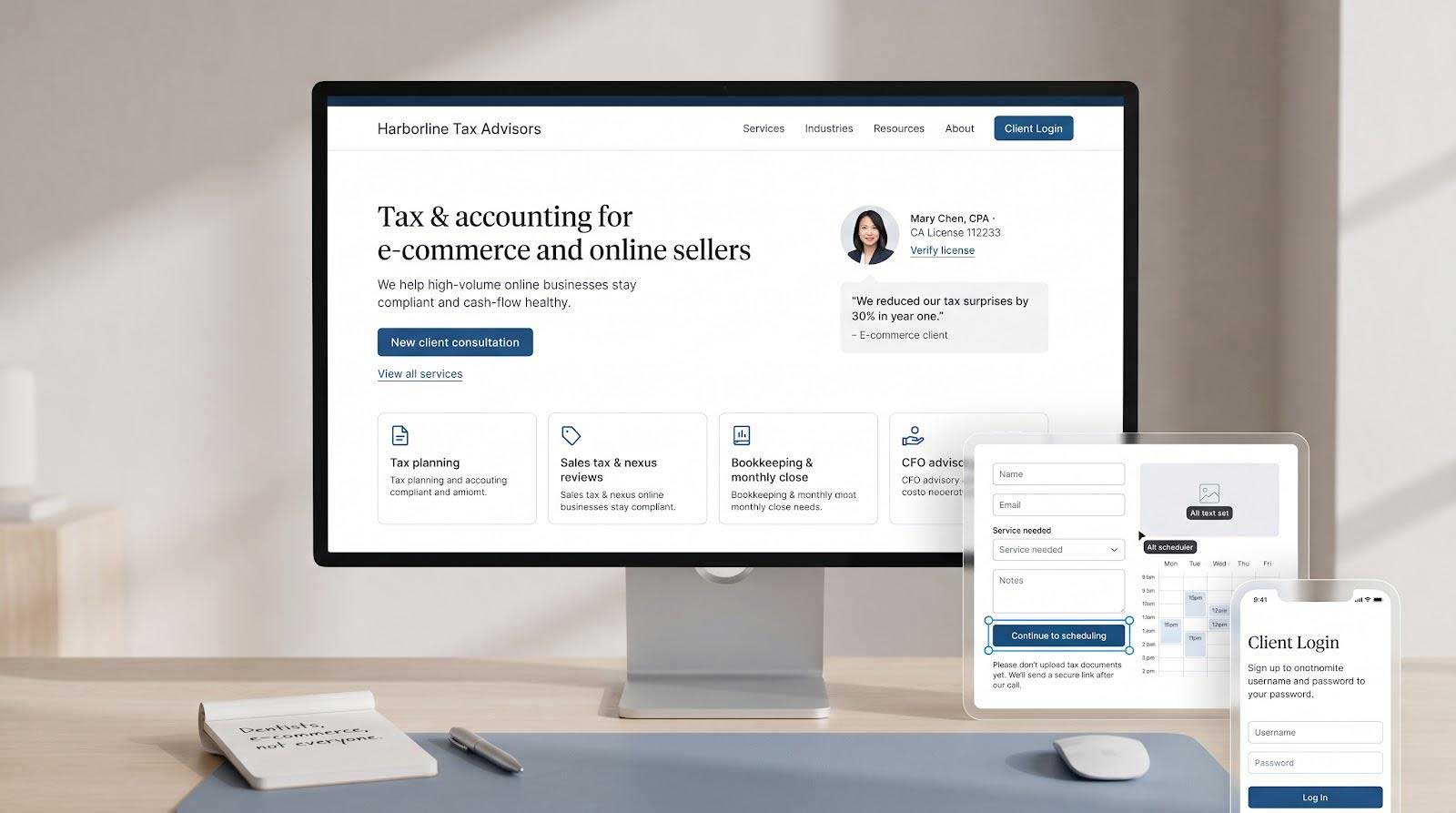
Your homepage has only a few seconds to prove relevance, which is enough time for a plain headline that states whom you help and how. Follow with one sentence of support, then send visitors to dedicated pages for each flagship service. Depth signals expertise to search engines and reassures prospects.
Create separate pages for each niche (“Dentists,” “E-commerce sellers”) and, when helpful, state who is not a fit. Clear boundaries save you and them time.
Show real faces next to exact credentials: “Mary Chen, CPA · CA License 112233,” with a link to the state-board lookup. Add one or two permissioned testimonials that cite measurable results, then spell out how fees work. Transparency converts skeptics faster than clever copy.
Keep the intake form lean: name, email, service need, short notes. Redirect immediately to an online scheduler (native or embedded) so a prospect can book inside two minutes. Remind them not to send W-2s yet; under the FTC Safeguards Rule you need MFA-protected storage, not a public form.
Place a “Client Login” button in the main nav and header. Link it directly to a purpose-built portal such as TaxDome, Karbon, or Client Hub, which enforce MFA and audit logs. Resist adding file uploads to a generic form because password-free links invite breaches.
Google’s AI Overviews still rely on the basics: crawlable text, logical headings, internal links, and valid schema. ADA guidance treats your site as a public accommodation, so keyboard navigation, alt text, and clear focus states remain non-negotiable. Aim for WCAG 2.2 Level AA (now ISO/IEC 40500:2025).
Stamp every tax article with “last reviewed” and schedule re-checks; fresh, accurate content outperforms dated thresholds when laws change.
Picking a platform is more than choosing a pretty template, so we built a ten-factor rubric and applied it evenly to every contender.
| Factor | Weight |
|---|---|
| Security & compliance evidence | 18 % |
| Accounting workflow & integrations | 16 % |
| Ease of day-to-day editing | 14 % |
| SEO & content governance | 10 % |
| Accessibility tooling | 8 % |
| Real-world performance (field Core Web Vitals) | 8 % |
| Pricing transparency & total cost | 10 % |
| Design flexibility | 6 % |
| Scalability & portability | 5 % |
| Support quality | 5 % |
Each factor earns up to five points. We multiply that raw score by its weight, then add the ten results for a clean 100-point total.
All figures come from public documentation and vendor pricing pages. We did not run paid-plan trials; if a feature appeared only behind a credit-card wall, it did not influence the score. That discipline keeps the playing field level and the rankings meaningful for your next move.
Below you’ll find a short profile for each platform: why it shines, where it stumbles, and which firm type gains the most. Scan for the scenario that matches your bottleneck, then dive into the details.
Picture a tax pro launching a “Quarterly Cash-Flow Bootcamp” or a paid compliance-alert newsletter; that scenario is where Spark excels.
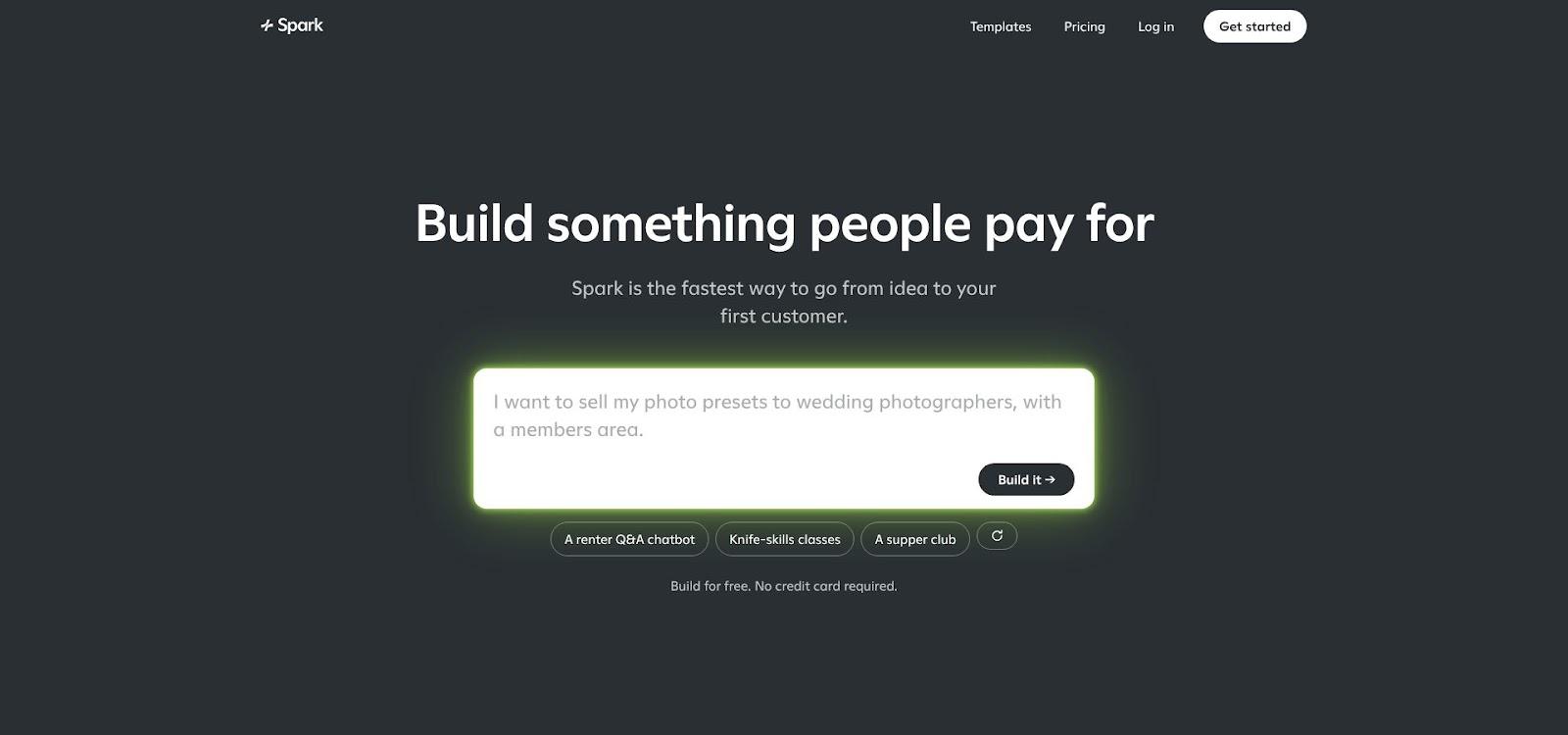 Spark website builder homepage for accountants selling courses and memberships.
Spark turns a plain-language description into the apps and pages you need, with sign-in, customer accounts, and payments built in, and hosts the result. The Free plan lets you build and publish a site on a spark.site address with a Built with Spark badge; paid tiers add payments, a custom domain, and badge removal.
For solo advisors who prize speed over granular design, avoiding plugin searches and cart configuration saves time. Spark also researches your market, writes a marketing plan with you, and helps with newsletters and analytics as you grow.
Caveats: Spark is built for selling products, courses, and memberships, not for exchanging tax documents. Treat it as a storefront for digital products and link clients to a separate, compliant portal for tax files.
Wix pairs depth with approachability. Spin up a branded site in an afternoon, then tune titles, redirects, and schema without touching code. The Core plan ($29 per month, billed yearly) adds online payments, scheduling and services, and up to five site collaborators.
For security, ask Wix for its current attestation reports before you add it to the vendor list in your Written Information Security Plan, and send tax files through a dedicated portal.
Day-to-day upkeep stays light, with built-in marketing and SEO tools on every plan.
Mind the extras: a branded email address is a separate Google Workspace purchase, and more storage or collaborators means a higher plan. For most DIY firms seeking control without maintenance headaches, Wix delivers the right mix of speed, security, and polish.
Running three offices or partnering with an outside marketing agency? Duda scales to that level.
Multi-site management is the headline: client management invites people with role-based permissions, team collaboration lets staff work side by side, and platform automation handles site building and management at scale. A White Label plan lets an agency make Duda's platform its own.
For security, request Duda’s current attestation reports and confirm its admin login options against your vendor-review checklist before rollout.
Trade-offs: the platform assumes agency-level needs. One-site firms still navigate agency-style dashboards, and while plans start at $19 a month on Basic, larger teams step up to the Team, Agency, or White Label plans.
Choose Duda when several stakeholders edit the site each week and brand consistency outweighs the lowest cost; solo practices can pick a lighter tool.
If your practice already runs on Zoho CRM, Books, and Bookings, Zoho Sites fits as another module, not a new vendor to vet.
The builder collects form leads straight into Zoho CRM and includes a Member Portal for members-only content, reducing duplicate data entry during peak season.
Pricing Basic costs $8 per site per month and Plus $15, both billed annually; check Zoho’s pricing page for the page and form limits of each tier.
Security If Zoho is already on your WISP vendor list, Sites adds no new vendor; confirm that its current attestations cover Sites.
Watch-outs
For firms already deep in the Zoho ecosystem, Sites is the simplest way to keep your website and CRM in one ecosystem while avoiding another integration project.
Need a credible site online today? GoDaddy Website Builder (Airo AI Builder) turns a plain-language description of your firm into pages, starter copy, and images in minutes. Refine the layout and wording yourself or with AI, then publish.
The Professional plan ($24.99 per month, billed annually) adds appointment bookings and online payments and deposits, so prospects can schedule and pre-pay without back-and-forth email.
Security: every paid plan includes SSL and DDoS protection, and you can invite collaborators; you will still link to a separate client portal for tax files.
Watch-outs
Choose GoDaddy when launch speed and low cognitive load matter more than deep design control.
Squarespace excels at aesthetics. Templates feel like high-end magazine layouts, and its AI website builder assembles on-brand pages you can refine as you swap colors or photography. If first impressions drive your deal flow, that edge counts.
Pricing Basic plan $19 / mo (billed annually) includes a free custom domain for the first year (it then renews at the standard rate), two contributors, and built-in SEO. Most firms embed Acuity Scheduling (from $16 / mo) so prospects can book without back-and-forth email; Acuity bills separately.
Security Ask for Squarespace’s current security documentation before adding it to your WISP. Collect only low-risk data or connect a dedicated portal.
Portability Check what Squarespace’s export includes before you commit; plan to stay long-term or budget developer hours for a manual rebuild.
Choose Squarespace when brand polish is non-negotiable and you are comfortable linking tax files elsewhere.
Webflow offers precise visual control without forcing you to write code. The Premium plan ($25 / mo, billed yearly) unlocks the CMS so you can template service pages, author bios, and niche hubs as the firm grows.
Security Request Webflow’s current attestation reports for your WISP, and still link a separate client portal for tax files.
Budget note: Site plans are priced per site; Workspace plans for your team are a separate subscription.
Rocketspark operates like a boutique studio within a builder. Every plan includes phone and email support, which matters when deadlines press.
Rocketspark lists a Xero integration; confirm what it syncs before you rely on it. The Website Builder Pro plan at $39 / mo (billed monthly) adds Flint AI page and blog writing, 200 forms, and file uploads in forms.
Send a vendor questionnaire before storing sensitive uploads, and plan a manual WCAG sweep.
Commit to four years and the Premium plan costs $1.99 per month, paid upfront ($95.52 for 48 months), with a custom domain free for the first year. Renewal rises to $10.99 per month, so run a five-year total-cost check.
The AI builder drafts pages from a short description, yet you still need an external portal for W-2s.
GetNetSet is like hiring a webmaster who speaks debits and credits. For $79.99 per month the team builds and hosts a fully managed site, handles security updates and backups, sends an automated monthly client newsletter, and answers support by phone and email. You never debug a theme during filing season.
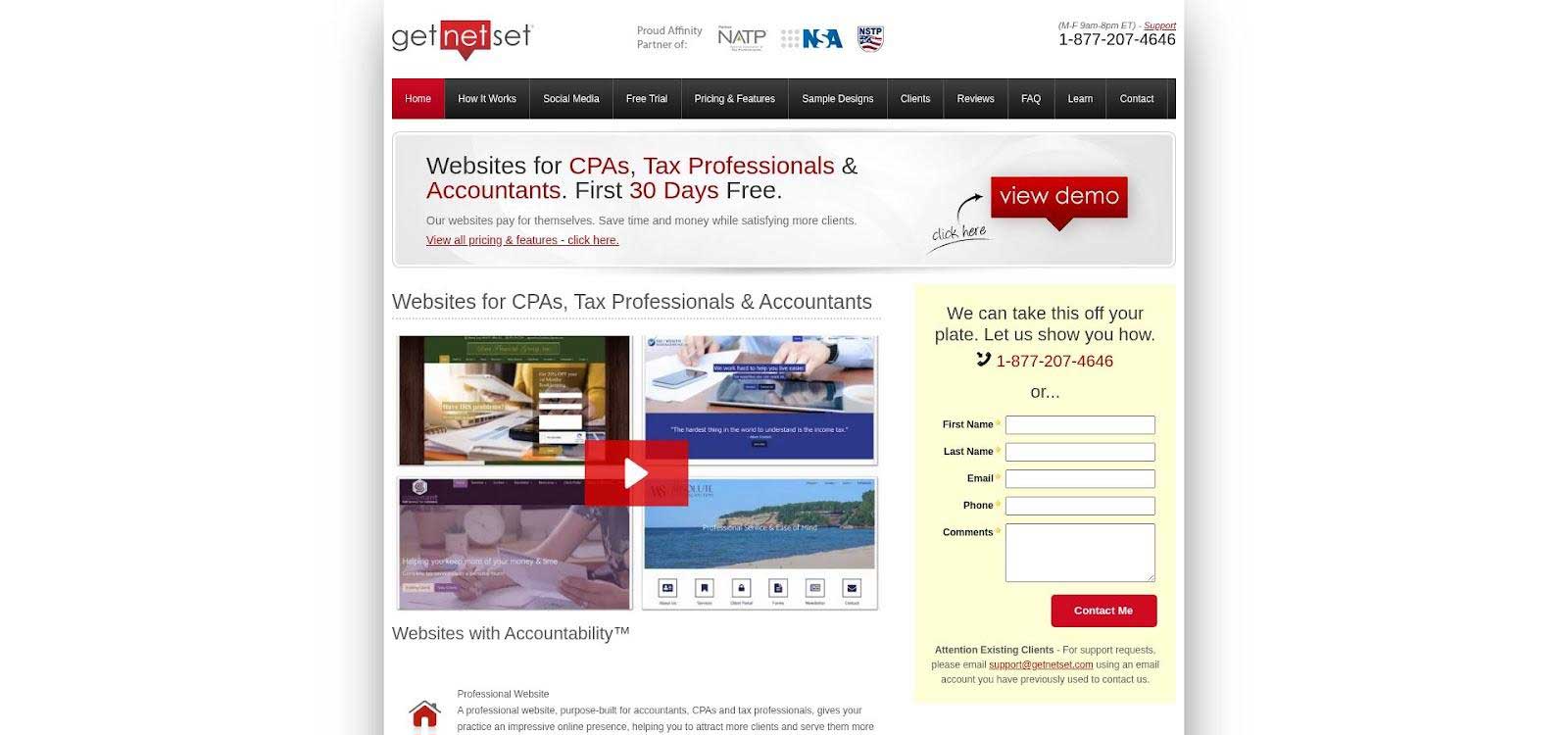 GetNetSet managed accountant website and secure file portal service.
Content & portal More than 100 tax and financial calculators, tax due dates, and the monthly newsletter keep the site fresh, while the built-in secure client portal lets clients upload documents without filling your inbox.
Pricing caveats A managed SSL certificate (HTTPS) is optional at $81.40 per year; budget for it, and request today’s rate, inclusions, and renewal schedule in writing.
Technical notes
Choose GetNetSet when turnkey content and maintenance matter more than design freedom and you are willing to pay a premium to keep upkeep off your desk.
TaxDome bundles website, secure portal, CRM, workflows, and billing. U.S./CA pricing is $1,500 per year for up to 150 active clients and 20 team members.
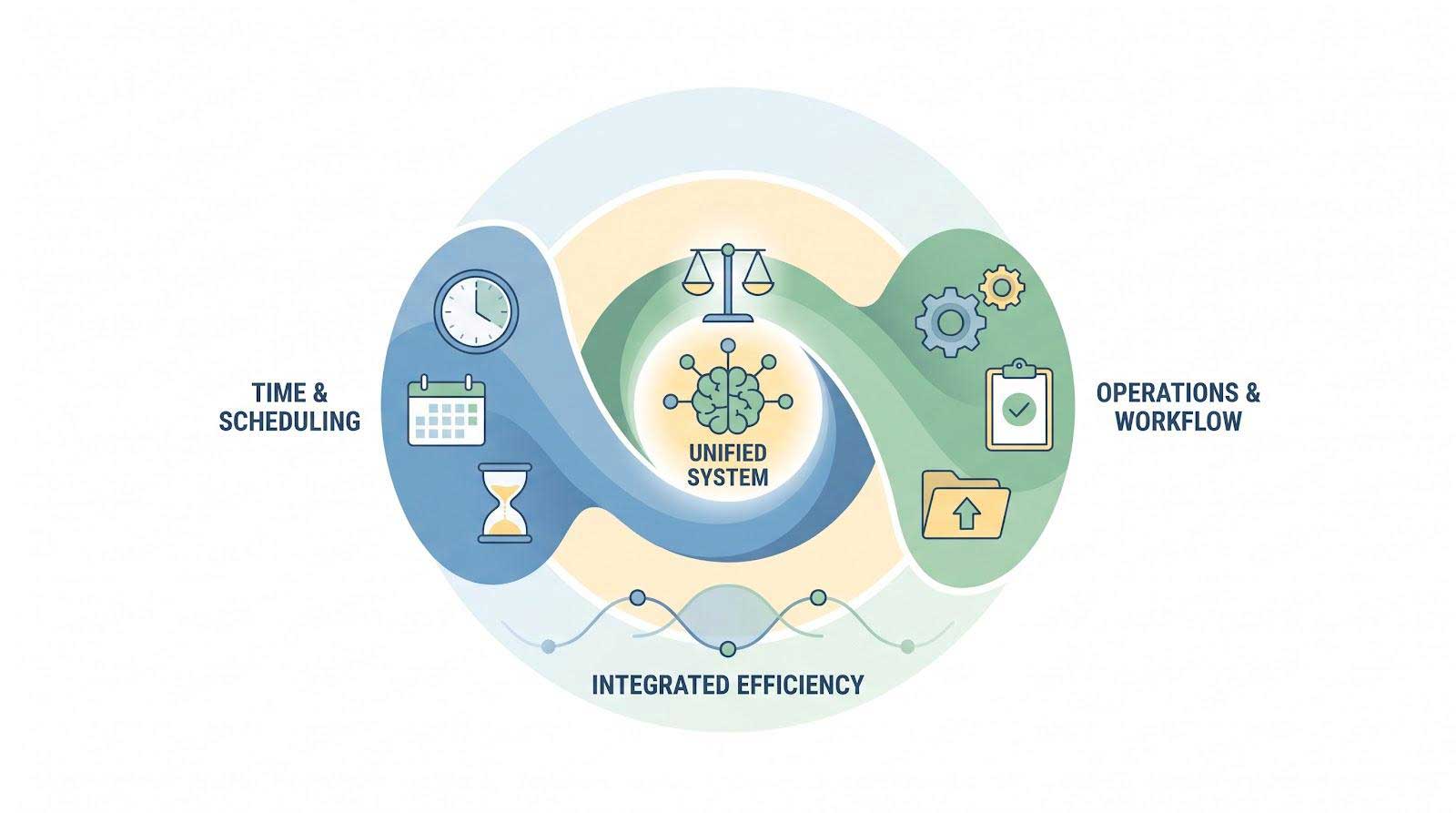
TaxDome states it holds a SOC 2 Type II report; confirm its login and permission settings fit your WISP. The cost and learning curve matter only if you use the entire feature set.
Choose TaxDome when you want the website to serve as the front door to your whole client experience: marketing, onboarding, and ongoing work. Otherwise, pair a lighter builder with a standalone portal to keep overhead lean.
The Website plan costs $24 per month and puts your site on your own domain. The Website + Client Engagement plan, at $78 per month, adds client intake, file uploads, contracts and e-signatures, invoicing and payments, email marketing, and a contact manager. You can also hire designers and copywriters through B12’s Expert Marketplace for an extra charge.
B12 does not publish security attestations on its pricing page, so firms with strict WISPs should request documentation, and test accessibility before launch.
The appeal is content: 3,000+ pages of guides, 50+ financial calculators, and a monthly client newsletter written by CPAs, plus a secure firm portal for file exchange. Published plans run from Silver at $90 to Diamond at $166.50, with portal storage rising from 5 GB to unlimited.
An HTTPS (SSL) certificate is listed with Diamond; on lower plans, HTTPS website security is a $9.99 per month add-on. Ask for current security evidence before storing sensitive files. Select this service when ready-made content matters more than design freedom.
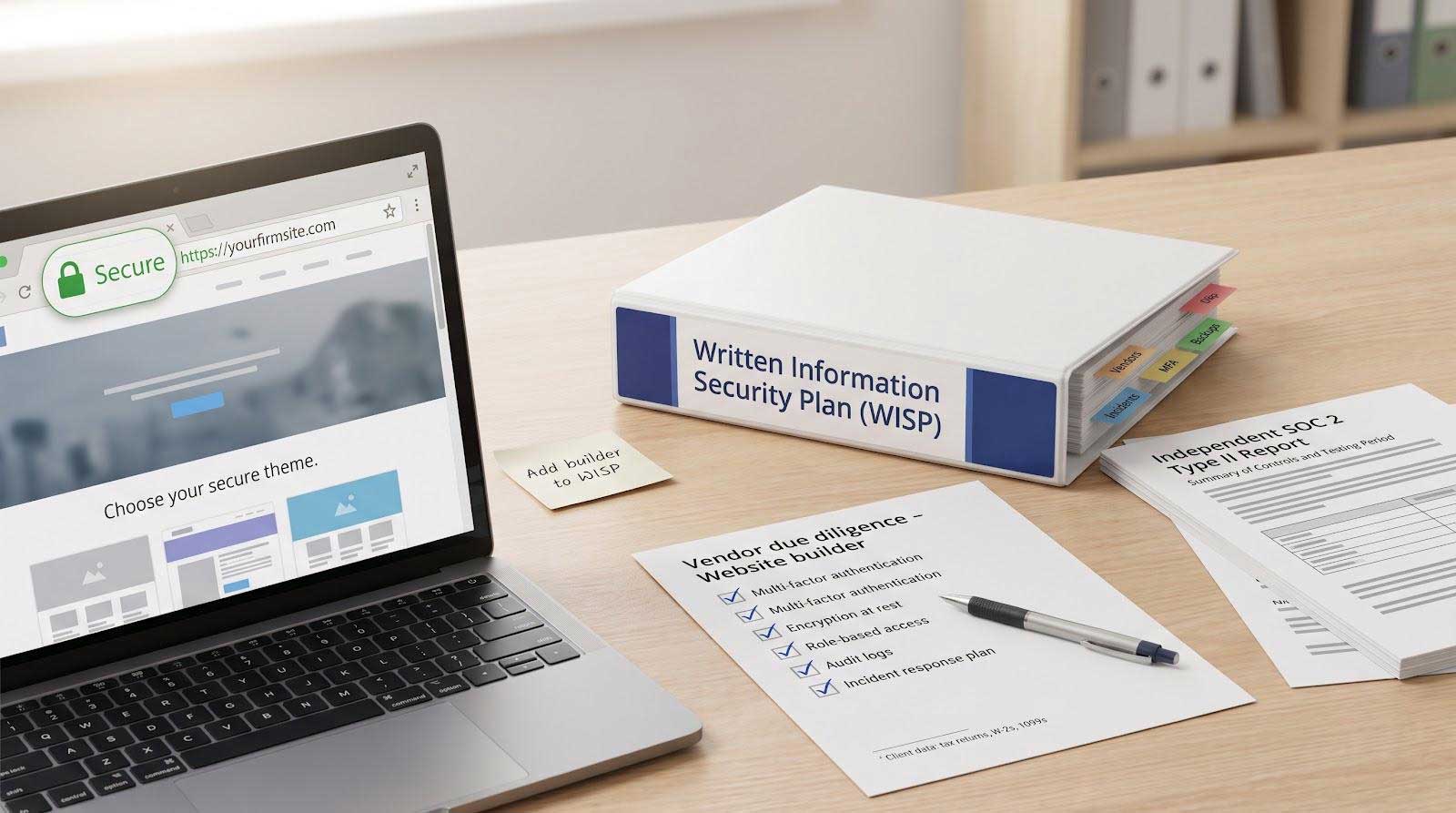
Buying a “secure” theme does not satisfy compliance. The FTC Safeguards Rule and IRS Publication 4557 require a written information security plan (WISP) that covers risk assessment, multi-factor authentication, encryption, vendor oversight, and incident response.
Your WISP must document how you vet, contract, and monitor every service provider. If the builder handles contact-form data or file uploads, add it to the vendor list with the contract date, reviewed controls, and your breach-response plan. Skip this step and one stray W-2 upload can become a liability.
Proof matters. Ask the host for a current SOC 2 or ISO 27001 certificate that shows encryption at rest and in transit, role-based access, audit logs, and a list of subprocessors. A green padlock alone is not evidence.
A SOC 2 report confirms an independent CPA firm audited the vendor’s controls during a set period. Scope is everything: third-party apps, embedded schedulers, and client-side scripts may sit outside the audit.
A clean opinion does not waive your duty to configure the builder securely. Weak passwords or unused admin accounts can still sink you. Request a report dated within the past 12 months and note the renewal plan; lapsed attestations signal slipping culture.
TLS encrypts data in transit but says nothing about storage, access, or incident response. Check that the provider:
Treat TLS like a seat belt: essential but far from the whole safety system.
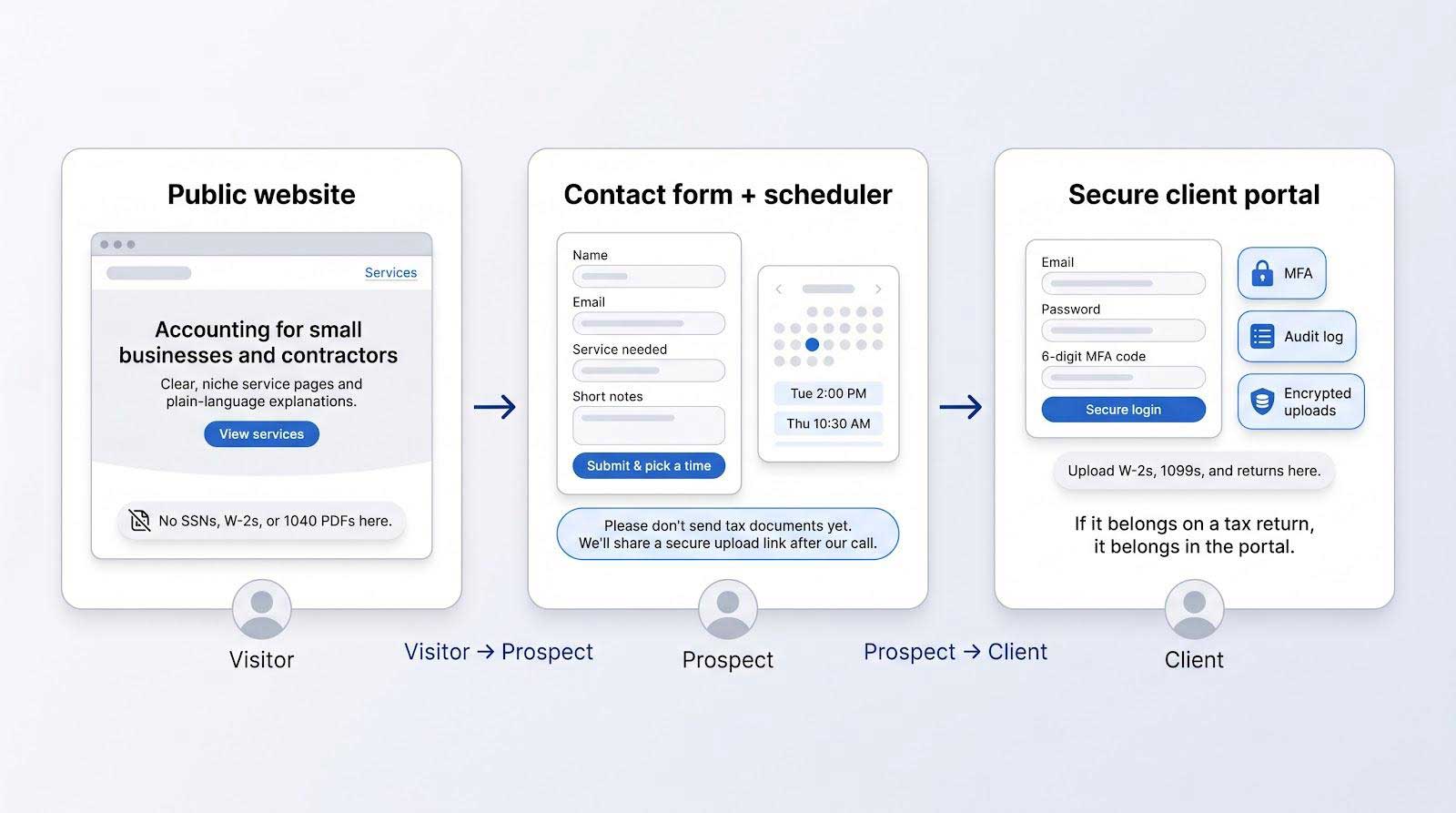
Your homepage and service pages live on the open web. Their job is to speak to a clear niche, prove expertise, and push visitors toward one action. Keep language plain, images light, and risk low; no SSNs, 1040 PDFs, or payroll exports.
Prospects need a friction-free way to raise a hand. A short form (name, email, service need) plus an instant scheduling link lets them book without back-and-forth. Add one bold note: “Please don’t send tax documents yet. We’ll share a secure upload link after our call.”
When the engagement begins, switch to a dedicated portal such as TaxDome, Karbon, or Client Hub. These tools enforce MFA, role-based access, and time-stamped activity logs, controls a website builder cannot match. Starting every file exchange in the portal protects PII under the FTC Safeguards Rule and centralizes evidence for future exams.
If the information belongs on a tax return, it belongs in the portal, not on the public site and not in an email attachment. Hold that line and your website becomes an asset, not a security risk.
Sticker prices may seem low until you add the extras that hit your credit-card bill. To compare builders fairly, tally the following for 12 months:
Sample math
| Builder | Core costs | Likely add-ons | Estimated annual total* |
|---|---|---|---|
| Wix Core | $348 plan | Domain renewal, branded email | $348 + add-ons |
| Squarespace Basic | $228 plan | Acuity Scheduling (billed separately), branded email | $228 + add-ons |
| TaxDome | $1,500 all-in | None | $1,500 |
| GetNetSet | $960 plan | Managed HTTPS $81.40 / yr | $960 + $81.40 HTTPS |
| Spark Starter | $300 plan | 10 percent of sales (variable) | $300 + sales fee |
*Public list prices; check each vendor’s pricing page before you buy. Renewal rates may differ.
Run the same sheet for your finalists. Create one column for “hard costs” and one for “time costs.” The winner often appears before you finish the math, and you avoid next year’s renewal-jump surprise.
Match the builder to the single riskiest bottleneck you face today:
| Your top need | Pick this builder | Why it fits |
|---|---|---|
| Sell courses, templates, or a paid newsletter | Spark | Payments and customer accounts come built in. |
| DIY marketing site, no developer | Wix | Balanced mix of power, price, and ease. |
| Firms already on Zoho CRM and Books | Zoho Sites | Sends website leads straight into Zoho CRM. |
| Multi-office consistency or agency control | Duda | Role-based permissions and team tools across many sites. |
| Designer-grade CMS and pixel precision | Webflow | CMS templates and full visual control. |
| Launch speed on a budget | GoDaddy Website Builder | AI drafts and publishes a mobile-friendly site fast. |
| Human support for a Xero-using firm | Rocketspark | Phone and email support on every plan, plus a Xero integration. |
| Four-year bargain pricing | Hostinger Website Builder | Lowest upfront cost; renewal jumps later. |
| Hands-off managed site + tax content | GetNetSet | Managed updates, calculators, newsletters, and portal. |
| Website + portal + workflows + billing | TaxDome | One cockpit for firms ready to consolidate tools. |
| Light portal without TaxDome pricing | B12 | Intake, uploads, e-signatures, and invoices in one dash. |
| Turnkey U.S. tax-content library | CPA Site Solutions | Deep library of pre-written guides and calculators. |
Solve that one problem first; the rest of your technology stack will fall into place.
The right website builder for an accounting firm is the one that fixes your biggest bottleneck without adding risk. Use the public site to attract and qualify prospects, a short form and scheduler to start the conversation, and a dedicated client portal for every tax document. Price each finalist over a full year, including add-ons and staff time, and check its security evidence before you add the vendor to your WISP. Do that, and your website becomes an asset rather than a liability.


Discover our other works at the following sites:
Danetsoft is a global web agency headquartered in Indonesia, specializing in web development, managed hosting, and web publishing platform.


 [email protected]
 Magelang, Central Java
© 2026 Danetsoft. Powered by HTMLy