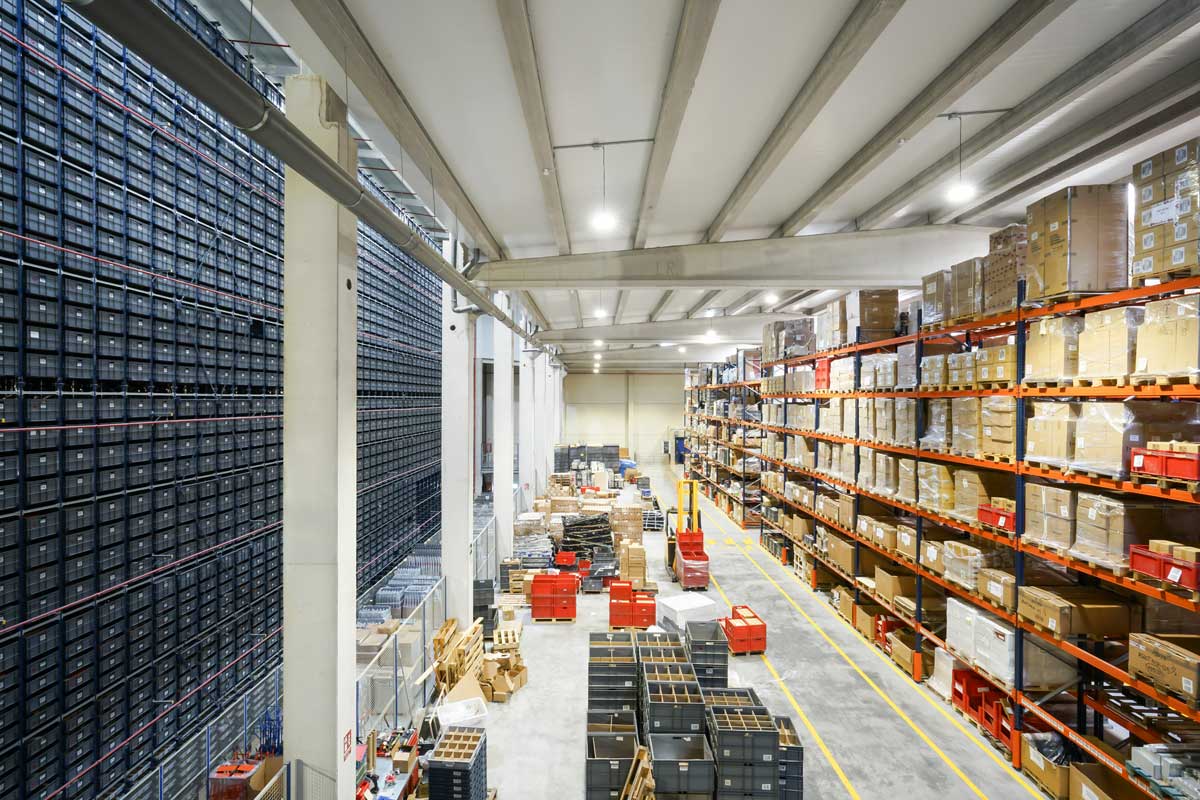
 Photo by Alberto Rodríguez on Unsplash
Running an ecommerce business means managing more variables than most operators expect. You’re sourcing inventory, managing SKUs, handling customer service, and somehow also figuring out how to get multi-item orders out the door without blowing your margins. Fulfillment, in particular, has a way of quietly eating profit until someone does the math.
The outsourcing data paint a clear picture. According to Red Stag Fulfillment’s 2025 industry analysis, 57% of ecommerce companies now outsource some or all of their fulfillment processes, and 55% plan to increase outsourcing further in the near future. Brands that grow past a certain threshold find that in-house fulfillment stops being an advantage and starts being a constraint - and kitting and assembly is often the first place that constraint shows up.
This article breaks down what kitting and assembly actually involves, what the data say about cost savings and operational efficiency, and how to decide whether outsourcing makes sense for your business right now.
Kitting and assembly are related but not identical. Kitting means combining multiple separate SKUs into a single unit that ships and tracks as one item. Assembly goes a step further - it involves building or joining components together, which can mean inserting batteries, attaching accessories, or constructing a partial product before packaging.
In practice, kitting covers a wide range of use cases: subscription boxes, tech accessory bundles, promotional gift sets, retail multipacks, and medical supply kits. The common thread is that the customer receives multiple items as a single cohesive package, not a pile of individually picked products.
Many businesses that outsource kitting and assembly services to a third-party logistics (3PL) partner find they can process more volume, faster, with fewer errors - because dedicated kitting operations run purpose-built workflows rather than bolting kitting onto a general pick-and-pack process.
The distinction matters for your SKU architecture too. A pre-kitted bundle gets its own SKU, which simplifies inventory tracking and lets you forecast demand at the kit level rather than the component level. That’s a non-trivial advantage when you’re dealing with a product mix that changes by season or campaign.
This is the section that most kitting articles skip. They describe the process well enough, but they don’t touch the actual numbers - which is where the decision gets made.
Start with time. A Journal of Survey study cited in Market.us’s 2025 kitting market report found that structured kitting layouts reduce kitting times by 36% to 49% for high-demand parts, with space utilization improved by 30% to 36%. Those aren’t marginal efficiency gains - they represent real labor hours and warehouse square footage, both of which cost money.
The efficiency story extends to digital tools. McKinsey’s research on improving warehouse operations digitally found that digital warehouse simulation tools reduced planned capital expenditure by approximately 10% and operating expenses by more than 30%. 3PL partners that invest in this kind of infrastructure pass the savings down through their pricing.
There’s also the shipping angle. Kitting multiple items into a single package cuts the number of shipments per order, reducing both carrier costs and the probability of partial deliveries. If you’re currently shipping three items from an order in separate boxes because they’re picked individually, you’re paying for two extra labels and probably more dimensional weight than you need.
The cumulative effect is significant, which explains why streamlining business operations consistently shows up as a top priority for businesses trying to protect margins as they scale. Kitting isn’t glamorous, but it’s one of the few operational levers that touches labor, shipping, packaging, and inventory all at once.
There’s a case for in-house kitting, and it’s worth acknowledging before recommending outsourcing.
If you’re running very small volumes - say, under a few hundred kits per month - the fixed overhead of a 3PL minimum commitment may not pencil out. In-house kitting also gives you direct control over quality checks and lets you experiment with bundle configurations without committing to pre-assembled stock. For businesses testing virtual kits (where items are picked separately but treated as a bundle for pricing and marketing purposes), in-house can be the lower-risk option.
But in-house kitting has real limits. The biggest ones are space, labor, and scalability. Kitting requires dedicated workspace, trained staff, and quality control protocols that go beyond standard pick-and-pack. When volumes spike - seasonal demand, a viral product, a promotional push - in-house operations often can’t absorb it without overtime, hiring, or errors.
Outsourced kitting solves the scaling problem without fixed labor costs. You pay for what you ship, not for staff downtime between peaks. Established 3PLs also bring standardized QC processes and warehouse management system (WMS) integrations that most mid-size brands don’t have in-house.
The data back this up. According to Speed Commerce’s 2025 3PL statistics report, 91% of shippers say that outsourcing to 3PLs improved supply chain effectiveness, enhanced customer satisfaction, and contributed to cost savings, with three-quarters of businesses specifically reporting a decrease in total logistics costs.
For businesses currently evaluating operational infrastructure, upgrading your business systems - including fulfillment and logistics - is often the highest-ROI change a growing SMB can make.
The decision framework is straightforward once you know what to look for.
Outsourcing makes sense if:
Monthly kit volume exceeds what your internal staff handles without overtime or errors (a common threshold is 500-1,000 kits per month, but it depends on kit complexity)
Your product mix changes frequently, making it inefficient to keep pre-assembled kits on hand
You need custom branded packaging with inserts, tissue paper, or specific folding sequences
You’re launching new bundle combinations and want someone else to absorb the setup cost and learning curve
Virtual kitting is worth knowing about as a middle-ground option. Rather than pre-assembling kits, a 3PL assigns a virtual kit SKU and picks individual components at the time of order. It’s slower per order than pre-kitting, but it lets you test bundle configurations without committing finished goods inventory. If a bundle doesn’t sell, the components go back into circulation.
The market context supports acting sooner rather than later. According to Market.us’s 2025 kitting and assembly packaging services market report, the global market was valued at $8.4 billion in 2024 and is projected to reach $17.0 billion by 2034, growing at a 7.3% CAGR. Capacity at quality 3PLs doesn’t expand overnight - brands that establish 3PL relationships early tend to get better terms and more flexibility during peak periods.
Not all 3PLs handle kitting well. Some treat it as an afterthought to their core pick-and-pack business, which means slower turnaround, less precise QC, and pricing that doesn’t reflect the actual complexity of your kits.
Here’s what to look for in a kitting-capable 3PL:
WMS integration: Your 3PL’s warehouse management system should connect to your ecommerce platform, so inventory updates automatically when kits are assembled or shipped. Manual reconciliation is a source of errors.
Quality control documentation: Ask for their QC SOPs. A serious kitting operation has documented check steps for each kit type - weight checks, visual inspection protocols, and rejection rates.
MOQ transparency: Some 3PLs require minimum order quantities for kitting runs. Make sure the minimums fit your actual volumes, not just your peak projections.
Experience with your product category: A 3PL that handles consumer electronics kitting has different capabilities than one built around apparel. Ask for category-specific references.
Scalability: Can they handle a 5x volume spike during Q4 without compromising turnaround time? Get a straight answer, not a sales pitch.
On the technology side, McKinsey’s research found efficiency gains of around 30% when digital tools are embedded in kitting and assembly workflows. Partners that have made this investment - barcode scanning, automated kit verification, real-time inventory dashboards - consistently outperform those running on clipboards and spreadsheets.
Before signing with anyone, it’s also worth understanding what your competitors are doing to see what fulfillment strategies your direct competitors are running. If they’re using outsourced kitting and you’re not, that gap shows up in their packaging consistency, shipping speeds, and unit economics.
Red flags to walk away from: vague pricing with unexplained “handling fees,” no SOPs on request, high staff turnover in the warehouse, and inability to provide a reference from a client with similar kit complexity.
Kitting isn’t a logistics detail - it’s an operational decision that affects your cost per order, your customer experience, and your ability to scale without headcount ballooning. Brands that treat it strategically tend to outcompete those that handle it as an afterthought.
The financial case for outsourcing is clear at mid-to-high volumes: lower per-unit labor costs, reduced shipping spend through consolidated packaging, and access to QC and WMS infrastructure that would cost far more to build in-house. The market is growing fast at a 7.3% CAGR through 2034, which means more brands are making this move, not fewer.
If you’re running more than a few hundred kits a month and spending real time managing the in-house process, do the math. The numbers almost always favor outsourcing before you think they do.


Discover our other works at the following sites:
Danetsoft is a global web agency headquartered in Indonesia, specializing in web development, managed hosting, and web publishing platform.


 [email protected]
 Magelang, Central Java
 © 2026 Danetsoft. Powered by HTMLy