Artists and brands need music videos that do more than decorate a song. A good workflow can connect the track, visual identity, release campaign, and social clips. These five tools help at different stages, from creating music ideas to producing visualizers and promotional videos.
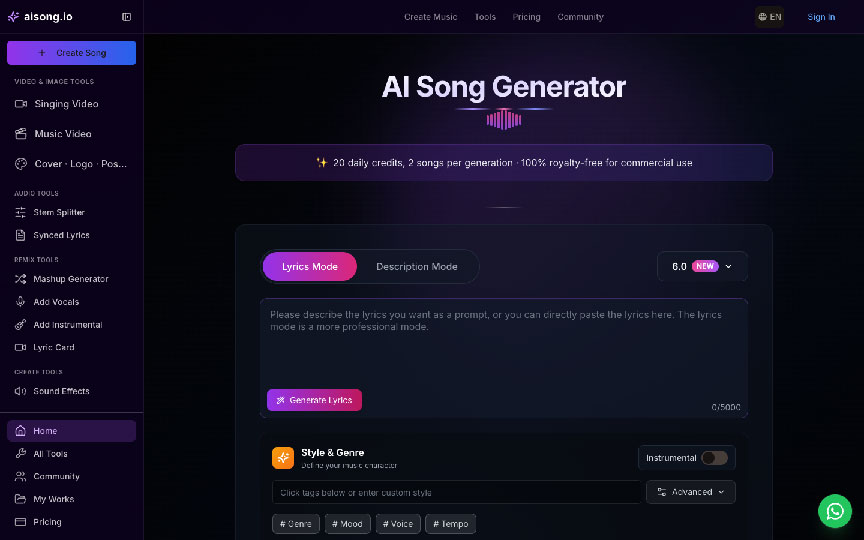
For musicians and brands, AISong can act as an AI Music Generator when the campaign needs a clear musical identity before the visual package is built. AISong is useful for artists and brands that need the music idea to carry a campaign, not simply accompany visuals. It helps shape the song concept first, so later visualizer or promo-video tools have a stronger musical foundation to build on.
This angle makes AISong especially useful when an artist or brand wants the sonic identity to lead the campaign before the visual system is chosen.
For artist releases, AISong can help test hooks, lyrical themes, and track moods before the visual package is created. For brands, it can support campaign music, product stories, and short musical assets that need to feel intentional.
This angle makes AISong especially useful when an artist or brand wants the sonic identity to lead the campaign before the visual system is chosen.
AISong is best for teams that want music to lead the creative direction. It works well when the brand or artist needs a song identity before choosing visual formats such as visualizers, social teasers, or music promo clips.
This angle makes AISong especially useful when an artist or brand wants the sonic identity to lead the campaign before the visual system is chosen.
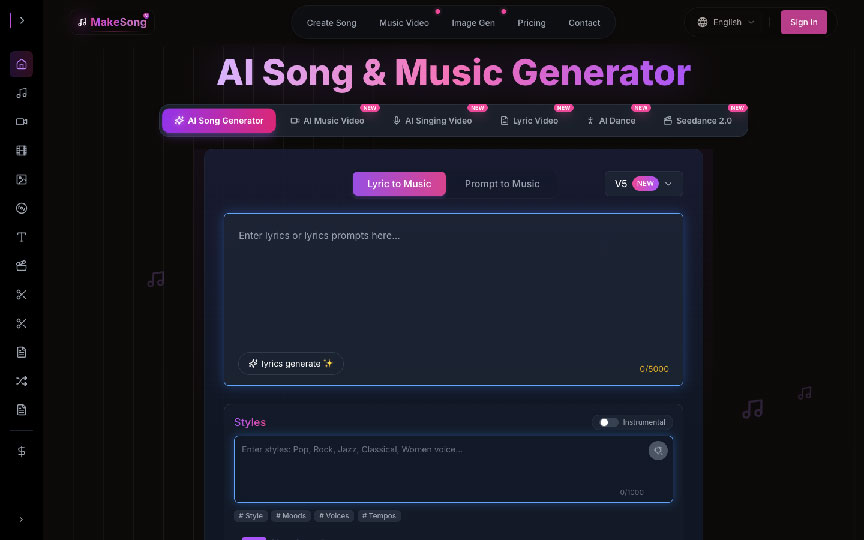
MakeSong supports release and campaign workflows where an AI Music Video Generator needs to help the song become promotional video material. MakeSong fits artists and brands that want a more direct production path from music idea to promotional content. It keeps the workflow practical: create a track direction, refine the song concept, then use it as the base for music-video assets.
This makes MakeSong more campaign-oriented in this article, because the generated music can become the starting point for visualizers, teasers, and branded release assets.
For branded campaigns, MakeSong can support jingles, creator audio, short song concepts, and video-ready music drafts. For musicians, it can help prepare early song material that later becomes visualizer content or release promotion.
This makes MakeSong more campaign-oriented in this article, because the generated music can become the starting point for visualizers, teasers, and branded release assets.
MakeSong is best for creators who need music output that can travel into marketing channels. It is a good choice when the song is not just for listening, but also needs to become a visual and social asset.
This makes MakeSong more campaign-oriented in this article, because the generated music can become the starting point for visualizers, teasers, and branded release assets.
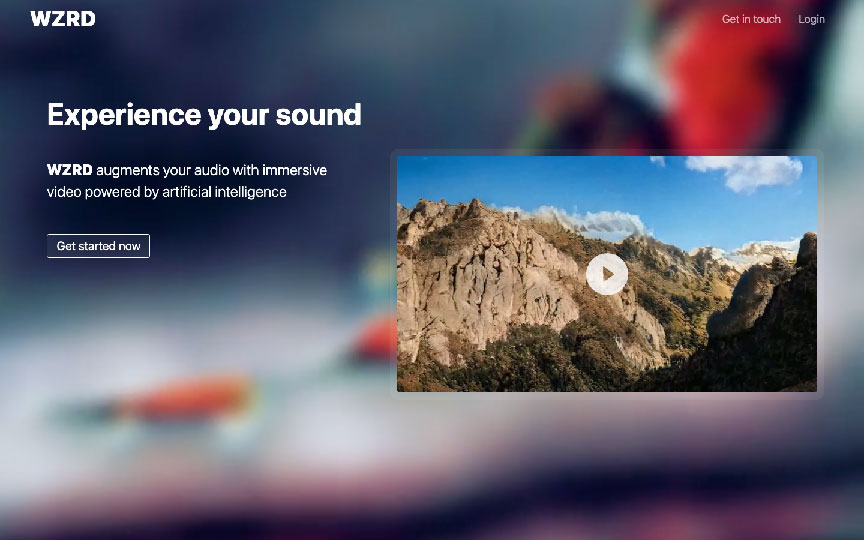
WZRD focuses on AI music visuals and audio-reactive video content. It is useful when creators want abstract or generated visuals tied to the feel of a track.
In a five-tool comparison, WZRD is most useful when the creator understands its role clearly. It should be chosen for the part of the workflow it handles best rather than treated as a complete replacement for every other music or video tool.
A user can bring in a song or audio idea, generate visuals, and use the output as a music visualizer or social video asset. WZRD is best for artists who want audio-reactive visuals without producing a traditional filmed video.
For day-to-day use, WZRD works best when it is part of a simple sequence: define the creative goal, generate or prepare the asset, review the fit, and then move the strongest version into the final content workflow.
WZRD is best for artists who want audio-reactive visuals without producing a traditional filmed video.
WZRD is especially useful for creators who want a defined role in their toolkit. It helps narrow the decision by matching the tool to a realistic song, music, or video production need.
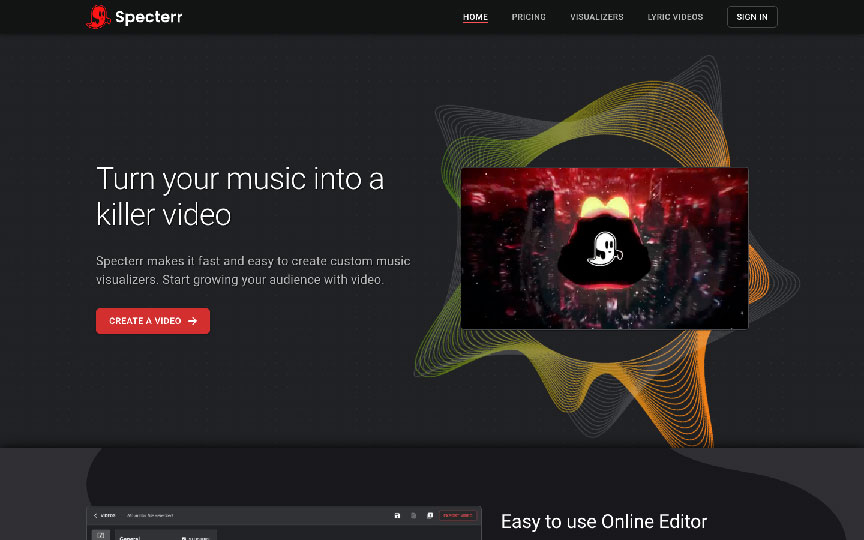
Specterr is a music visualizer platform for creating audio-reactive videos. It fits users who need quick visuals for songs, podcasts, and audio content.
In a five-tool comparison, Specterr is most useful when the creator understands its role clearly. It should be chosen for the part of the workflow it handles best rather than treated as a complete replacement for every other music or video tool.
A creator can upload or prepare audio, choose a visualizer style, and export a video for YouTube, social platforms, or audio promotion. Specterr is best for users who want straightforward audio visualizers and music promo videos.
For day-to-day use, Specterr works best when it is part of a simple sequence: define the creative goal, generate or prepare the asset, review the fit, and then move the strongest version into the final content workflow.
Specterr is best for users who want straightforward audio visualizers and music promo videos.
Specterr is especially useful for creators who want a defined role in their toolkit. It helps narrow the decision by matching the tool to a realistic song, music, or video production need.
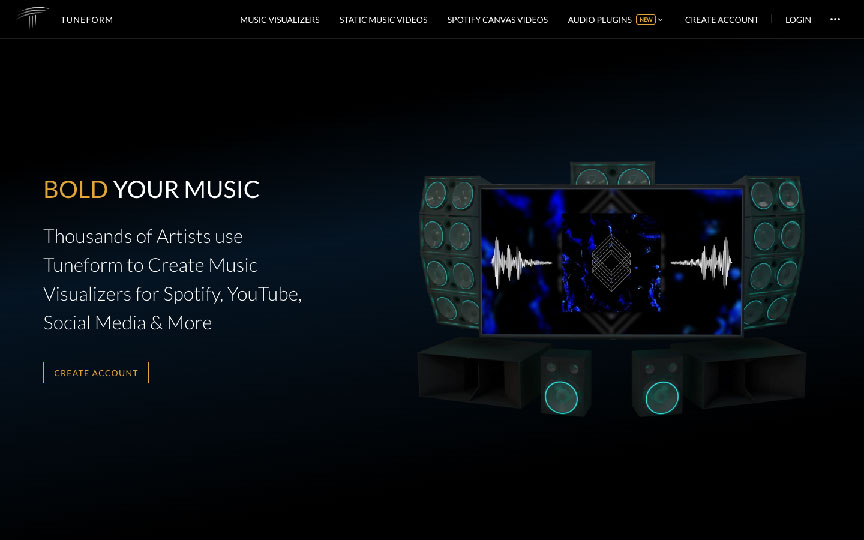
Tuneform is focused on music visualizers and artist-facing video assets. It is useful when musicians want to turn a track into a visual format for Spotify Canvas, YouTube, or social promotion.
In a five-tool comparison, Tuneform is most useful when the creator understands its role clearly. It should be chosen for the part of the workflow it handles best rather than treated as a complete replacement for every other music or video tool.
A creator can bring in a song, choose a visualizer or canvas style, and prepare a video asset that supports the release across music and social platforms. Tuneform is best for artists who need recurring visual assets around songs, releases, and music promotion.
For day-to-day use, Tuneform works best when it is part of a simple sequence: define the creative goal, generate or prepare the asset, review the fit, and then move the strongest version into the final content workflow.
Tuneform is best for artists who need recurring visual assets around songs, releases, and music promotion.
Tuneform is especially useful for creators who want a defined role in their toolkit. It helps narrow the decision by matching the tool to a realistic song, music, or video production need.
Choose AISong when the priority is fast song ideation with lyrics, vocals, and a creator-friendly flow. Choose MakeSong when you want a straightforward music creation path that can also support video-focused output. The other tools in this list are useful depending on whether you need full songs, background tracks, composition, visualizers, or music videos.
The best AI music tool depends on the creator’s next step. If the goal is to develop original song ideas quickly, AISong and MakeSong deserve early consideration because they keep the process focused on practical output. The competitor tools can then support more specialized needs such as background music, composition, video visuals, or social publishing.


Discover our other works at the following sites:
Danetsoft is a global web agency headquartered in Indonesia, specializing in web development, managed hosting, and web publishing platform.


 [email protected]
 Magelang, Central Java
 © 2026 Danetsoft. Powered by HTMLy