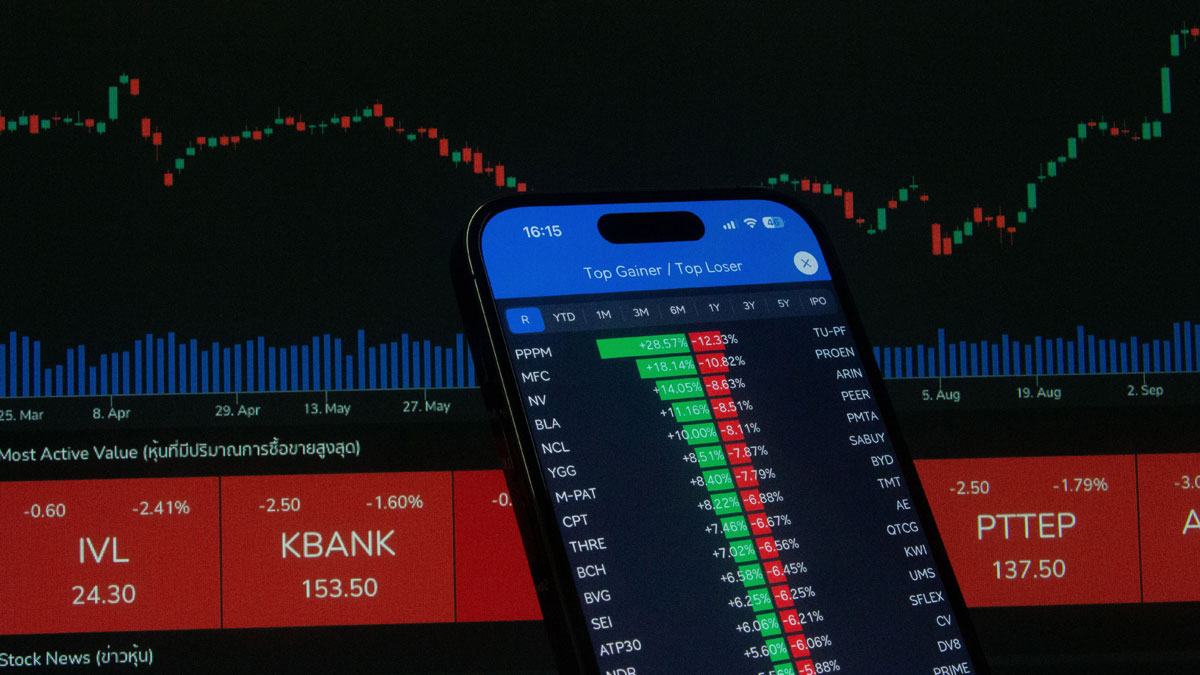
 Photo by StockRadars on Pexels
Financial markets move quickly, and successful participation often depends on how effectively traders can translate an idea into a consistent process. Decisions based solely on instinct can become difficult to repeat, particularly when markets are volatile or several instruments need to be monitored at once. This is where technology can help create a more organised approach. Modern online trading gives market participants access to a broad range of instruments, real-time information, analytical tools, and execution capabilities.
However, access alone does not create a strategy. Traders still need clearly defined rules covering entries, exits, position sizing, risk management, and responses to changing market conditions. Trading automation can support these requirements by turning selected rules into repeatable processes while reducing the influence of emotional reactions.
A trading strategy generally begins with an idea about how a market may behave. This could involve price momentum, technical indicators, market trends, volatility, support and resistance levels, or a combination of several factors. The challenge is converting that idea into rules that can be applied consistently. Automation can help establish this structure. Instead of relying on a trader to remember every condition during a fast-moving session, predefined instructions can determine when a particular action should be considered.
This creates a framework in which decisions are guided by established parameters rather than constantly changing emotions. For example, a strategy might specify that a position can be considered only when a particular technical signal appears and the market satisfies a defined volatility condition. Additional rules may determine the maximum position size and where protective orders should be placed. Such a framework makes the strategy easier to review and refine because each component has a defined purpose.
One of the recurring challenges in financial markets is maintaining discipline. Fear can encourage premature exits, while excessive confidence may lead to unnecessarily large positions. After a loss, some traders may also be tempted to alter their original rules in an attempt to recover quickly.
Automation does not remove market risk or guarantee profitable results, but it can reduce the need for repeated discretionary decisions when a strategy has already established clear parameters. This can be particularly useful when a trader wants to maintain consistency across multiple trades.
Markets rarely behave in exactly the same way every day. Periods of strong trends can be followed by sideways movement, while economic announcements can create sudden changes in volatility. A structured strategy therefore needs rules that recognise the conditions under which it is intended to operate. Automated processes can monitor predefined variables continuously and respond when specified conditions are met. This may help traders avoid overlooking a signal simply because they are away from their screens or concentrating on another instrument.
A structured approach to trading should place risk management alongside market analysis. Even a strategy with a strong historical performance can experience losing trades, unexpected price movements, or periods when its assumptions do not work as anticipated. Risk controls can include predetermined stop-loss levels, take-profit targets, position-sizing rules, maximum exposure limits, and restrictions on the number of simultaneous positions. These mechanisms can provide a clearer framework for controlling potential downside.
Technology can make these controls easier to implement. A trader may establish an exit level before entering a position rather than deciding what to do only after the market has moved against them. Similarly, smaller position sizes can be used when testing an unfamiliar instrument or strategy. Such controls are particularly relevant in leveraged markets, where both potential gains and losses can be magnified. Traders should therefore understand the mechanics and risks of the instruments they use before relying on automated or semi-automated processes.
Modern trading environments can provide access to several asset classes from a single account. Monitoring numerous instruments manually can become demanding, particularly when each market has different characteristics. Automation can help organise this information by applying consistent monitoring rules across selected instruments. A trader may define different conditions for currencies, stocks, indices, commodities, cryptocurrencies, or exchange-traded funds rather than attempting to watch every market continuously.
This can make the overall workflow more systematic. Instead of reacting to every price movement, traders can focus their attention on situations that meet predetermined criteria. Nevertheless, greater market access also requires greater responsibility. Having more instruments available does not mean every instrument should be traded. Strategy selection, market knowledge, liquidity, volatility, and risk tolerance should remain central considerations.
The most effective use of automation does not necessarily mean handing every decision to software. Human oversight remains important because market environments can change in ways that historical rules cannot anticipate. Economic announcements, unexpected geopolitical developments, liquidity disruptions, and unusual volatility can all affect market behaviour. A strategy that performed appropriately under ordinary conditions may require additional scrutiny during exceptional circumstances.
For this reason, traders can treat automation as part of a broader decision-making framework. Technology can assist with monitoring, execution, alerts, and predefined risk controls, while the trader remains responsible for understanding the strategy and deciding when its underlying assumptions remain appropriate.
Trading automation is most useful when it supports a clearly defined process. The foundation should remain a strategy with identifiable objectives, entry conditions, exit rules, risk parameters, and criteria for evaluation. Once those elements are established, automation can help make the process more repeatable. It can reduce certain manual tasks, support predefined risk controls, and help traders monitor opportunities without continuously watching every price movement.
For traders seeking a clearer approach to modern markets, the combination of structured rules, responsible risk management, appropriate testing, and suitable technology can create a more organised trading workflow. An automated trading platform can become part of this framework by helping traders implement predefined processes while maintaining oversight of their strategies and risk exposure. Baazex reflects this broader approach through its focus on accessible market infrastructure, straightforward trading experiences, multiple trading interfaces, and greater clarity around trading costs and risks.


Discover our other works at the following sites:
Danetsoft is a global web agency headquartered in Indonesia, specializing in web development, managed hosting, and web publishing platform.


 [email protected]
 Magelang, Central Java
 © 2026 Danetsoft. Powered by HTMLy