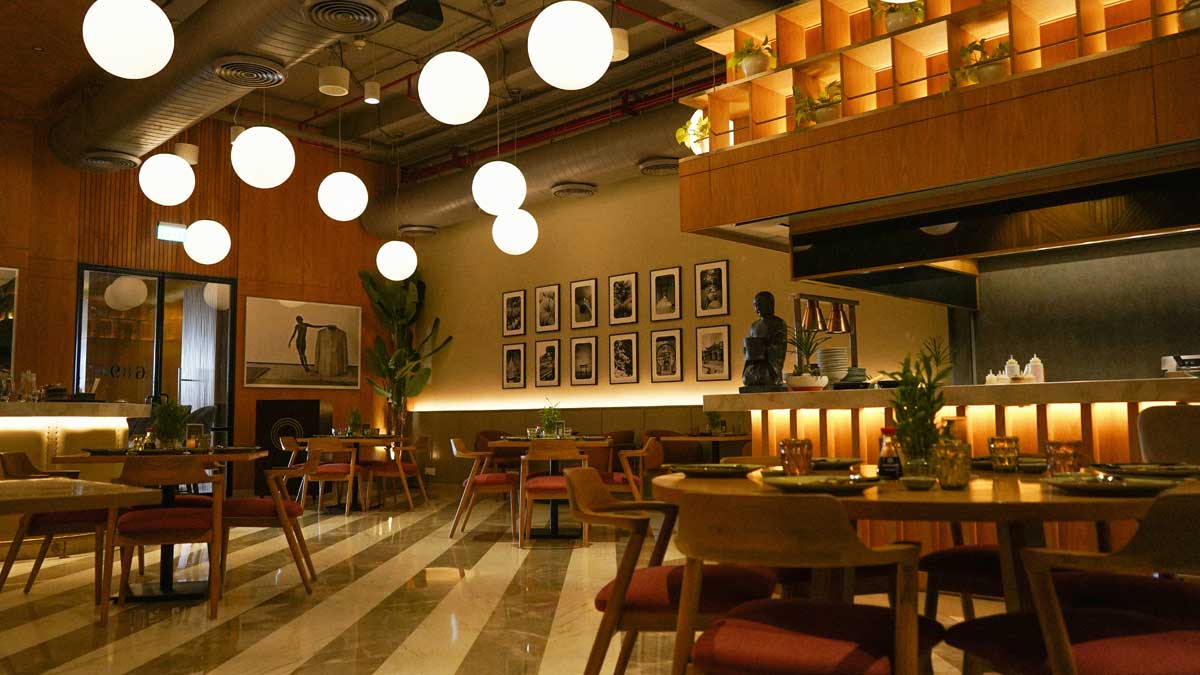
 Photo by Mustafa Fatemi on Unsplash
Some restaurants do not need to ask guests to take photos. The room does the asking for them.
A striking wall, a beautifully lit booth, a sculptural bar, a warm table setting, a dramatic ceiling feature, or a row of carefully chosen metal restaurant chairs can turn a normal dinner into something people want to share. In 2025, that difference became harder for restaurant owners to ignore. Interior design was no longer just an aesthetic decision. It became a traffic engine.
The restaurants that invested more thoughtfully in their interiors often saw the biggest gains on social media because the space gave guests something to capture before the food even arrived. A plate can be beautiful, but one sitting in a forgettable room has less visual impact. A cocktail can look impressive, but it becomes more shareable when the lighting, surface, background, and seating all support the shot.
That is why design spending changed from a renovation expense into a marketing strategy. The smartest operators were not just building dining rooms. They were building content environments.
For years, restaurants viewed social media as something that occurred after the guest experience. A customer came over, enjoyed the dinner, took a picture, and posted it. That still occurs, but the sequence has changed.
Many guests now find the restaurant visually before even seeing the menu. They look through short videos, tagged photos, reels, review images, influencer videos, and friend posts. In that universe, the dining room serves as a preview of the encounter.
A restaurant with poor lighting, uninspired furniture, and a lackluster visual identity has to work significantly harder to attract attention. A restaurant with a distinct internal point of view generates its own movement. Guests understand where to sit, where to point the camera, and which areas of the space are worth discussing.
This does not imply that every restaurant requires neon signage, flower walls, or theatrical décor. In reality, many of the most effective places in 2025 were more modest. They used tiered lighting, rich textures, warm materials, curving seats, bespoke art, natural wood tones, statement bars, and comfortable corners that were appealing from all perspectives.
The difference was in intention. Nothing felt like an accident.
The restaurants that spent more on interior design usually did not win because they bought more expensive items. They won because they created more visual moments per square foot.
A guest might not know the cost of a banquette, the finish on a table base, or the reason a pendant light sits at a certain height. Still, they feel the result. The room photographs better. The video looks warmer. The background feels less cluttered. The overall space gives the guest a reason to pause.
That pause matters.
Social media traffic often arises from small emotional moments: someone lifting their phone before the appetizer, filming a walk toward the bar, taking a group photo in a booth, or posting a story because the corner table feels too good not to share.
Strong restaurant interiors help create those moments by offering:
This is where spending becomes strategic. A restaurant may spend more on custom booths, commercial metal chairs, wall finishes, lighting, tabletops, or art, but the return does not show up only inside the dining room. It shows up in digital reach.
When people say restaurants with better interior design generated 3x more social media traffic, the deeper point is not that money alone created the result. Visibility did.
A better-designed restaurant gives guests more reasons to post. More posts create more impressions. More impressions create more profile visits, website clicks, booking searches, tagged location views, and branded search interest. The room becomes part of the marketing funnel.
The effect can be especially strong for independent restaurants, boutique cafés, cocktail bars, brunch spots, rooftop venues, and fast-casual concepts with a strong point of view. These places depend on personality. A generic interior makes them easier to forget, while a distinctive one gives people something to talk about.
The best-performing spaces usually had a few things in common. They did not rely on one “Instagram wall.” They made the whole restaurant feel visually consistent. The entry had a mood. The bar had a scene. The seating was comfortable. The tables had texture. The lighting changed the energy between lunch and dinner.
That kind of design turns every guest into a potential media channel without making the experience feel forced.
Restaurant furniture was assessed more on durability, comfort, pricing, and fit. Those things still count, especially in business settings where metal chairs, booths, stools, and tables are in perpetual use. But in 2025, furniture also entered the social media debate.
An interesting metal chair silhouette frames the photo. A booth can provide solitude and warmth. A table surface may make food colors pop. A bar stool can determine the energy of the counter. Even spacing affects guests’ comfort when taking shots, reducing the risk of accidentally getting half the room in the picture.
And so the operators began to think differently about the furnishings choices. They weren’t only questioning “Will this last?” Plus, they were thinking, “Is this going to look good in every customer photo for the next five years?”
That question alters the purchase process. It emphasizes the importance of material, color, scale, and layout. It also encourages restaurants to purchase components that assist both operations and brand identification.
A dining area with a mishmash of furnishings could work, but it rarely makes a lasting visual statement. A dining area with matching seats, good table choices, and intentional finishes can make the restaurant feel more premium before a guest even reads a single review.
Food will always be central to restaurant content, but atmosphere is what gives that content context.
A burger in poor lighting looks ordinary. The same burger on a warm wood table, beside a textured wall, under flattering light, with a lively background, feels like a moment. A coffee cup near a window can become lifestyle content. A cocktail at a dramatic bar can become a reason someone books a table.
People do not post only what they ate. They post where they were, who they were with, and how the place made them feel.
That emotional layer is why design spending can outperform basic advertising. Paid ads can introduce a restaurant, but guest-generated content gives it social proof. When real people repeatedly share the same beautiful space, the restaurant starts to feel desirable before the viewer even checks the menu.
The strongest interiors naturally support that behavior. They do not scream for attention. They reward attention.
The ROI of interior design is no longer solely about visitor comfort or brand image. Now it is about discoverability, social engagement, local awareness, and perceived worth.
When a restaurant is effectively designed, it will attract more people who are willing to stay, snap photos, tag friends, commemorate occasions, and suggest the location. It can also help the business stand out in markets where menus often appear the same online. Two restaurants can serve the same kind of food, but the one with the more memorable room generally gets the first click.
This is not to say that every operator should overspend. Good design, still disciplined. “Beauty has to be balanced with cleaning, durability, traffic flow, table turns, maintenance, and staff efficiency. Good design is not a beautiful place that falls apart in service.
The best approach is to spend where the guests feel and see the difference most.” Lighting, seating, tabletops, wall treatments, entry sections, bar design, flooring, and focal points often create the strongest impressions. When those pieces are put together, it’s easier to recall the space, easier to communicate.
Restaurants used to think of interior design as something guests experienced only after walking through the door. That idea feels outdated now.
In 2025, the room often traveled farther than the menu. It moved through stories, reels, posts, location tags, influencer clips, and group photos. A smart interior could reach people who had never passed the building, never searched the restaurant name, and never seen an ad.
That is the real power behind the 3x social media traffic effect. The restaurants that invested in design were not just making their rooms prettier. They were creating spaces that guests wanted to distribute for them.
A memorable dining room does not replace good food, service, or operations. It amplifies them. When the food is strong, the service is warm, and the interior offers something worth sharing, the restaurant gains a kind of visibility that paid marketing struggles to replicate.
The modern dining room is no longer just a place to sit. It is a stage, a brand signal, a photo backdrop, a comfort zone, and, increasingly, one of the most powerful marketing assets a restaurant owns.


Discover our other works at the following sites:
Danetsoft is a global web agency headquartered in Indonesia, specializing in web development, managed hosting, and web publishing platform.


 [email protected]
 Magelang, Central Java
 © 2026 Danetsoft. Powered by HTMLy