 Photo by Sergej on Unsplash
Sustainability used to feel like a separate track from business growth, something companies talked about after the “real” work was done. In 2026, that idea feels outdated. We are now seeing green technology shape the core of how organizations build products, manage energy, move people, and use resources.
This shift is not happening because sustainability sounds good in a presentation. It is happening because the world has changed. Energy prices can swing fast, climate risks are more visible, regulations are getting tighter, and customers are asking harder questions. At the same time, new technologies are making it possible to do more with less. That combination is pushing green tech from the margins into everyday operations.
What is interesting is that green innovation no longer means only solar panels and electric cars. It now includes smarter grids, cleaner buildings, better recycling systems, precision agriculture, water-saving tools, and digital platforms that help us track and reduce waste. These are practical systems, not abstract ideas. They are becoming part of how sustainable growth actually works.
For a long time, many businesses treated growth and sustainability as opposites. If we wanted to expand, we consumed more materials, burned more fuel, and accepted more waste. If we wanted to protect the environment, we had to slow down. That logic is breaking apart.
In 2026, sustainable growth is more about efficiency, resilience, and long-term value. It means building systems that can scale without constantly draining energy, land, water, or raw materials. The best green technologies are helping us do exactly that.
Several forces are driving the change:
These pressures are making green tech less of a nice extra and more of a strategic necessity. Companies that understand this are finding ways to cut costs, reduce risk, and strengthen their position at the same time.
Solar and wind still matter a great deal, but the story in 2026 is not just about building more capacity. It is about making energy systems smarter and more responsive.
Solar panels and wind turbines are improving in efficiency. Better materials, refined designs, and software-assisted forecasting allow operators to squeeze more value from the same equipment. That means stronger output without necessarily needing a larger footprint.
Floating solar is also getting more attention. These systems sit on reservoirs, lakes, or other bodies of water, which helps conserve land in crowded regions. They can also reduce water loss through evaporation, which is a useful side benefit in dry areas.
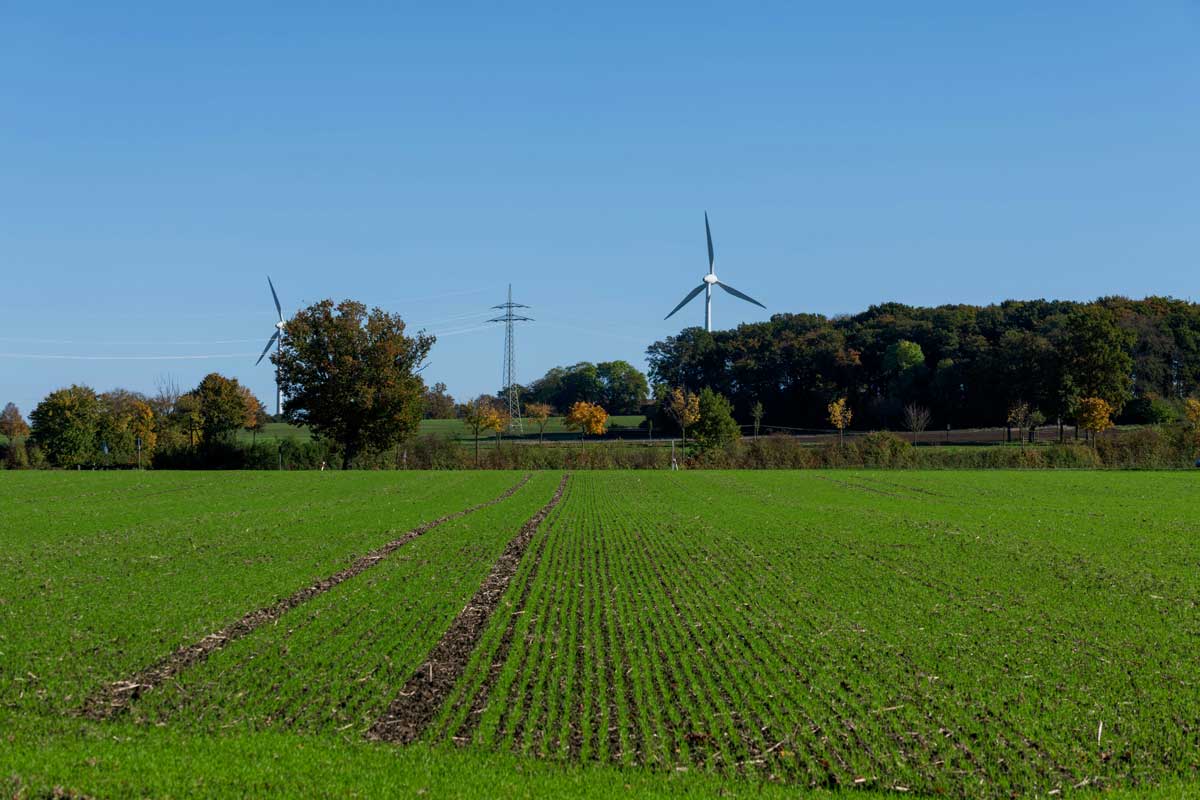
Wind energy is also evolving. New turbine designs can capture power more effectively in a wider range of conditions, and offshore installations are becoming easier to manage because of better monitoring tools and maintenance systems.
Renewable power is useful, but it only creates full value when we can store it and use it when needed. That is why energy storage has become one of the most important parts of the clean energy puzzle.
In 2026, storage is far broader than lithium-ion batteries alone. We are seeing more use of:
These systems help balance supply and demand, reduce outages, and support grid reliability. They also make it easier to depend on renewable energy during times when the sun is not shining or the wind is not blowing.
Virtual power plants, or VPPs, are one of the most interesting developments in energy management. Instead of relying on one large power station, VPPs combine many smaller energy assets, such as rooftop solar, home batteries, smart thermostats, EV chargers, and flexible appliances.
Together, these distributed resources act like a single power network. That gives utilities and grid operators more flexibility, helps reduce peak demand, and improves resilience during disruptions. It also gives households and businesses a new role in the energy system, not just as users, but as active contributors.
Electric vehicles are now familiar in many places, but green transport in 2026 is much broader than private cars. We are seeing a wider shift in mobility, and it is changing fleets, public transport, and city planning.
One of the fastest-growing areas is fleet electrification. Businesses that run delivery vans, service vehicles, buses, or municipal vehicles are often under pressure to cut fuel costs and emissions at the same time.
Electric fleets can make sense because the total cost of ownership is improving. Electricity is often cheaper than fuel, maintenance can be lower, and software tools now help teams plan routes and charging schedules more efficiently. Depot charging and fast chargers are making large-scale electrification more realistic.
Battery progress is one of the main reasons electric mobility is advancing so fast. Better energy density, safer designs, and faster charging are making electric vehicles more useful across a wider range of applications.
In some cases, solid-state batteries are starting to move from labs into limited commercial use. Even before they become mainstream, the promise is clear, longer driving range, better safety, and faster charging. That benefits not only cars, but also buses, motorcycles, construction machines, and other equipment that used to be difficult to electrify.
Green mobility is not only about the vehicle itself. It is also about the systems around it. More cities are investing in bike lanes, pedestrian-friendly streets, shared transport, and integrated mobility apps. That helps reduce congestion, improve air quality, and make daily movement healthier and more efficient.
A big part of sustainable growth is learning how to keep materials in use for as long as possible. That is where circular economy tools come in. The old model, take, make, use, throw away, is losing ground because it creates too much waste and ignores the value sitting inside products after they are sold.
More companies are thinking about the full life of a product before it even launches. That means designing items so they can be disassembled, repaired, upgraded, or refurbished more easily.
This shift is showing up in electronics, packaging, appliances, and industrial equipment. When products are modular and easier to repair, we can extend their life and reduce demand for new raw materials. That helps both the environment and the bottom line.
One of the most useful new tools in circular systems is the digital product passport. This is a digital record that tells us what a product is made of, where it came from, how it has been used, and how it can be repaired or recycled.
That kind of information is valuable for manufacturers, recyclers, regulators, and customers. It improves transparency and makes it easier to recover materials at the end of a product’s life. It also supports better decision-making across supply chains.
Recycling technology is improving too. AI-powered sorting systems can separate materials more accurately than older mechanical methods. Chemical recycling is expanding in some plastics applications, and battery recycling is getting better at recovering valuable metals.
These developments do not replace the need to reduce consumption and reuse products first. Still, they help us recover more value from materials that would otherwise be lost. That matters in a world where critical raw materials are expensive, limited, and often tied to geopolitical risk.
AI is not automatically green, and it can use a lot of power if we are careless. But when it is used well, it has become one of the most effective tools for sustainability in 2026.
Buildings, factories, and city systems are using AI to monitor and adjust energy use in real time. These systems can predict demand, change heating and cooling patterns, and move energy use to cheaper or cleaner periods.
In offices and commercial buildings, AI can optimize lighting, ventilation, and temperature depending on occupancy. In industrial settings, it can reduce idle time, improve equipment performance, and spot inefficiencies that humans might miss.
Agriculture is one of the biggest areas for green innovation because it connects directly to food security, water use, and climate resilience. AI, sensors, drones, and satellite data are helping farmers make more precise decisions about planting, irrigation, fertilizer, and pest management.
The result is often less waste, lower input costs, and healthier crops. That matters in a world where we need to grow more food with fewer resources and less environmental damage.
AI also helps companies understand the environmental impact of what they buy, ship, and sell. Better tracking systems can reveal emissions hotspots, transport inefficiencies, and high-impact suppliers.
This is important because sustainability cannot stay at the surface level. If we want real progress, we need visibility into sourcing, production, distribution, and end-of-life handling. AI makes that kind of analysis faster and more useful.
The built environment is a major source of emissions, so it makes sense that building technology is advancing quickly. In 2026, more developers, landlords, and public institutions are thinking about buildings as systems that must perform well over time, not just look efficient on paper.
Net-zero buildings are designed to produce or offset as much energy as they use over a year. That sounds ambitious, but better insulation, high-efficiency appliances, smart controls, and rooftop solar are making it much more practical.
These buildings also tend to lower operating costs and create better indoor environments. That means lower bills, better comfort, and less energy waste.
Construction is also changing at the material level. Low-carbon concrete, engineered timber, recycled steel, and bio-based materials are gaining attention because they reduce embodied carbon, the emissions created before a building is even occupied.
Smart building systems are helping monitor energy use, air quality, and maintenance needs. This can improve health and reduce unnecessary repairs or replacements.
New buildings matter, but most of the buildings standing today will still be used for years. That makes retrofits one of the most powerful climate tools we have.
Upgrading insulation, replacing old heating systems with heat pumps, installing efficient lighting, and adding smart sensors can cut emissions dramatically without tearing structures down. For many organizations, retrofit projects deliver some of the fastest returns in green investment.
Water has often been left out of sustainability discussions, even though it is closely tied to climate, food, energy, and public health. In 2026, that is starting to change.
Cities and utilities are using sensors and analytics to find leaks more quickly. In many systems, a surprising share of treated water is lost before it reaches the end user. Smart water networks help reduce that waste and improve service reliability.
These tools also help manage pressure, monitor quality, and improve maintenance planning. That saves water and money.
In dry regions, desalination remains important, but it has always been energy-intensive. New membranes, better energy recovery systems, and solar-powered designs are helping lower the cost and environmental burden.
Portable purification tools are also improving access in disaster zones and remote communities, which adds resilience where it is needed most.
Factories, food processors, and data centers are paying more attention to water recycling. Closed-loop systems can clean and reuse water onsite, which reduces pressure on local supplies and lowers operational risk.
Another big change in 2026 is that climate solutions are no longer seen as a niche category. They are becoming part of mainstream business planning, finance, and infrastructure.
Companies are using better software to measure emissions across operations and supply chains. This matters because we cannot manage what we do not understand. Good data helps us identify where emissions are coming from and which actions will have the biggest impact.
Carbon capture, direct air capture, biochar, and nature-based solutions are all receiving more attention. These approaches are not perfect and they should not be used as excuses to delay emissions cuts. Even so, they can play a role in sectors that are hard to decarbonize.
Lenders, insurers, and investors are now using climate models to assess flood exposure, wildfire risk, drought vulnerability, and heat stress. That affects where money goes. Projects that ignore climate risk are becoming harder to finance, while those that build resilience are more attractive.
There are many green technologies on the market, but success does not come from chasing every new idea. The organizations doing best in 2026 are usually focused on a few practical habits.
The cleanest energy is the energy we do not waste. Improving logistics, reducing material losses, and optimizing equipment often produce strong results quickly.
Sustainability claims need proof. Clear reporting, real metrics, and careful measurement build trust with customers, investors, and regulators.
A product is not truly sustainable just because it uses a recycled box or runs on electricity. We need to consider sourcing, production, transport, use, repair, and end-of-life recovery together.
A sustainable system should also be durable. Green technology should help us handle climate shocks, supply interruptions, and energy instability, not just reduce carbon on a spreadsheet.
Green technology in 2026 is not one big invention. It is a growing system of tools and methods that are changing how we live and work. Clean energy is smarter. Mobility is broader and cleaner. Buildings are more efficient. Agriculture is more precise. Water systems are more secure. AI is helping us make better decisions. Circular design is reducing waste.
The larger message is simple. Growth does not have to depend on constant resource depletion. If we build better systems and use better tools, we can create value in ways that are more durable, more efficient, and more responsible.
That is what green tech is really offering us in 2026, not just less harm, but a stronger way forward.


Discover our other works at the following sites:
Danetsoft is a global web agency headquartered in Indonesia, specializing in web development, managed hosting, and web publishing platform.


 [email protected]
 Magelang, Central Java
 © 2026 Danetsoft. Powered by HTMLy