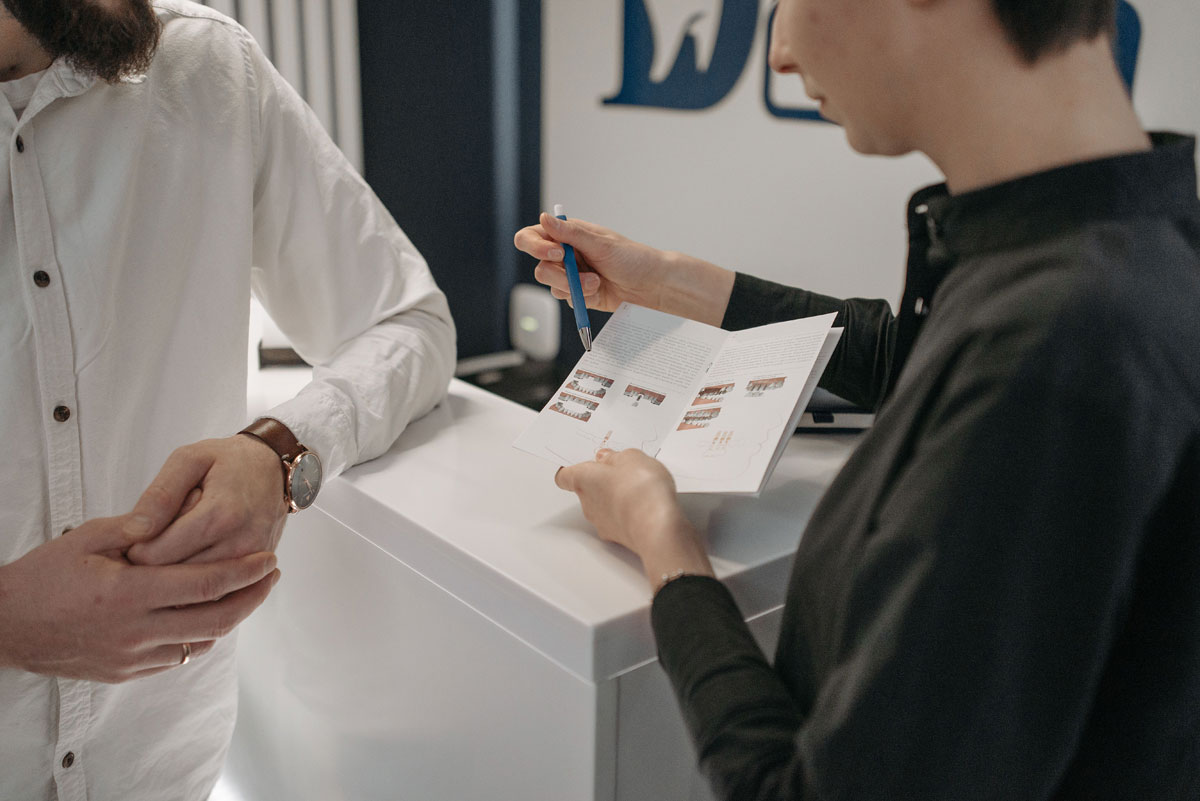
 Photo by Pavel Danilyuk on Pexels
The associate's contract was signed in March. By May, the practice had moved hygiene appointments around, ordered her loupes, and printed a "Welcome, Dr. Patel" sign for the break room. It was the office manager who finally called one of the bigger PPO networks, about a week before the start date, and found out the application had been sitting in a pending queue for six weeks. A page of the malpractice certificate had never come through on the fax.
That's a pretty typical credentialing story. Nobody did anything outrageous. The paperwork went out, the practice assumed it was moving, and it wasn't.
Below are the spots where dental enrollment most often gets stuck, along with some thoughts on why it happens and what tends to help.
This sounds obvious until you ask around the office who's actually responsible for a given application. Usually the office manager starts it. Then a front desk coordinator takes a callback from the payer and writes the reference number on whatever's handy. The dentist signs a stack of forms on a Thursday afternoon between crown preps. Plenty of people touched the file, but nobody's really watching it.
Some practices hand this off to outside dental credentialing services. Others give it to one steady person on staff and protect a couple of hours on their calendar each week. Honestly, either setup is fine as long as it's clear. The messy version is the one where three people each assume someone else is following up.
Put a name next to every pending application, and make sure that person knows it's theirs.
Payers don't just read your application. They check it against the state dental board, the NPI registry, and often the provider's DataSpring (CAQH) profile, which a lot of dental networks pull from. If those records don't agree, the review tends to stop until someone explains why.
Most of the time the profile was accurate when it was built. It's what happened afterward that causes problems. Maybe the dentist switched offices two years ago and the old suite number is still listed, or the liability policy renewed in December and the new certificate is still in someone's email inbox. Re-attestation catches people too. It comes up every 120 days, and it's very easy to let slide when the office is short-staffed.
A monthly reminder to look over each provider's profile won't take long and heads off a lot of this. In bigger groups, the profile upkeep often ends up with a doctor credentialing solutions, which makes some sense. If you've also been the one posting EOBs, you've watched a wrong suite number in April turn into a run of denials in July, and you get pretty quick at spotting which fields a payer is going to pick apart.
The packet for a dental application isn't huge, but it's specific. You'll want the state license, the DEA registration, and the controlled substance permit if your state issues one. Add the malpractice face sheet with the coverage dates and limits visible, and a CV that someone has actually updated in the last year. Specialists get a longer list, usually residency paperwork or proof of board certification. A handful of payers ask for a W-9, and every so often one still wants to see the diploma, which tends to send someone off to take a frame down from the hallway wall.
Why do documents go missing? Often it's because the office made a checklist for one network and reused it for another that wanted a couple of extra items. Or a certificate expired partway through review. Depending on the payer, that can mean the entire packet gets returned and the clock resets.
The fix most offices land on is boring, but it works. Give each dentist one folder on the shared drive and keep a spreadsheet beside it with every expiration date. Then set reminders far out, sixty or ninety days before anything lapses. Some state boards turn renewals around in a few days. Others sit on them for weeks, and a renewal that's still "in process" when the payer checks won't do you much good.
Work history is worth a separate word. Payers want to see where a dentist has been, more or less month by month, and a blank stretch on the CV usually earns a letter asking about it. Gaps happen for ordinary reasons, a new baby, a parent who needed help at home, a year teaching at the dental school. None of that hurts the application. What slows it down is waiting for the payer to bring it up, so put a couple of sentences about the gap in with the original submission.
You'd be surprised how little it takes. Two digits flipped in a license number. A missing middle initial. A tax ID filed under the owner's Social Security number when the practice has its own EIN. Any one of those can hold up an application for weeks.
Every individual dentist has a Type 1 NPI. If the practice bills as a group or a corporation, it also has a Type 2, which is the organizational number. Mixing them up on an application is one of the most common errors in dental enrollment.
The contents of the NPI record matter too. The practice address and taxonomy code (that's the code identifying the provider's specialty) should match what's on the application. If a periodontist's NPI record still lists general dentistry from years back, expect a question about it.
Addresses deserve a careful look. It's not unusual to find the DEA registration tied to a previous office, the license board record showing a home address, and the application listing the current practice. Lay it all out side by side before you submit. And check the legal business name against the IRS record for the tax ID. To a payer's system, "Riverside Family Dental PLLC" and "Riverside Family Dental, LLC" are two different businesses.
If you've enrolled with one network, you've learned how that network works. That's about it. One insurer only takes applications through its portal. Another still wants a signed paper packet in the mail. Some rely heavily on DataSpring (CAQH), others don't use it. A few will close their panel in a given area once they decide they have enough dentists there, and when that's the case it doesn't matter how clean your application is.
So start with a phone call, or at least the enrollment guide currently posted on the payer's provider site, before anyone opens a blank form. Ask directly whether they're taking new providers in your county. That PDF on the shared drive from a couple of years ago may not be the version they accept now.
A clean application still takes a while. Several weeks is normal. Some payers stretch it to two or three months, and certain states just seem slower than others. You mostly have to live with that part.
The follow-up is a different story, since that piece falls on the practice. Files get routed to the wrong department sometimes. Requests for a missing item often show up as a fax or a letter addressed to the office in general, and they're easy to lose in the daily mail. If nobody answers, the payer may eventually close the file as incomplete, and the office won't hear about it until someone calls to ask about a contract that technically doesn't exist anymore.
Call every two weeks or so. Keep a running log, even a plain notepad by the phone is fine, with the date, who you spoke with, the reference number they gave you, and anything they said was still missing. It feels tedious. It's also the only thing you'll have to point to when a payer says they never received your documents.
Be careful about start dates, too. Many payers won't make an effective date retroactive, so patients seen before the contract is active may get processed out of network or not paid.
Getting approved isn't the end of it. Most networks recredentialing every few years, commonly around the three-year mark, and they'll mail or email a request for updated information. Sometimes that request goes to an old address. Or it lands in the inbox of a coordinator who quit last fall, and nobody's checking it.
Let that deadline pass and the dentist can be termed from the network. Getting reinstated is rarely a quick form. More often it's a brand-new application and another few months of waiting. One running list goes a long way here, showing every network each dentist is in, the date they went live, and roughly when the next recredentialing request should arrive.
A lot of problems start with a change the dentist simply forgot to share. They renewed their license online and never forwarded the confirmation. They started covering Fridays at the satellite office. They finished their board certification and didn't think to tell anyone. Dentists are thinking about patients, which is fair, and the front office can only update what it knows about.
A quick quarterly question to each provider fixes most of this. Keep it casual and ask whether anything's new, maybe a renewed license, a different location or schedule, a switch in malpractice carrier, or a certification they just wrapped up. Most of the time the answer is no, and the whole thing takes thirty seconds.
None of this is complicated. The offices that seem to sail through credentialing are mostly just the ones that keep their files current and make the follow-up calls nobody likes making. That's usually enough to spare everyone a frantic week before a new dentist's first day.


Discover our other works at the following sites:
Danetsoft is a global web agency headquartered in Indonesia, specializing in web development, managed hosting, and web publishing platform.


 [email protected]
 Magelang, Central Java
 © 2026 Danetsoft. Powered by HTMLy