Walk into any detailing or wrap shop today and you'll be asked a question that didn't exist a decade ago: which film do you actually want? Paint protection film, color-change film, ceramic window tint, wraps, and coatings now overlap in ways that confuse even experienced owners, and the wrong choice can mean paying for protection you didn't need or missing protection you did.
This guide separates the main categories, explains what each one actually does, and shows how they combine on a single vehicle.
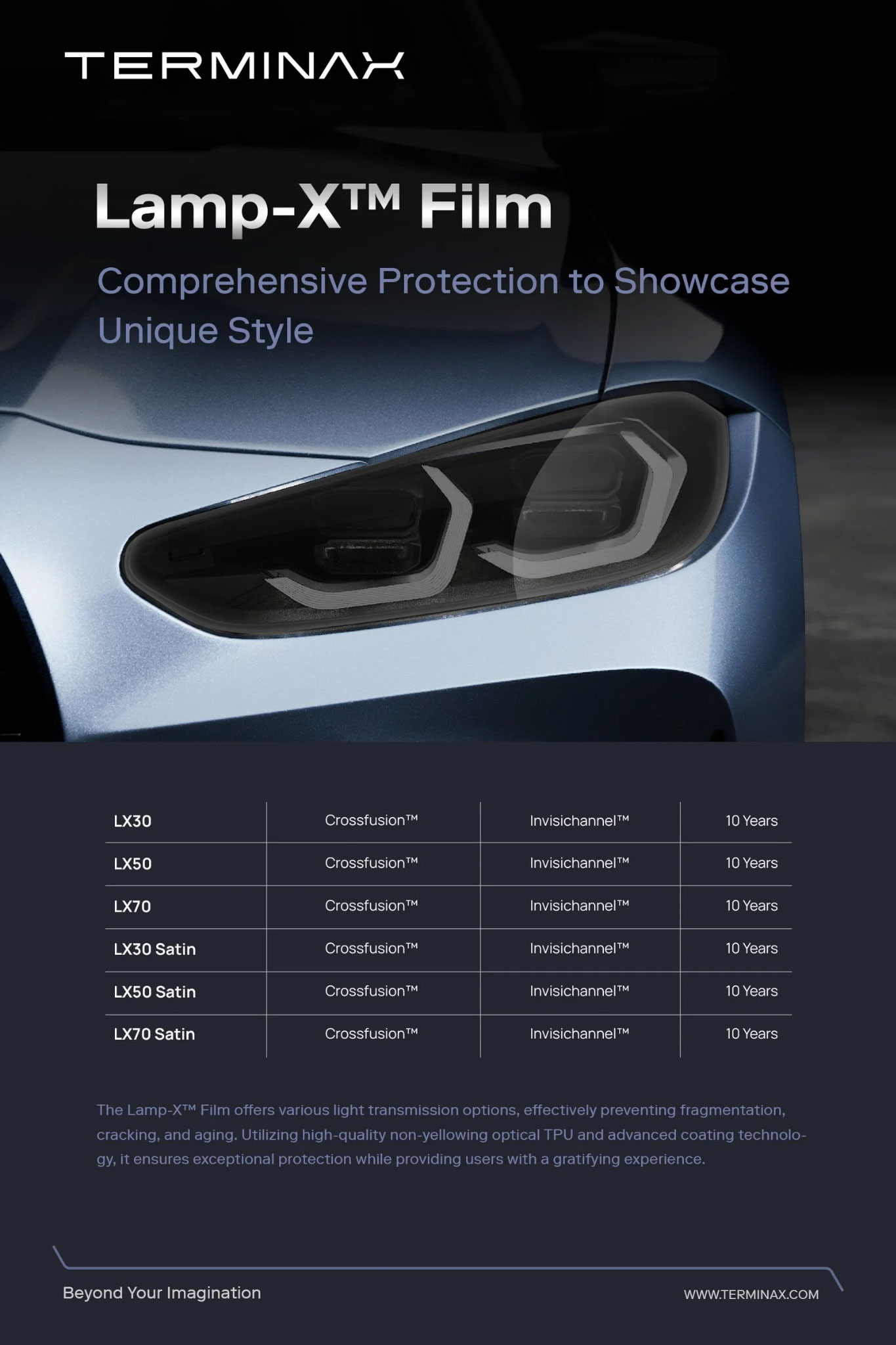
Paint protection film, usually shortened to PPF, is a transparent urethane layer applied over a vehicle's paint. Its job is physical protection: absorbing stone chips, resisting light scratches, and shielding against bug acids, bird droppings, and road grit.
Modern PPF is built from thermoplastic polyurethane, or TPU, which has two properties worth understanding. It is flexible enough to stretch around curved panels, and many versions are described as self-healing, meaning light swirls and scratches can disappear when warmed by sun or hot water.
Quality varies widely, and the differences are mostly invisible at purchase. A few factors matter most:
Top-coat technology. The outer surface determines stain resistance, gloss, and how well the film sheds water. Manufacturers use proprietary coatings here, such as the CROSSFUSION top-coat in TERMINAX's range.
Adhesive. The adhesive affects how easily the film installs, how cleanly it removes, and whether it leaves residue. Some systems use channelled adhesives that help installers position film and release air.
Non-yellowing formulation. Cheaper films discolour over time, particularly on white and light-coloured cars. Non-yellowing TPU is the main safeguard.
Finish options. Clear PPF comes in gloss, satin, and matte versions. Satin and matte films can also change a car's look while protecting it, which suits owners who want a factory-matte appearance without a matte paint job.
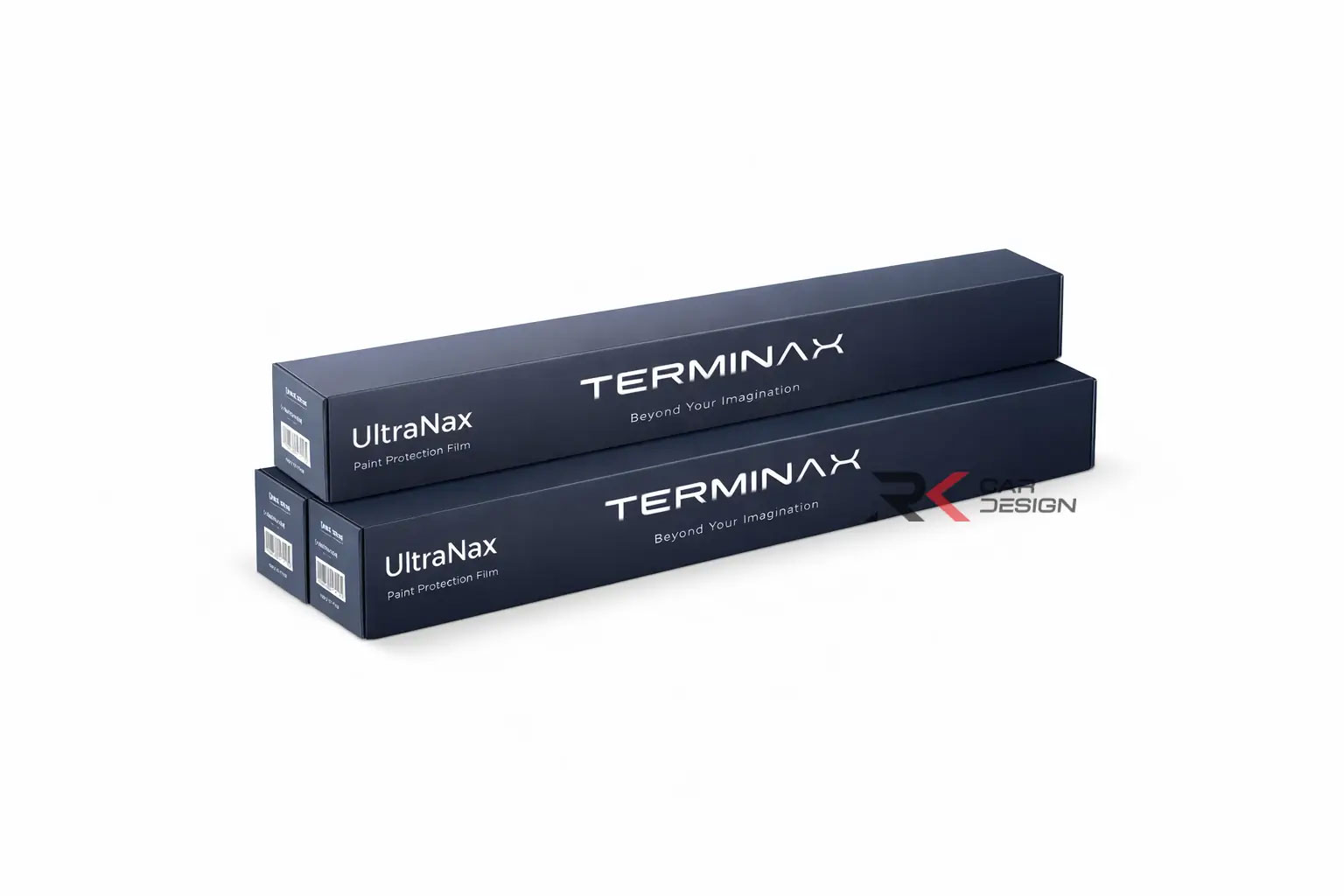
TERMINAX PPF is one of several professional-grade film brands sold to installers, detailers, and wrap shops. Its UltraNAX range covers clear gloss, satin, and matte finishes, while related lines handle headlights, sunroofs, windshields, and carbon-look surfaces. As with any brand, the practical advice is the same: ask your installer which film they use, what warranty applies, and who backs it.
Color PPF is where protection film and wraps meet. It's a pigmented TPU film that changes a car's colour while still offering the self-healing and scratch resistance of clear PPF.
Compared with a traditional vinyl wrap, colored PPF is thicker and more durable, typically around 8 mil for professional TPU colour films, and it protects the original paint underneath. The trade-off is cost, since TPU colour film is considerably more expensive than vinyl, and installation is more demanding because the material is thicker and less forgiving.
For owners deciding between the two, a simple rule helps:
Either way, removal is cleaner than repainting, and a quality installation leaves the paint intact when the film eventually comes off.
Window tint is a different category with a different purpose. Where PPF protects the exterior, window film manages heat, glare, and UV light entering the cabin.
Ceramic tint uses nano-ceramic particles embedded in the film. Unlike older dyed films, which absorb heat and fade over time, ceramic films reject heat without depending on darkness, and they don't interfere with phone, GPS, or radio signals as metallic films sometimes do.
What to look at when comparing ceramic films:
UV rejection. Quality films block around 99% of UV radiation, protecting both occupants and interior materials from fading and cracking.
Infrared rejection. This is the main driver of cabin heat. Figures vary a lot between products and test methods, so be sceptical of a single headline number and ask what standard it was measured against.
Visible light transmission, or VLT. This is the percentage of visible light the film lets through. Lower numbers mean darker tint. TERMINAX's Ceramic-X film, for example, is offered across a range from very dark to very light shades.
Clarity. Good ceramic film is optically clear, with no haze or distortion, which matters most on the windshield and front side windows.
Legal limits. Tint laws differ by country and, in the US, by state, and they usually regulate the front windows most strictly. Check local rules before choosing a shade.
Owners often confuse four separate things, so it helps to compare them directly.
| Product | Main purpose | Physical protection | Typical lifespan |
|---|---|---|---|
| Clear PPF | Protect paint | High | Many years |
| Color PPF | Change colour and protect | High | Many years |
| Vinyl wrap | Change colour or look | Low | Several years |
| Ceramic coating | Gloss and chemical resistance | Moderate | Varies |
Ceramic coatings and PPF are often combined. A coating applied over PPF makes the surface easier to wash and adds gloss, while the film underneath handles impact damage. Coatings don't stop stone chips on their own, which is the main reason people choose film.
Most owners don't need every product, but certain combinations make sense together.
New car, daily driver: clear PPF on high-impact areas such as the front bumper, hood, mirrors, and door edges, plus ceramic window tint for comfort.
Performance or luxury car: full-body clear PPF for maximum paint protection, ceramic tint, and a coating for ease of cleaning.
Style-focused build: color PPF for the colour change, with matching tint and optional blacked-out trim.
Older car with good paint: targeted PPF on the front end to preserve what's left, plus window tint.
Film quality only matters if it's installed properly. Poor installs show up as lifted edges, trapped dust, stretch marks, and visible seams, and they're the most common reason owners are disappointed with PPF.
Questions worth asking any installer:
Installer experience usually matters more than the specific film brand, because even the best film fails if it's applied badly.
Maintenance is simple but worth doing properly. Wait the period your installer recommends before washing, typically a week or so, to let the adhesive cure. Use pH-neutral soap and soft microfibre mitts, avoid abrasive polishes on film, and be careful with pressure washers near edges. Bird droppings and insect remains should be removed promptly, even on film that resists staining.
For window film, avoid ammonia-based cleaners, which can damage the adhesive, and don't roll the windows down for a few days after installation.
PPF, color film, ceramic tint, wraps, and coatings each solve a different problem. Film protects paint, tint protects occupants, wraps change appearance, and coatings make surfaces easier to maintain. The best choice depends on what you want to achieve, how long you plan to keep the car, and how much you want to spend.
Start with the problem you're actually trying to solve, ask installers specific questions, and be wary of any package that promises everything. A focused combination chosen for how you use your car will almost always serve you better than the most expensive option on the menu.


Discover our other works at the following sites:
Danetsoft is a global web agency headquartered in Indonesia, specializing in web development, managed hosting, and web publishing platform.


 [email protected]
 Magelang, Central Java
© 2026 Danetsoft. Powered by HTMLy