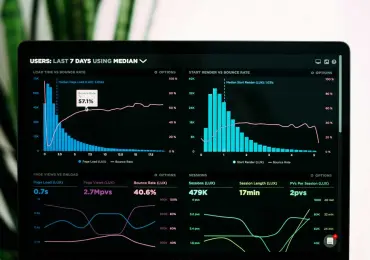
 Photo by Gavin Phillips on Unsplash
For years, cloud computing has been the backbone of modern digital infrastructure. From streaming your favorite shows to running complex enterprise applications, the cloud has brought flexibility, scalability, and accessibility that were once unimaginable. However, as the number of connected devices explodes and applications demand lightning-fast response times, relying solely on the cloud starts to feel like pushing an old technology to its limits. The solution? Edge computing, a paradigm that’s rapidly emerging as the vital complement to the cloud, and arguably the next big leap in computing.
In this article, we’ll dive into what edge computing really means, why it’s becoming indispensable, and how it’s shaping the future of technology as we know it.
Cloud computing democratized access to vast computing resources. There's no need for companies to invest in massive hardware infrastructure anymore, they simply pay for what they use, scaling up or down on demand. This flexibility allows businesses to innovate faster and adapt quickly to changing needs.
Key benefits of cloud computing include:
Despite its many advantages, cloud computing inevitably involves some trade-offs, because it relies heavily on centralized data centers situated far from many end users and devices. This creates challenges:
Latency matters, For applications like augmented reality (AR), virtual reality (VR), autonomous vehicles, or interactive gaming, even milliseconds of delay can spoil the experience or cause safety risks.
Bandwidth bottlenecks, Continuously sending massive amounts of raw data to distant servers is expensive and inefficient, potentially leading to network congestion.
Privacy and compliance, Some data cannot leave certain jurisdictions for regulatory reasons, or needs protection from exposure in transit.
Reliability concerns, Dependence on uninterrupted internet connectivity means that any network outage can mean losing access to critical services instantly.
Given the growing volume and diversity of connected devices, these constraints highlight why cloud alone can’t solve every computing challenge.
Edge computing shifts data processing away from centralized cloud data centers to the “edge” of the network, closer to where data is generated. Instead of sending all information to a cloud hundreds or thousands of miles away, devices or nearby mini data centers handle computing tasks locally.
What does this look like in practical terms?
By bringing computation and storage closer to users and devices, edge computing grants:
It’s important to note edge computing isn’t about abandoning the cloud. Rather, it's about complementing cloud services with new capabilities at the edge. Think of them as parts of a hybrid ecosystem:
| Function | Edge Computing | Cloud Computing |
|---|---|---|
| Latency-sensitive processing | Real-time decisions & control | Longer-running analytics and batch jobs |
| Data volume | Handles vast local streams | Stores & aggregates data globally |
| Privacy/security | Localized data handling | Centralized but with strict controls |
| Resource constraints | Limited compute & storage locally | Virtually unlimited resources |
For example, a self-driving car might process sensor data instantly on-board (edge) to navigate safely, but periodically upload trip logs to the cloud for fleet-wide AI improvements.
The Internet of Things (IoT) is rapidly weaving its way into every facet of life, from wearables and smart home gadgets to industrial sensors and smart city infrastructure. This vast network creates torrents of data right at the edge, making local, efficient processing indispensable.
Emerging technologies like AR/VR, remote robotic surgery, autonomous vehicles, and interactive gaming need ultra-low latency, we’re talking about response times that cloud-only setups just can’t consistently achieve. The difference between success and failure can be measured in milliseconds.
Not all data generated at the edge needs to be stored or processed in the cloud, sometimes, it’s just noise. Edge computing can filter and analyze data on-site, transmitting only the most relevant information upstream, saving bandwidth and cutting operational costs.
Legal frameworks such as GDPR in Europe and HIPAA in the US impose strict rules about data storage and transmission, particularly for sensitive information like personal or health data. By processing data locally, edge computing helps maintain compliance and reduce attack surfaces.
Self-driving cars are mobile edge devices that must interpret streams from cameras, radars, and LIDAR in real time. Waiting for a round trip to a remote cloud is not an option when split-second decisions make the difference between a smooth ride and catastrophic failure.
Factories use edge computing to directly monitor machinery, spot anomalies, and trigger preventive maintenance. This instantaneous insight helps reduce downtime, increase safety, and optimize productivity, fundamental goals of the modern industrial revolution.
Healthcare innovations rely heavily on ultra-low latency networking and computation at the edge. Surgeons performing robotic-assisted operations require immediate feedback without the risk of delay-associated complications.
Retail stores deploy edge devices to recognize customers in real time, adjust displays dynamically, and speed up checkout processes without needing constant cloud interaction. This creates frictionless, personalized shopping experiences that boost customer satisfaction.
As exciting as edge computing is, deploying it at scale isn’t without hurdles:
Managing Complex Infrastructure: Operating numerous distributed edge nodes demands sophisticated orchestration, monitoring, and maintenance.
Security Risks: Increasing the number of devices at the edge expands potential entry points for cyberattacks, requiring robust, tailored security models.
Lack of Universal Standards: Without widely adopted protocols, integrating diverse edge devices and platforms can be tricky.
Initial Costs: Deploying edge hardware and building local infrastructures can require hefty upfront investments.
Addressing these issues will take time and concerted engineering, but the potential payoff is enormous.
Exciting developments are already pushing edge computing further:
As edge technology matures, we can expect entirely new categories of applications that currently seem futuristic, smart cities that respond dynamically to citizens’ needs, autonomous drones performing complex missions, or immersive experiences that blur the lines between digital and physical.
Cloud computing has transformed industries and reshaped our digital lives, no doubt about that. However, the demands of tomorrow’s connected, fast-moving, data-rich world mean the cloud needs a powerful ally. Edge computing brings computing horsepower closer to the user, unlocking speed, efficiency, and privacy levels cloud-only setups just can’t match.
As the saying goes, the future won’t just be “in the cloud”, it will be at the edge.


Discover our other works at the following sites:
Danetsoft is a global web agency headquartered in Indonesia, specializing in web development, managed hosting, and web publishing platform.


 [email protected]
 Magelang, Central Java
 © 2026 Danetsoft. Powered by HTMLy