Agency copy desks often reverse the order. An Ai humanizer can help only when the desk decides what it is checking before the meter dictates the rewrite. A writer pastes an AI draft into a checker, panics at the score, rewrites three adjectives, checks again, and burns an hour inside a yellow-loop. The checker becomes the editor. Cognitive load spikes because the same person is tracking brand voice, client facts, and a bouncing meter at once. A better sequence picks a rewrite model first, runs a structural pass, then checks once against the client’s actual gate—not against every public meter on the internet.
That is the practical job for a rewrite tool with explicit model choices: reduce thrash by changing the order of operations.
Define success as a draft that survives a client read-aloud and a single agreed checker, not as a perfect score on five tools. Prep a fact sheet beside the draft. Anything not on the sheet cannot be “improved” into existence during rewrite. Your stop rule: after one model pass and one targeted check, either ship edits by hand or change the brief—do not open a second hour of meter chasing.
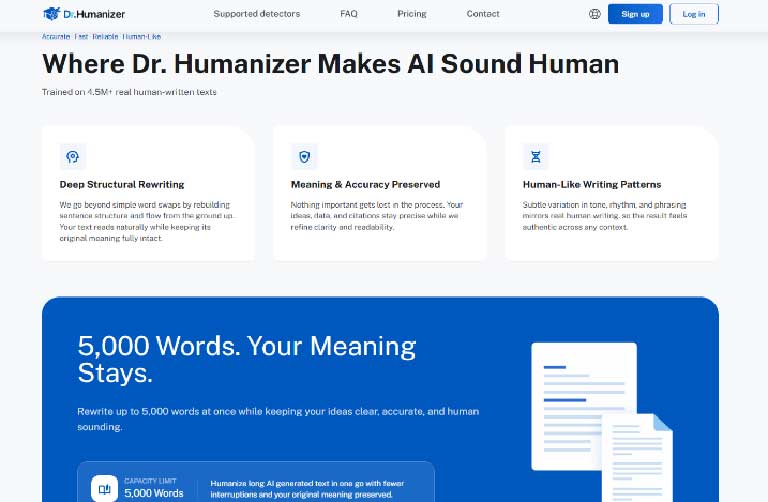
Dr. Humanizer exposes Select Model alongside Humanize Level. The model set is described as Basic, Pro, and Standard, each with a different rewriting approach and different behavior against detection standards. Standard is positioned toward stricter detection targets, with published sample pass-rate snapshots across common tools from large test sets. Those snapshots are directional evidence for model picking, not a warranty for your client’s exact PDF.
| When the desk faces… | Start model bias | Still verify |
|---|---|---|
| Light template cadence, low external scanning | Basic / lighter pass | Brand voice read-aloud |
| Mixed quality needs, general web copy | Pro as a middle experiment | Fact sheet drift |
| Stricter scanner expectations | Standard first | Client’s actual gate, not five random sites |
Pick the model from the gate you know. Random model hopping recreates checker thrash inside the rewriter.
Paste a packet that carries a complete, fact-checked thought.
Select Model based on the client gate, not vibes.
Set Humanize Level from how template-like the draft feels.
Run Humanize Now and review the returned versions for fact drift.
Keep or combine sentences; only then run the agreed checker once.
If the checker still flags the piece, change one variable—Level or model—not both—and stop after the second pass. drhumanizer is a rewrite workstation here, not a slot machine.
The first decision concerns which gate has authority over this piece. A client may name one institutional detector, or may care only that an editor and legal reviewer can stand behind the copy. Write that rule down before the draft moves. Without it, each new score becomes an invitation to change direction, and the desk starts treating unrelated public meters as a product brief.
That is how checker-first work creates rework. One score falls, the writer raises depth; another score moves the other way, so the writer changes model; then a fact has shifted and the client asks why the paragraph no longer matches the source. The output looked fine but the decision process was unreadable. A fixed gate turns the review into an actual comparison instead of a slot machine.
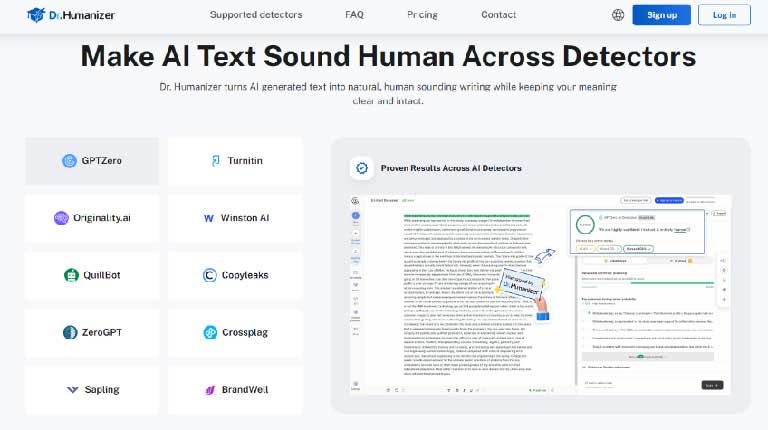
Basic is a reasonable first choice when the problem is light template cadence and the external screen is low-stakes. Pro gives a middle option when the desk needs a different rewriting approach but still has normal editorial control. Standard is the sensible starting point where the known gate is stricter. The point is not to promise a universal pass rate. Published samples are samples, and the only result that matters is whether this client’s required review accepts the fact-preserving draft.
When the first pass misses, change either the model or Humanize Level, then compare against the original fact sheet. Do not move both controls and claim to know what helped. Keep a short note on the rejected output: repeated cadence, lost qualification, invented example, or a gate that still flagged it. That note is a desk-level test protocol, not a pretend personal benchmark. It helps the next editor avoid repeating a failed path.
The expensive failure is endless optimization after the client’s real requirement has already been met. Every extra pass risks voice drift, fact drift, and another reviewer round. In our pipeline, the stop rule is deliberately plain: model first, structural review second, one agreed check last. If the result still cannot meet the gate without changing the facts, the brief needs repair rather than more software.
Dr. Humanizer works best in that bounded process. Its Basic, Pro, and Standard options give a desk a reasoned starting point; they do not justify checker hopping. Keep the fact sheet visible, reject invented detail, and let a completed review end the loop.
The fact sheet is what keeps model selection from becoming a word game. List approved product names, prices, dates, customer statements, and any qualifier that changes the client promise. Review each returned version against that sheet before opening the agreed checker. A rewrite can look fine but become a hard fail when it removes a small condition that sales or legal needs. That is visible evidence, and it is more useful than a generic claim that one model sounds better.
Keep the sheet beside the comparison table and mark only material drift. If a sentence loses a number, discard it. If the cadence is still flat but the facts hold, adjust one control on the next pass. This short protocol reduces rework because an editor does not have to rediscover the same missing qualification after a client review. Dr. Humanizer then has a bounded job: offer structural alternatives without becoming the source of new claims.
Checking five detectors after every synonym is the classic thrash pattern. So is accepting a smoother version that invents a case study the client never ran. Another failure: pasting only the flagged sentence. Isolated sentences lack rhythm context and encourage meaningless local edits while the surrounding paragraph stays machine-even.
Agency cost shows up as junior hours and client trust. A meter-first culture teaches writers to optimize for software instead of for the human who pays the invoice. Reverse the order and the same tools become quieter.
Read the kept draft aloud next to the fact sheet. If a number moved, discard the sentence even if the checker calmed down. If cadence still marches, raise Level once. If both facts and cadence hold, deliver. That is enough process for most web-agency retainers.
A short handoff note also helps when several editors touch the same client account. State which model was selected, why it matched the known gate, and which facts were checked after the rewrite. The next editor can then continue the work without reopening every public checker or guessing why a previous version was rejected. That is a quieter, more reliable use of model choice than chasing a universal score.
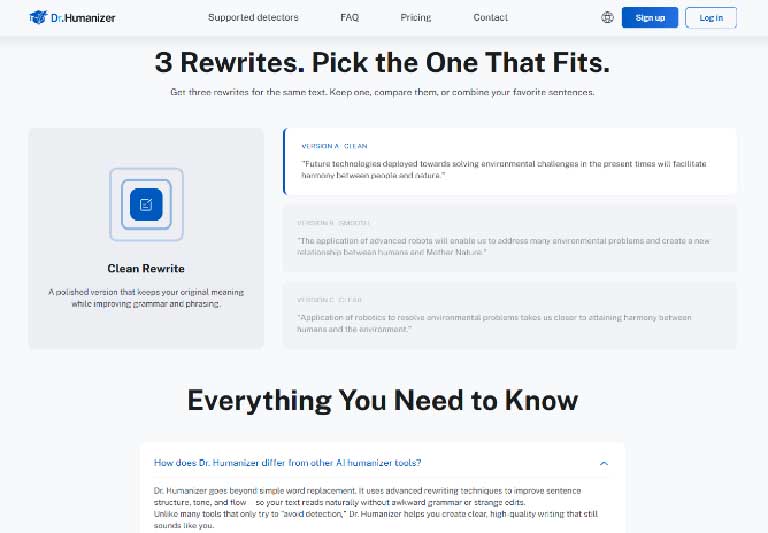
For fact-complete AI drafts, Dr. Humanizer is useful when the copy remains template-flat but template-flat, and when you can name the checker that actually matters. Choose Standard when that gate is strict; choose lighter models when the risk is mostly voice. Leave the meter closed until the structural pass is finished. If the brief itself is empty, no model selection will save the yellow loop—you need substance before software.


Discover our other works at the following sites:
Danetsoft is a global web agency headquartered in Indonesia, specializing in web development, managed hosting, and web publishing platform.


 [email protected]
 Magelang, Central Java
 © 2026 Danetsoft. Powered by HTMLy