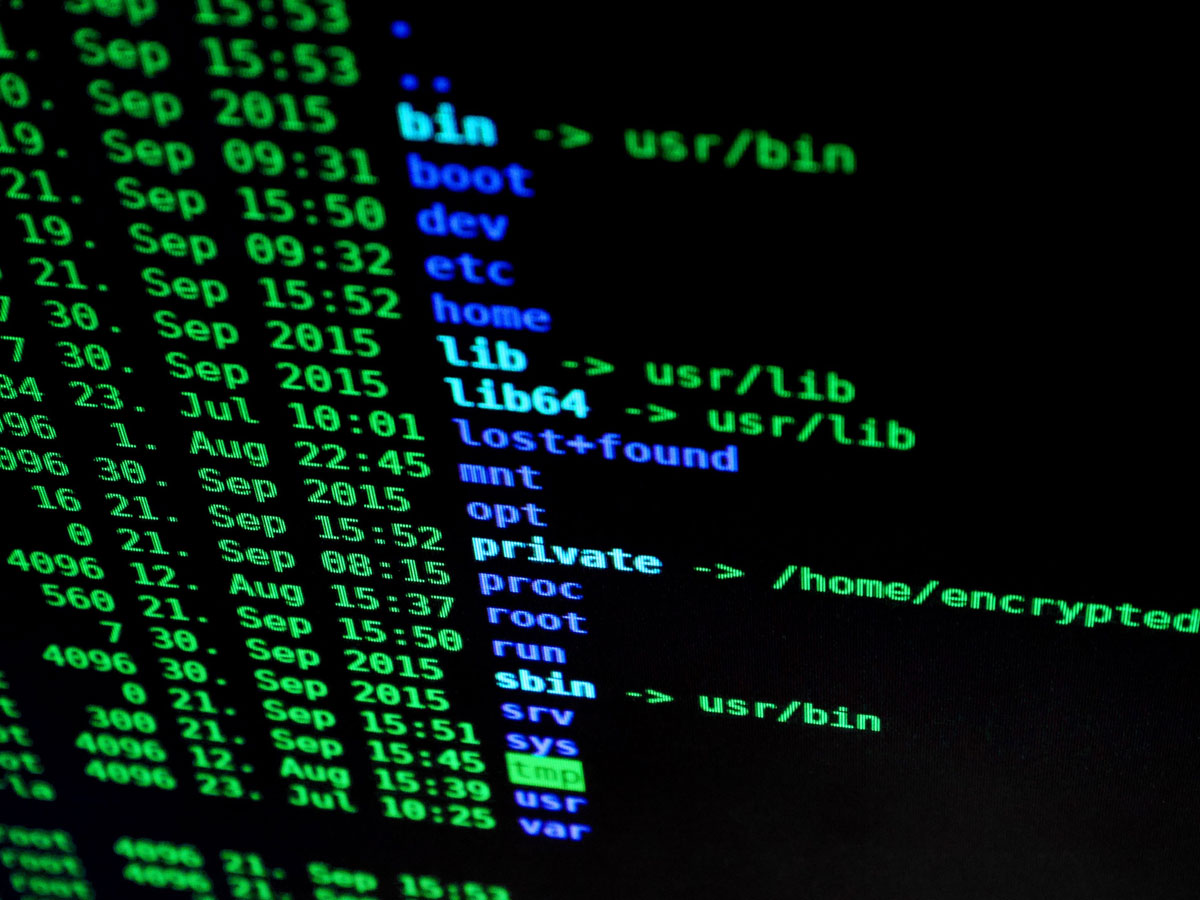
 Photo by Pixabay on Pexels
Cybersecurity consulting is the specialized practice of identifying, assessing, and reducing an organization’s digital security risks through strategic guidance, technical controls, and ongoing security operations. The rapid adoption of artificial intelligence is expanding what this discipline can accomplish, from detecting suspicious activity across enormous datasets to automating parts of incident response. At the same time, AI is introducing an entirely new category of attack surfaces that security teams cannot address with traditional controls alone.
The relationship between AI and cybersecurity is therefore more complicated than a simple defensive advantage. The same technology that helps analysts discover threats faster can help attackers automate reconnaissance, generate convincing phishing campaigns, discover vulnerabilities, and manipulate data at scale. For businesses, the opportunity lies in using AI without allowing its speed and complexity to outrun security governance.
Traditional security operations generate an enormous amount of telemetry. Firewalls, endpoints, cloud platforms, identity systems, applications, and network devices can produce millions of events, while security analysts have limited time to investigate them.
Machine learning can help reduce this imbalance by identifying patterns that deserve attention. Instead of examining every event individually, security platforms can correlate signals across different systems and highlight unusual behavior—for example, an account suddenly accessing unfamiliar resources from an unexpected location.
The real value is not simply automation. It is prioritization.
An effective AI-enabled security operation can help analysts distinguish between routine noise and potentially meaningful attack sequences. Human specialists can then concentrate on investigation, validation, and response rather than spending most of their time manually filtering alerts.
Generative AI introduces a second dimension to cybersecurity because organizations are increasingly embedding large language models into their own applications and workflows.
An internal AI assistant might have access to confidential documents. A customer-facing chatbot could interact with databases or business APIs. An AI agent might be authorized to execute actions on behalf of employees.
These capabilities create risks that conventional application security does not fully address.
Prompt injection is one example. An attacker may attempt to manipulate an AI system through specially crafted instructions, potentially influencing how it processes information or interacts with connected tools. Other concerns include sensitive information disclosure, insecure tool use, excessive permissions, malicious data entering retrieval systems, and weaknesses in model-integrated APIs.
The security boundary is consequently expanding from the application itself to the model, prompts, training or retrieval data, tools, identities, and surrounding infrastructure.
The offensive side of AI deserves equal attention.
Attackers can use generative systems to create more convincing social-engineering messages, automate repetitive reconnaissance, translate content into multiple languages, and adapt communications to particular targets. Even when individual techniques are not technologically revolutionary, automation can increase their scale and speed.
This changes an important assumption in traditional security planning: organizations can no longer rely exclusively on attackers being slow or expensive to operate.
Defensive teams therefore need to improve their own automation while strengthening controls that remain effective regardless of how an attack was generated. Strong identity management, network segmentation, secure software development, vulnerability management, multifactor authentication, and tested incident-response procedures remain fundamental.
AI complements these controls; it does not replace them.
As AI becomes embedded in business processes, cybersecurity consulting increasingly overlaps with governance.
Organizations need to understand not only whether an AI model works, but also what information it can access, who can use it, what decisions it influences, and what happens when it behaves unexpectedly.
A mature AI security program may therefore include:
This approach changes security from a final approval step into an architectural consideration. AI systems should be assessed before deployment and continuously reevaluated as models, data sources, integrations, and permissions change.
There is a temptation to describe AI as a replacement for cybersecurity professionals. In practice, the more realistic model is collaboration.
AI can process enormous quantities of information quickly, but security decisions frequently require business context. An unusual login might represent an attack—or an executive traveling to a new country. An anomalous database query might indicate data theft—or an authorized migration.
Human analysts provide the contextual judgment necessary to distinguish these situations.
The strongest security architectures therefore combine automated detection with human validation, escalation procedures, and clearly defined accountability. Automation should reduce cognitive overload without removing responsibility from the people who understand the organization and its risks.
AI also creates an opportunity to make cybersecurity discussions more relevant to business leadership.
Instead of reporting hundreds of vulnerabilities without context, security teams can connect technical findings to critical assets, operational disruption, regulatory exposure, and potential financial impact.
This makes prioritization more practical. A vulnerability affecting an isolated development environment does not necessarily deserve the same immediate attention as a weakness exposing a payment system or sensitive customer database.
Risk-based cybersecurity consulting can help organizations connect technical evidence with business decisions, making security investment easier to justify and measure.
The future of cybersecurity will not be defined by choosing between AI and traditional security. It will depend on integrating both intelligently.
Organizations will need AI to process the volume and complexity of modern security data, while conventional security engineering will remain essential for controlling identities, applications, infrastructure, networks, and information. At the same time, AI itself will become an asset that needs protection.
That creates a continuous cycle: AI improves defense, attackers adopt AI, new vulnerabilities emerge, and security architectures evolve in response. Andersen cybersecurity consulting reflects this broader shift by combining cybersecurity strategy with areas such as AI security assessment, governance, testing, and protection of AI-enabled systems.
For businesses, the practical lesson is straightforward: AI should enter the security strategy early, not after an AI-powered product has already reached production. Organizations that treat AI security as part of architecture, governance, and risk management can pursue innovation while keeping the expanding attack surface under deliberate control.


Discover our other works at the following sites:
Danetsoft is a global web agency headquartered in Indonesia, specializing in web development, managed hosting, and web publishing platform.


 [email protected]
 Magelang, Central Java
 © 2026 Danetsoft. Powered by HTMLy