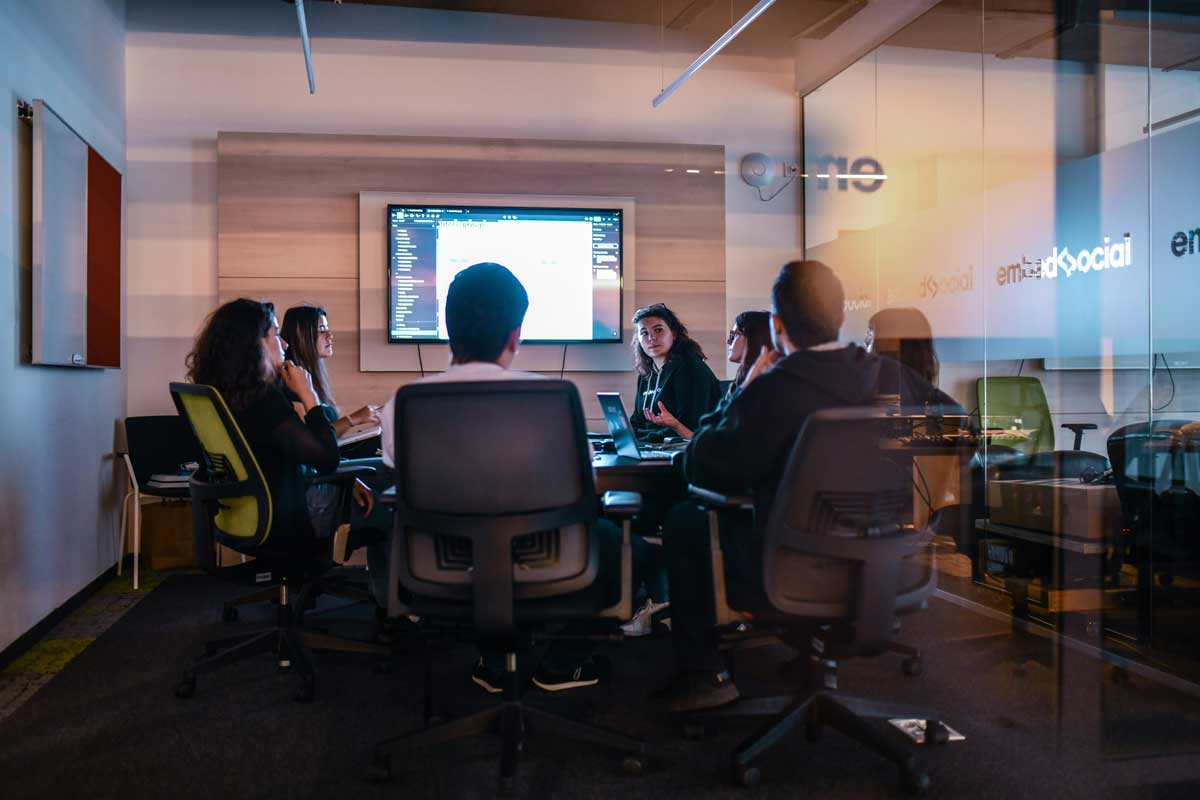
 Photo by EmbedSocial on Unsplash
Digital marketing keeps changing, but 2026 looks different from the usual cycle of new tools and fresh tactics. We are moving into a phase where campaigns are not only automated, they are responsive, predictive, and far more personal than what most brands have used before.
That shift matters because audiences have changed too. People scroll faster, ignore generic messaging faster, and expect brands to understand what they need without making them repeat themselves. If a campaign feels random, stale, or disconnected, it gets skipped.
AI is helping us solve that problem in a practical way. It is giving marketers the ability to read signals, shape content in real time, and make decisions based on behavior instead of guesswork. The result is a new kind of campaign, one that feels more useful to the audience and more efficient for the brand.
Below, we will look at 10 AI-powered campaign ideas that are likely to define digital marketing in 2026. These are not just tools or features, they are campaign styles that can change how we plan, launch, and improve marketing across channels.
Email is still one of the strongest marketing channels, and AI is making it much smarter.
In 2026, the best email campaigns will not rely on broad audience segments alone. They will use behavior data, purchase history, site activity, and engagement patterns to shape the message for each person. That means two people on the same list could receive very different emails, even if they signed up from the same campaign.
This kind of personalization can show up in several ways:
The point is not to make email more complicated just for the sake of it. The point is to make it more relevant. When a message feels timely and personal, it is more likely to be opened, read, and acted on.
For marketers, this means moving away from “one version for everyone” thinking. AI allows us to create emails that feel sharper and more human without hand-building each one.
One of the biggest changes in digital marketing is the move from reacting to predicting.
Traditional ads often depend on a user already showing clear intent, such as searching for a product or visiting a site. Predictive campaigns go a step earlier. They use AI to analyze behavior, patterns, and seasonal trends to estimate what someone may need next.
That can help us reach people before they enter a buying cycle. For example, a fitness brand might target users who are likely to start planning summer workouts. A travel company might identify audiences that usually book trips at a certain point in the year. A retailer could predict when a customer is ready for a repeat purchase.
Predictive ad campaigns are useful because timing matters so much in marketing. If we are too early, people ignore us. If we are too late, someone else gets the sale. AI helps close that gap by showing us where interest is likely to appear next.
This kind of campaign is especially strong when paired with creative testing. We can learn what message works best for different likely behaviors, then use that data to improve future targeting.
Video continues to dominate digital marketing, but making enough video content has always been a challenge.
AI is changing that by making video creation faster and more flexible. In 2026, brands will use AI to produce multiple video versions from a single idea, instead of planning one expensive production and hoping it works everywhere.
That opens the door to campaigns that can adapt to:
A single campaign might generate short clips for social ads, longer demos for product pages, and personalized video messages for leads. Instead of building every version from scratch, we can use AI to speed up the production process and free up more time for strategy.
The strongest AI video campaigns will still need good creative direction. AI can help with volume and variation, but the message still needs a clear point of view. If the concept is weak, automation will only make weak content faster.
Social media moves quickly, and brands that wait too long often miss the moment.
AI-powered social listening helps us track what people are saying, how they are feeling, and which topics are starting to spread. This is much more useful than basic keyword monitoring. We are not just looking for mentions, we are looking for tone, momentum, and audience response.
That makes it easier to build campaigns that feel current. For example, a brand can spot a rising trend and respond before it becomes crowded. A customer service issue can be noticed early before it grows into a bigger problem. A positive moment can be turned into a timely post, ad, or offer.
This kind of campaign works because it makes brands more aware of the environment around them. Instead of pushing messages into a vacuum, we can respond to what people are already talking about.
In 2026, the brands that feel alive on social media will be the ones using AI to listen better, not just post more.
People do not always want to browse endless pages before buying something. Sometimes they want a quick answer, a little guidance, and a direct path to the right product.
That is where conversational commerce comes in.
AI-powered chat flows, voice assistants, and guided messaging can help turn a simple question into a sale. Instead of forcing someone through a long funnel, we can answer concerns in real time and guide them toward the right choice.
This can look like:
These campaigns are especially useful in e-commerce, beauty, travel, and services, where people often need reassurance before they buy. By reducing friction, we make the buying process feel easier and more natural.
The big benefit here is not just convenience, it is confidence. When people feel understood, they are more likely to move forward.
A strong ad can drive traffic, but the landing page closes the loop.
In 2026, static landing pages will feel increasingly limited. AI is making it possible to adjust the page experience based on who is visiting and how they arrived there.
That means the same URL can show different versions of a page depending on the visitor’s source, location, device, or past behavior. A person arriving from an Instagram ad may see a more visual layout. A B2B lead might see stronger proof points and more detailed copy. Someone who has already visited once may receive a different offer than a first-time visitor.
This kind of adjustment matters because it keeps the message consistent with the intent behind the click. If the ad and landing page feel mismatched, conversion drops. If the page reflects what the visitor already cares about, the path forward feels easier.
AI helps us reduce that friction by making the page more flexible. For marketers, that means better use of traffic, better engagement, and often better sales conversion rates.
Influencer marketing is still strong, but the way we choose creators is changing fast.
In the past, many campaigns focused too much on follower count. That often led to poor fits, weak engagement, or audiences that did not match the brand at all. AI gives us a better way to evaluate creators.
In 2026, AI-powered influencer campaigns will look beyond surface metrics. We can analyze audience authenticity, engagement quality, brand alignment, content style, and past performance to find creators who are likely to deliver real value.
This helps in several ways:
The best influencer campaigns will not be about finding the biggest voice, they will be about finding the right one. AI helps us make that decision with far more confidence.
Retargeting remains one of the most effective ways to bring people back, but old-school retargeting can get annoying fast.
AI makes retargeting smarter by looking at why someone did not convert, not just the fact that they left. That opens the door to messages that match the real reason for hesitation.
For example:
This matters because repeating the same reminder over and over can damage the experience. AI helps us move from blunt repetition to more thoughtful follow-up.
The goal in 2026 is not to chase people around the internet, it is to re-engage them with the right message at the right time.
Global campaigns used to be built around translation first, adaptation second. That approach often misses the mark.
AI is helping us localize more effectively by adjusting not just language, but tone, cultural references, pricing, timing, and product presentation. This creates campaigns that feel more natural to each market.
A good localization campaign might change:
This is important because what feels persuasive in one market may feel awkward in another. AI can help us avoid those mismatches and build campaigns that feel more native.
In 2026, growth across regions will depend less on being available everywhere and more on being relevant everywhere.
This may be the biggest shift of all.
Autonomous optimization means campaigns can monitor performance and make changes as they run. Instead of waiting for weekly reports and manual updates, AI can shift budgets, refine targeting, adjust bids, and test new creative on the fly.
That creates a much faster feedback loop. If one ad starts losing momentum, AI can reduce spend. If one audience segment is converting well, it can receive more budget. If one message works better than another, the campaign can learn from that quickly.
This is powerful because marketing environments change constantly. Audience behavior shifts, platforms evolve, and ad fatigue sets in faster than most teams can manually track. AI helps campaigns stay active and efficient without demanding constant hands-on control.
Human marketers still matter here. We set the strategy, define the brand voice, and decide what good performance means. AI simply handles the constant tuning that would otherwise eat up time.
These campaign types are important because they all point in the same direction, toward marketing that is more responsive and less wasteful.
People expect better experiences now. They do not want irrelevant offers, generic messaging, or slow responses. They want brands to understand context and act on it.
AI helps us deliver that by improving:
It also gives us more room to focus on the parts of marketing that still need a human touch, such as strategy, positioning, and storytelling. The goal is not to remove people from the process. The goal is to remove unnecessary friction and make campaigns work harder for us.
The future of digital marketing in 2026 is not about shouting louder. It is about building campaigns that notice more, adapt faster, and communicate better.
AI is making that possible across email, video, social, retargeting, localization, landing pages, and more. The brands that benefit most will be the ones that use AI thoughtfully, not just as a shortcut, but as a way to create stronger, more relevant experiences.
If we want campaigns that stand out in 2026, we need to build them around intelligence, flexibility, and usefulness. That is where the real advantage will come from, and that is where the next wave of growth is likely to happen.


Discover our other works at the following sites:
Danetsoft is a global web agency headquartered in Indonesia, specializing in web development, managed hosting, and web publishing platform.


 [email protected]
 Magelang, Central Java
 © 2026 Danetsoft. Powered by HTMLy