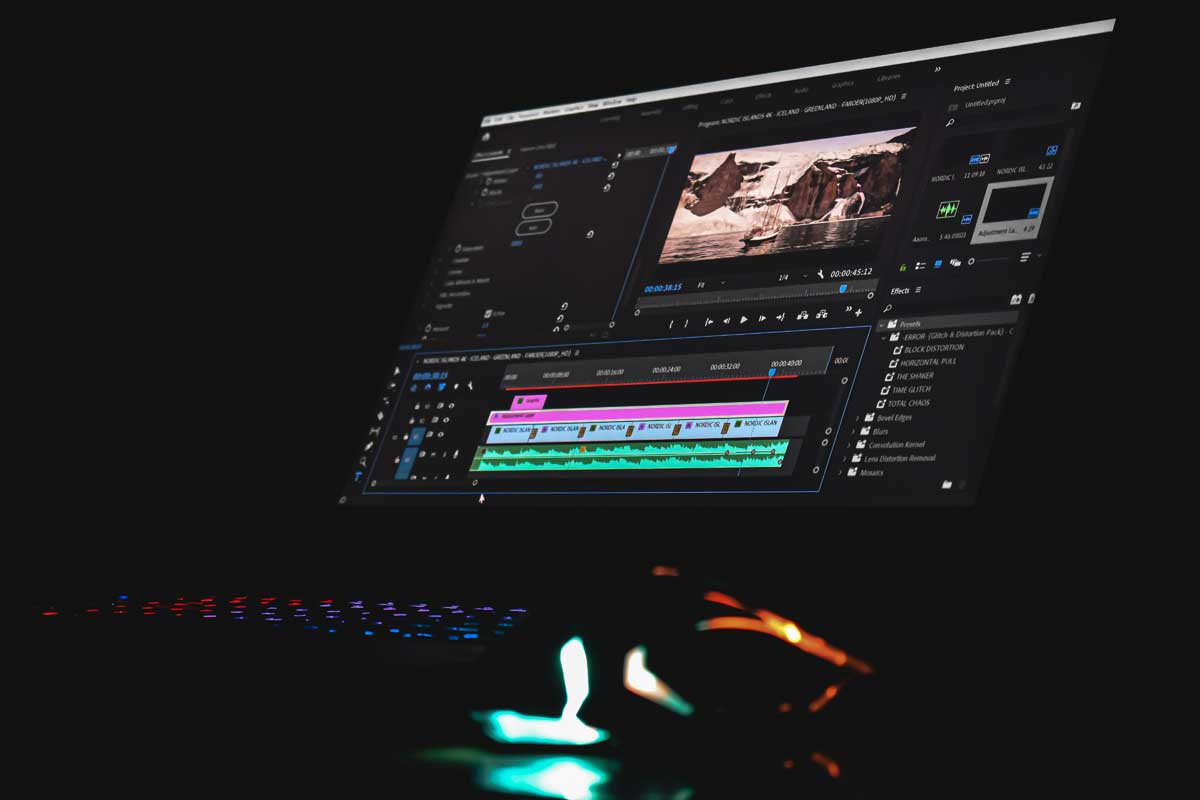
 Photo by Sanjeev Nagaraj on Unsplash
Video has been the dominant content format in marketing for years. What has changed in 2026 is the cost and speed of producing it. AI video generation has moved from a novelty that produced stilted, obviously artificial clips into a production-grade capability that marketing teams at agencies and in-house departments are integrating into their actual workflows — not as a replacement for human creativity, but as a tool that removes the logistical and financial friction that previously limited video output.
At the centre of this shift is Google DeepMind's Veo model family, and specifically its most current iteration. Understanding what Veo 3.1 for AI video creation actually offers technically, creatively, and operationally is increasingly relevant for marketing professionals deciding how to allocate production resources and which tools to build into their content pipelines.
Veo 3.1 is Google DeepMind's current state-of-the-art video generation model, officially released in January 2026 as a refinement of the Veo 3 architecture. Rather than a wholesale architectural revision, the 3.1 update introduced targeted improvements across several dimensions that matter specifically for professional and production-grade use: better human rendering, improved temporal consistency across frames, more reliable audio synchronisation, and stronger adherence to text prompts.
The model takes text prompts or still images nd generates video clips with synchronised audio, including dialogue, ambient sound, and music, in a single generation pass. Earlier AI video models had to be paired with separate text-to-speech or sound-effect systems, meaning most AI video clips were either silent or had obviously grafted-on audio. Veo 3 ended that pattern, and 3.1 is the version most professionals will actually use.
The Veo 3.1 family now includes three tiers, all of which feature native audio generation capabilities: Veo 3.1 for state-of-the-art visual fidelity suited to final production cuts; Veo 3.1 Fast for faster generation while maintaining high quality in standard production workflows; and Veo 3.1 Lite, the most cost-effective option designed for high-volume applications and rapid iteration. For marketing teams, this tiered structure is practically useful, matching the model to the job rather than running every asset through the highest-cost tier.
Several specific Veo 3.1 capabilities are directly relevant to how marketing and agency teams produce video content. Each addresses a friction point that previously constrained AI video's practical utility.
The integration of audio dialogue, ambient sound, and music directly into the generation process eliminates one of the most time-consuming post-production steps in AI video workflows. Previously, teams generating AI video had to source or synthesise audio separately and synchronise it manually, a process that introduced both time cost and quality inconsistency. Veo 3.1 produces audio and visual output as a unified artefact, which is a meaningful workflow compression for teams producing high volumes of social, advertising, or explainer content.
Veo 3.1 supports narrative control, the ability to direct what happens at specific moments inside a clip, not just at the start. A prompt can specify that at four seconds, a character turns toward the camera and smiles, and the model will execute that specific beat. For marketing use cases, product demonstrations, testimonial-style content, and brand storytelling, this level of directorial control over AI-generated video represents a qualitative shift from earlier models that produced unpredictable output beyond the opening frame.
Veo 3.1 can directly generate 720p, 1080p, or 4K videos, with the upscaling capability introduced in January 2026 applying state-of-the-art AI reconstruction that creates genuine detail in fabric, skin, foliage, and textures rather than simply stretching pixels. For agencies producing content intended for broadcast, large-format digital out-of-home, or premium digital placements, this output quality removes a previous ceiling that made AI video unsuitable for production-grade use cases.
Native 9:16 vertical video generation is optimised for YouTube Shorts, TikTok, and mobile-first platforms — not cropped horizontal footage. For marketing teams managing multi-platform content distribution, the ability to generate natively formatted vertical content rather than repurposing horizontal video for vertical placements eliminates both a workflow step and a quality compromise that has historically undermined social video performance.
Veo 3.1 supports image-based direction using up to three reference images to guide the content of a generated video, alongside frame-specific generation that allows a user to specify both the first and last frames of a clip. For brand-consistent content production, these capabilities provide the visual anchoring that text prompts alone cannot reliably achieve. A brand with established visual assets, product photography, logo treatments, and approved talent images can use those assets as direct inputs rather than attempting to describe them in text.
The practical implications of Veo 3.1 for marketing production are worth examining in concrete terms rather than in the abstract language of AI capability announcements.
Content volume constraints change. Teams that previously produced three or four video assets per month due to production cost and resource limitations can realistically increase output without a proportional cost increase. Social video, which rewards frequency and format diversity, is the most immediate beneficiary, but the same logic applies to A/B testing creative variants for paid campaigns, personalising video content for different audience segments, and producing localised versions of core assets.
The iteration cycle accelerates. In traditional video production, each revision carries the cost of reshooting, reediting, and re-voicing. In AI video workflows, iteration is structurally cheap. A campaign concept that would previously have been tested with static mockups can be prototyped as an actual video, reviewed by stakeholders, and refined before any significant production resource is committed. This changes how creative development conversations happen at the agency level from text and image mood boards toward video-native creative exploration.
Smaller teams gain production scale. Not every brand or agency has a video production department. Veo 3.1 gives a two-person marketing team the ability to produce video content at a volume and quality level that previously required either a larger internal team or an external production partner. That accessibility has direct implications for how marketing budgets are allocated and how competitive the creative landscape becomes across categories where video production was previously a barrier to entry.
Honest assessment of any production tool requires acknowledging where it falls short, and Veo 3.1 is no exception. Clip length, while extended from earlier models, remains a constraint for long-form video requirements. Human rendering faces, hands, and naturalistic movement — has improved substantially but still produces artefacts in high-scrutiny close-up situations that require either careful prompting or post-generation correction. Character consistency across multiple scenes remains an active development area rather than a solved problem, which affects narrative and branded content applications that depend on recognisable recurring subjects.
These are real constraints for specific use cases, not disqualifying limitations across the board. The marketing applications where Veo 3.1 performs most reliably, social video, product visualisation, atmospheric brand content, explainer animation, and campaign prototyping, are also among the highest-volume and highest-frequency needs in most marketing organisations. Matching the tool to the task produces better outcomes than attempting to apply it universally.
Veo 3.1 is accessible through multiple interfaces depending on how a team's workflow is structured. Google has made Veo 3.1 video generation available to all Google account holders through Google Vids, alongside the Gemini API for development teams building custom integrations. For marketing professionals who want to work with Veo 3.1 within a more complete creative production environment without managing API infrastructure, third-party tools that have integrated the model provide a more accessible entry point.
The tiered pricing model with Veo 3.1 Lite positioned as the cost-effective option for high-volume iteration and the full Veo 3.1 model reserved for final production-quality output means teams can structure their usage around actual budget parameters rather than treating every generation as equal cost regardless of purpose.
AI video generation is not replacing creative direction, brand strategy, or the human judgment that determines which content actually resonates with an audience. What it is replacing is the production bottleneck that previously stood between a good idea and a finished video asset. For marketing organisations where video strategy has consistently outrun video production capacity, that shift has direct, measurable implications for output quality, campaign cadence, and creative experimentation.
Veo 3.1 represents the current leading edge of that shift, a model that has moved past the threshold where quality limitations were the primary reason not to use AI video, into a range where the primary question is how to integrate it effectively into workflows that were built for a different production paradigm.


Discover our other works at the following sites:
Danetsoft is a global web agency headquartered in Indonesia, specializing in web development, managed hosting, and web publishing platform.


 [email protected]
 Magelang, Central Java
 © 2026 Danetsoft. Powered by HTMLy