 Photo by Pixabay on Pexels
When a founder sketches the first version of a product, it usually looks simple: a screen, a button, and a result. Behind that simplicity sits a lot of engineering, and almost all of it falls into two camps. Front-end developers build everything the user sees and touches. Back-end developers build everything that makes it work. For tech startups and product companies, understanding this split is one of the most practical things a founder can learn, because it shapes who to hire, in what order, and how to budget the first year of product development.
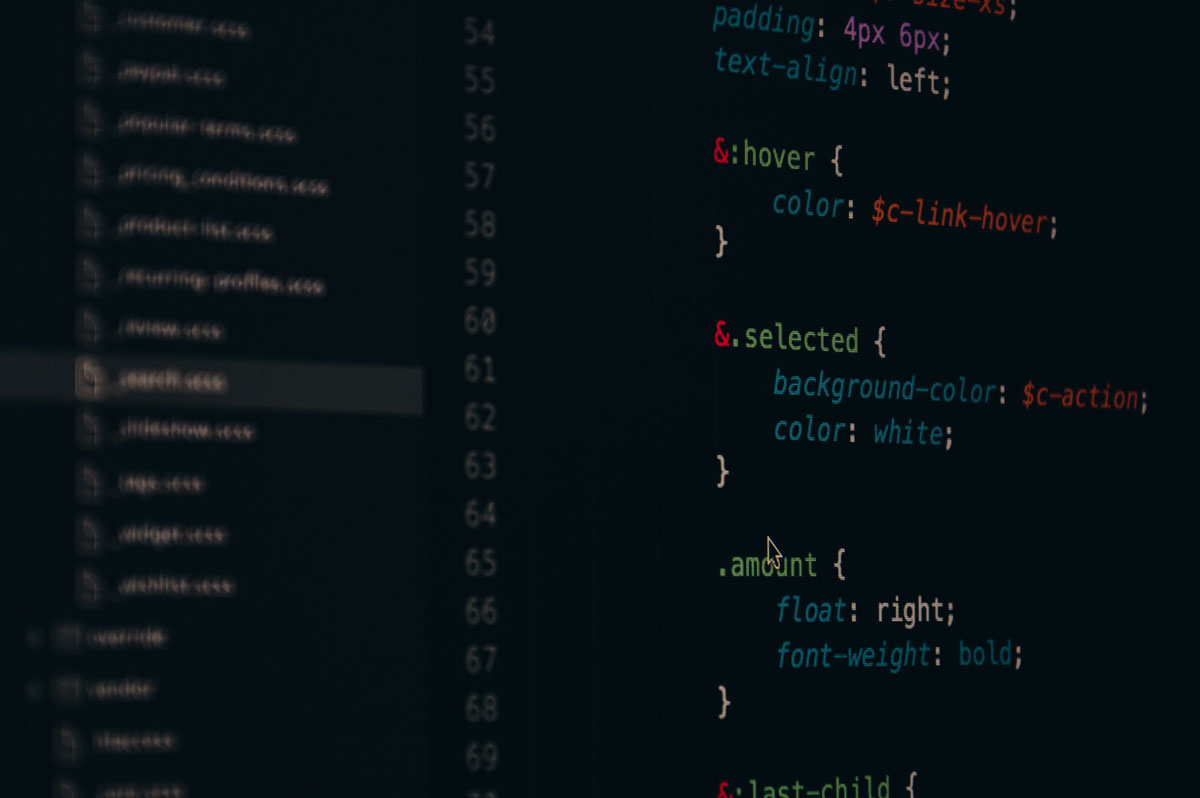
The front end is the visible layer of an app. It includes layouts, navigation, buttons, forms, animations, and every interaction a customer has with the product. Front-end developers work with technologies like HTML, CSS, JavaScript, and frameworks such as React, Vue, or Angular for web apps, and Swift, Kotlin, or Flutter for mobile.
Their job goes well beyond making things look good. A strong front-end developer translates a designer's vision into a fast, accessible, responsive interface that works across devices and browsers. They handle loading states, error messages, form validation, and performance so that the app feels smooth even on a slow connection. They also care about accessibility, making sure people with different abilities can use the product.
For a startup, this work has direct commercial impact. First impressions are formed in seconds, and a clunky or confusing interface can send a new user away before they ever see your core value. Studies of user behavior consistently show that small improvements in page speed and usability lift conversion and retention. That is why founders who care about growth tend to hire front end developers early, often right alongside their first designer, so the product feels credible from day one.
If the front end is the showroom, the back end is the engine, the fuel system, and the factory. Back-end developers build the server-side logic, databases, and APIs that power the app. When a user signs up, makes a payment, uploads a file, or receives a notification, the back end is doing the work.
Typical back-end responsibilities include designing database structures, building APIs that let the front end request and send data, managing authentication and permissions, integrating third-party services like payment gateways and email providers, and keeping everything secure. They work with languages and frameworks such as Node.js, Python, Java, Go, Ruby, or .NET, and with databases like PostgreSQL, MongoDB, and Redis.
Back-end developers also think about scale. A product that works for fifty beta users can fall over at five thousand if the architecture was not built with growth in mind. Good back-end engineers design systems that stay fast, reliable, and affordable as traffic climbs. This is why product companies that expect rapid growth are wise to hire backend developers with real experience in scalable systems, not just people who can make a prototype run.
The front end and back end are constantly in conversation. Here is a simple example. A user opens a food delivery app and taps "Order." The front end captures that tap, checks that the form is complete, and sends a request to the back end. The back end verifies the user, checks restaurant availability, processes the payment, saves the order to the database, and sends a confirmation back. The front end then displays a success message and a live tracking screen, all within a second or two.
The bridge between the two is the API. When both teams agree on how the API should behave early in the project, they can work in parallel without blocking each other. This is a major speed advantage for startups, where every week of delay matters. Teams that define their data contracts upfront ship faster and argue less.
Clear communication between the two groups matters just as much as technical skill. A front-end developer who understands the limits of the data model will design smarter screens. A back-end developer who understands how the interface consumes data will build cleaner, more efficient endpoints. The best product teams treat the two disciplines as partners working toward one user experience, not as separate silos.
This is one of the most common questions founders ask, and the honest answer depends on what you are building. A few practical guidelines can help.
If your product is heavily visual or consumer-facing, such as a social app, a marketplace, or a design tool, user experience is a big part of your value. In that case, it makes sense to hire front end developers first or to bring them in at the same time as back-end talent, so that your early prototypes feel polished enough to test with real users.
If your product is data-heavy, logic-heavy, or built around complex workflows, such as a fintech platform, an analytics tool, or a B2B SaaS product, the back end carries most of the early weight. Here, founders often hire backend developers first to build a reliable foundation, then layer on a front-end specialist once the core logic is stable.
Many very early startups start with one or two full-stack developers who can handle both sides at a basic level. This is a sensible way to move fast on an MVP. As the product grows, however, the demands of each side deepen. At that stage, dedicated specialists in each area almost always deliver better quality and faster iteration than generalists stretched across the entire stack.
Founders often make a few predictable errors. The first is treating the front end as "just design" and underinvesting in it, which leads to a product that works but feels unfinished. The second is treating the back end as invisible and cutting corners on architecture and security, which creates expensive technical debt later. The third is hiring based on a long list of technologies rather than on problem-solving ability and communication skills. Tools change quickly, but strong engineers adapt.
It also helps to hire for the stage you are in. An early-stage product needs people comfortable with ambiguity and rapid iteration. A scaling product needs people who bring structure, testing discipline, and performance optimization. Being clear about this in your job descriptions attracts the right candidates and saves months of misaligned hiring.
Startups that grow successfully tend to build balanced engineering teams. Strong front-end talent keeps users delighted and engaged. Strong back-end talent keeps the product stable, secure, and ready for scale. Together, they turn an idea into something customers rely on every day.
Founders who understand what each role does are better equipped to write clear job descriptions, evaluate candidates fairly, and plan their hiring roadmap around real product needs. Whether you choose to hire front end developers to sharpen the user experience or hire backend developers to strengthen your foundation, the goal is the same: a product that looks great, runs reliably, and grows with your business. Get this balance right early, and every future release becomes easier to build, test, and ship.


Discover our other works at the following sites:
Danetsoft is a global web agency headquartered in Indonesia, specializing in web development, managed hosting, and web publishing platform.


 [email protected]
 Magelang, Central Java
 © 2026 Danetsoft. Powered by HTMLy