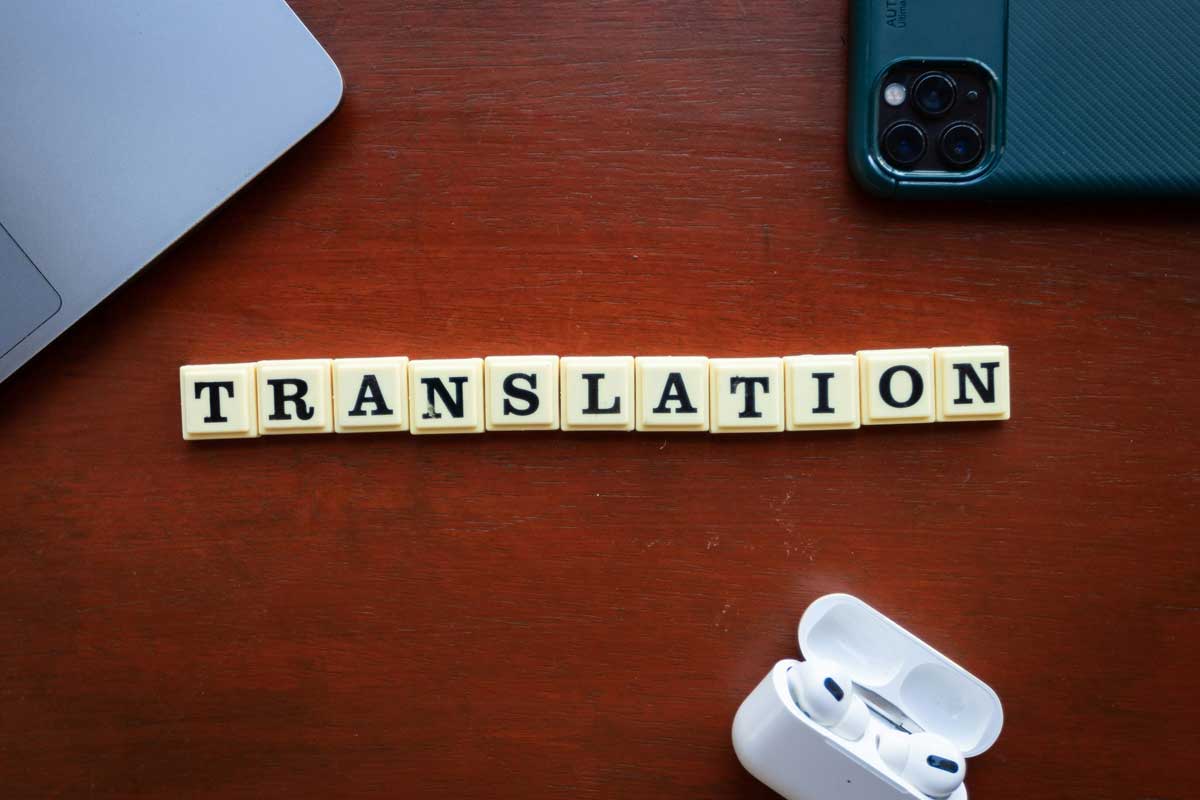
 Photo by Ling App on Unsplash
A software product can perform very well in its original market, which makes global expansion feel like a natural next step. You may localize your apps when entering regions such as Japan, Germany, Brazil, or the Middle East, expecting user behavior to remain largely consistent. At first, everything appears ready. The product is stable, and users in the home market are satisfied. However, once the same product reaches users in different regions, issues begin to appear.
"Button" may sound slightly unnatural in Spanish. A menu layout might shift on certain Korean devices. A message that feels polite in English can come across as too direct in Arabic. None of these issues break functionality, but they slowly change how comfortable people feel while using the product. Over time, users rarely complain directly; instead, they leave quietly, and this is where global growth often weakens. MarsTranslation Company works to close this gap by ensuring language fits naturally into real product environments.
Many localization issues do not come from poor translation quality but from how content is managed inside organizations. Different teams often handle different parts of the product separately, which creates gaps in consistency.
Developers may store interface text in code files, writers manage documentation in another system, and marketing teams create app store content independently. When these parts are not aligned, the same feature can be labeled differently across screens. A button in onboarding might use one term, while the same action in settings uses another. Internally this seems minor, but users notice it immediately.
Another common issue is missing context during translation. Translators often receive isolated strings without knowing where they appear in the product. A simple word like "continue" may appear in signup, checkout, or syncing flows, each requiring a slightly different tone. Without proper context, translations may be technically correct while still feeling unnatural.
To address these challenges, MarsTranslation approaches localization as part of the product lifecycle rather than a final-stage task.
This means translators interact with content in a manner that allows them to comprehend relationships between different interface components. Content is categorized according to functionality so that system notifications, button texts, and marketing copy follow the appropriate tone and user expectations. This keeps tone and clarity stable across the entire application.
Context is a key part of this workflow. Translators can view screens and user journeys, which helps them understand how people interact with the product. This leads to natural translations within the actual product experience.
To support long-term stability, structured systems such as glossaries and style guides are used. These ensure that important terms remain consistent across updates and that tone does not drift as the product evolves. Testing is also performed inside working builds, allowing teams to detect layout shifts and alignment issues before release.
When you decide to localize your software, success depends on more than translating text from one language to another. It requires ensuring that the product still feels natural, clear, and intuitive in every market it enters.
MarsTranslation supports this process by combining linguistic expertise with technical understanding. Many linguists involved in the process have experience in industries like healthcare, finance, and industrial systems, where wording directly impacts user behavior.
They understand that even small phrasing changes can affect user trust. A confirmation message may need to feel calm in one region but more formal in another. A warning might need to sound strict in safety systems while remaining simple in consumer applications. These decisions rely on cultural awareness and product context that automated tools alone cannot fully provide.
A strong example of this approach is the BOCHU Electronics project. The company developed advanced laser cutting control software used in industrial environments and expanded it to multiple international markets across Asia and Europe.
The system included machine controls, live alerts, safety instructions, and complex operational workflows. In such environments, even small language issues can lead to confusion during real operations.
MarsTranslation Company became involved early in the process. Instead of translating isolated strings, the team studied how the system worked, including machine behavior, operator tasks, and screen interactions.
This allowed language to be adapted based on real-world usage. Commands were aligned with actual machine behavior, while alerts were written to communicate urgency clearly without overwhelming operators. Post-localization, operators across multiple regions found the interface easier to understand and use; this also reduced support requests and improved user adoption.
Global software success depends on more than adding multiple languages. It depends on whether the product still feels natural and easy to use after localization. Most challenges are not caused by incorrect translation but by missing context and disconnected workflows.
When localization is built into the development cycle, these issues reduce significantly. With structured support from MarsTranslation, products can maintain meaning, tone, and usability across markets.
Users rarely think consciously about translation quality. They simply decide whether the product fits smoothly into their daily routine. If it feels natural, they stay. If it feels confusing, they leave. That is why localization is a core part of building global-ready software. Start your global journey with MarsTranslation and make your software feel truly local in every market.


Discover our other works at the following sites:
Danetsoft is a global web agency headquartered in Indonesia, specializing in web development, managed hosting, and web publishing platform.


 [email protected]
 Magelang, Central Java
 © 2026 Danetsoft. Powered by HTMLy