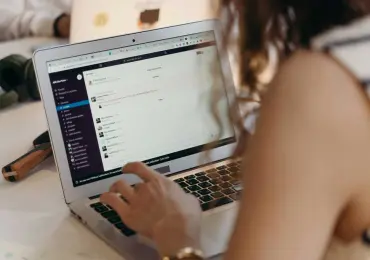
 Photo by Matheus de Souza on Unsplash
For decades, productivity was tied to physical space, and work happened at office desks surrounded by filing cabinets, desktop computers, landline phones, and stacks of paperwork. Employees needed to be physically present to access systems, communicate with colleagues, and complete daily tasks.
That model has changed dramatically, and today, work moves with people instead of staying attached to buildings. Employees answer messages from airports, manage projects from cafés, review documents from hotel rooms, and collaborate across continents without ever entering a traditional office.
Portable productivity has reshaped how businesses operate, and much of that shift has been driven by browser-based tools, cloud infrastructure, and mobile collaboration systems.
This article explores how portable productivity tools transformed modern work, why businesses no longer depend on fixed office environments, and how digital infrastructure continues to reshape collaboration across remote and hybrid teams.
The modern workplace exists across laptops, tablets, phones, and cloud platforms rather than inside a single office environment. Employees now expect to move between locations without losing access to the tools they rely on every day.
At the same time, portability has increased the importance of secure and reliable digital access. Using a free VPN can help remote employees maintain safer connections while working across public networks, shared workspaces, hotels, and mobile environments where browser-based productivity tools are constantly in use.
Increased flexibility has created enormous advantages for businesses managing remote and hybrid teams. Staff can respond faster, collaborate across time zones, and maintain operations outside traditional office hours.
Portable work systems are no longer limited to freelancers or tech startups, either. Large organizations across finance, media, retail, consulting, and logistics now rely heavily on distributed digital workflows.
One of the biggest reasons productivity became portable is the rise of cloud-based software. Businesses no longer need employees sitting inside company offices to access critical systems.
Documents live online instead of inside filing cabinets. Meetings happen through browser-based platforms instead of conference rooms. Teams collaborate inside shared dashboards rather than passing physical paperwork between departments.
That transition fundamentally changed how companies think about work itself.
Employees can now:
The office desk gradually stopped being the center of productivity because digital infrastructure replaced many of the physical limitations that once defined work.
As productivity tools became more mobile, workplace culture evolved alongside them. Businesses increasingly shifted away from measuring presence toward measuring output.
Employees no longer need to remain visible inside an office building to contribute effectively. Many companies now focus more heavily on project completion, communication quality, and operational efficiency rather than strict office attendance.
That shift has influenced how businesses scale as well. Companies expanding distributed teams often prioritize systems that reduce operational strain while maintaining flexibility across departments.
Businesses exploring more sustainable growth strategies frequently focus on improving digital workflows and reducing unnecessary complexity, particularly when scaling smarter without burning out becomes a long-term operational priority.
Portable productivity tools support that approach by allowing teams to remain connected without depending entirely on centralized office structures.
Automation also played a major role in reducing dependence on physical office environments. Many repetitive administrative tasks that once required in-office coordination now happen automatically through browser-based systems.
Scheduling, reporting, customer support, invoicing, approvals, and analytics increasingly run through automated workflows accessible from virtually anywhere.
Businesses investing in smarter workflow automation often discover that portability and automation naturally reinforce each other. Employees can manage more responsibilities remotely when repetitive tasks no longer require constant manual oversight.
That combination allows businesses to operate with greater agility while reducing friction across distributed teams.
Portable productivity has not solved every workplace problem. In many cases, it introduced entirely new challenges.
Employees now deal with:
The ability to work anywhere can easily become pressure to work everywhere.
Businesses have had to rethink how they manage collaboration, communication, and employee well-being inside highly connected digital environments. Productivity tools may be portable, but human attention still has limits.
That tension continues shaping discussions around remote work and organizational flexibility.
Research on workplace flexibility has long explored how changing work structures influence employee performance, satisfaction, and organizational outcomes. Many of those conversations have become even more relevant as digital work environments replace traditional office systems.
For many employees, the browser now functions as the primary workplace interface. Communication, file storage, analytics, scheduling, design tools, research platforms, and project management systems all exist inside browser tabs.
That shift explains why businesses increasingly focus on digital workspace organization rather than physical office optimization.
Portable productivity depends less on where employees sit and more on how effectively they can access information, communicate with teams, and move between systems without disruption.
Companies investing in cleaner workflows, better browser organization, and stronger remote infrastructure often discover that small operational improvements create significant gains over time.
The office desk has not disappeared entirely, but it is no longer the default center of professional life. Productivity has become mobile, flexible, and increasingly independent from physical location.
Modern employees expect work systems to move with them rather than restricting where and how tasks can be completed.
Businesses that adapt successfully tend to focus less on recreating traditional office environments digitally and more on building workflows that support flexibility without sacrificing coordination.
Portable productivity tools continue to alter how organizations communicate, scale, and collaborate.
As digital infrastructure becomes even more integrated into daily operations, the businesses that thrive will likely be the ones that simplify work instead of anchoring it to outdated structures.


Discover our other works at the following sites:
Danetsoft is a global web agency headquartered in Indonesia, specializing in web development, managed hosting, and web publishing platform.


 [email protected]
 Magelang, Central Java
 © 2026 Danetsoft. Powered by HTMLy