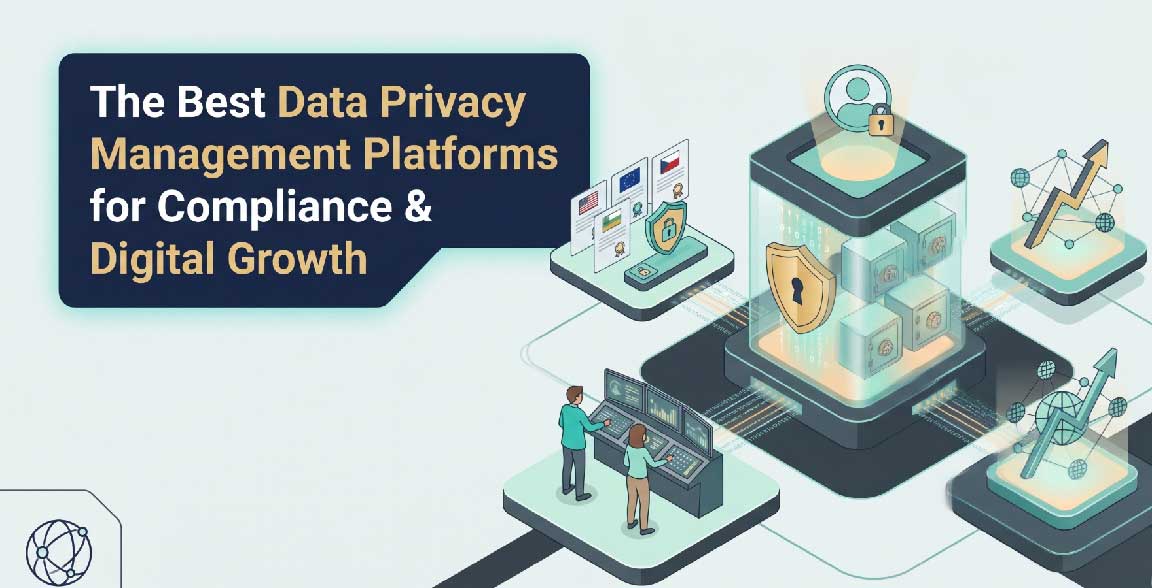
Data privacy management platforms have become essential infrastructure for modern businesses. As regulations like GDPR and CCPA continue to evolve, organizations must manage personal data responsibly - without slowing down growth.
A modern data privacy management platform helps automate consent collection, handle data subject requests (DSARs), map data flows, and ensure compliance across jurisdictions. But the best tools go beyond compliance: they enable safer data activation, improve customer trust, and support scalable digital operations.
This guide covers the top platforms for compliance, governance, and growth - plus how to choose the right solution for your organization.
Data privacy management software is a platform that helps organizations collect, manage, and protect personal data in compliance with regulations like GDPR and CCPA. It typically includes tools for consent management, data subject request (DSAR) automation, data mapping, and compliance reporting.
| Platform | Best Fit | What It Specializes In | Where It Stands Out | Realistic Pricing Model |
|---|---|---|---|---|
| Ketch | Digital-first companies | Consent orchestration and privacy automation | Transparent pricing and modern architecture | Public SaaS pricing: free tier; \~$150/mo starter; from \~$499/mo |
| OneTrust | Large enterprises | End-to-end privacy governance | Most comprehensive regulatory coverage | Custom enterprise quotes; often mid-five-figure annual contracts |
| TrustArc | Mature privacy programs | Risk-based assessments and governance | Strong privacy maturity modeling | Fully quote-based enterprise pricing |
| BigID | Data-heavy enterprises | Data discovery and classification | Industry-leading visibility into sensitive data | Custom pricing based on data sources |
| Osano | SMBs | Consent management, cookie compliance, vendor risk monitoring | Extremely easy implementation + strong compliance defaults | Subscription-based; typically \~$99–$300+/month depending on traffic and features |
| Transcend | Engineering-led organizations | Automated DSARs and system integrations | Strongest API-driven privacy automation | Enterprise quote model |
Our evaluation focused on usability, feature depth, integration ecosystem, pricing transparency, scalability, and customer feedback. We prioritized platforms that balance regulatory compliance with operational flexibility and real-world implementation needs.
Ketch is designed for organizations that need to operationalize privacy not just for compliance, but for real-time data usage across marketing, analytics, and product systems.
At its core, Ketch combines consent management, DSAR automation, and data mapping into a unified platform - but its key differentiator is data permissioning. This allows organizations to control how customer data is used across downstream systems in real time, rather than just tracking consent passively.
In practice, organizations use Ketch to bridge the gap between legal requirements and growth teams. For example, marketing teams can activate customer data confidently, knowing usage is governed by real-time permissions tied to user consent and regulatory rules.
Typical enterprise workflows include:
Key Strengths:
Limitations:
OneTrust is one of the most widely adopted enterprise privacy platforms, known for its breadth of capabilities and global regulatory coverage.
It provides a comprehensive suite covering consent management, data discovery, third-party risk management, privacy impact assessments, and compliance reporting. This makes it a strong choice for organizations that need a single platform to manage privacy, security, and governance at scale.
In real-world deployments, OneTrust is often used as a central operating system for privacy teams, supporting workflows like:
Its strength lies in consolidation - reducing the need for multiple point solutions.
Key Strengths:
Limitations:
TrustArc focuses on combining privacy management with deep regulatory intelligence and risk-based workflows.
Unlike platforms that emphasize tooling alone, TrustArc places strong emphasis on guiding organizations through compliance processes. It continuously updates its regulatory knowledge base, helping teams stay aligned with evolving privacy laws.
Organizations typically use TrustArc for:
This makes it particularly valuable for companies operating across multiple jurisdictions where requirements frequently change.
Key Strengths:
Limitations:
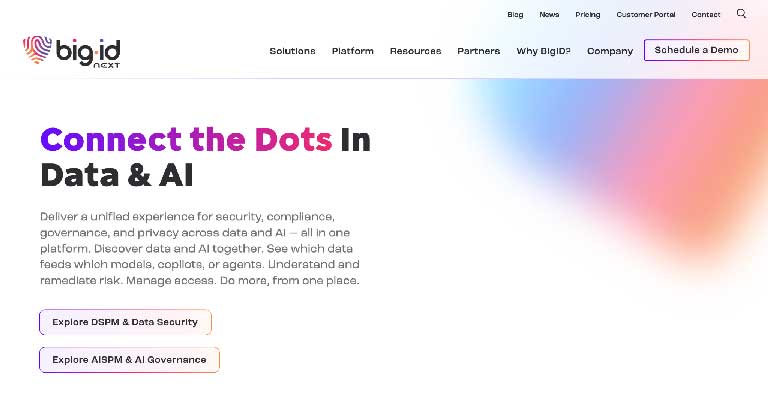
BigID takes a fundamentally different approach by focusing on data intelligence as the foundation of privacy management.
Instead of starting with consent or workflows, BigID helps organizations discover, classify, and understand their data at scale. This is especially important for enterprises with large, fragmented data environments.
It enables teams to:
In practice, BigID is often used by data, security, and governance teams to build a single source of truth for sensitive data, which then supports compliance, security, and analytics initiatives.
Key Strengths:
Limitations:
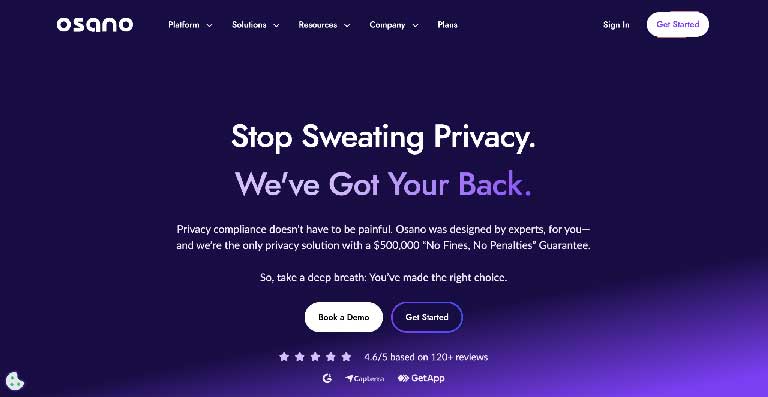
Osano is designed for organizations that need fast, straightforward compliance without heavy implementation overhead.
It focuses on core capabilities like consent management, cookie banners, and vendor monitoring, all delivered through a clean and intuitive interface. This makes it particularly appealing for startups and mid-sized companies.
In real-world use, Osano is commonly deployed to:
Its simplicity is its biggest strength - it allows teams to get up and running without needing dedicated privacy specialists.
Key Strengths:
Limitations:
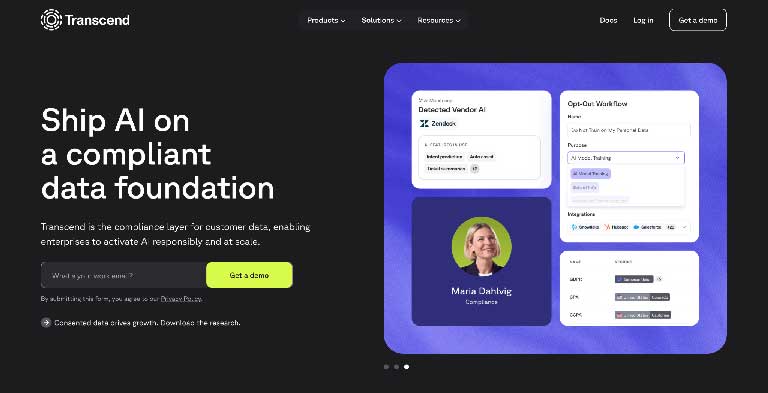
Transcend is built for organizations that want to treat privacy as core infrastructure rather than a compliance layer.
It offers an API-first platform that allows teams to embed privacy workflows - like DSAR handling and data deletion - directly into their systems. This makes it particularly powerful for engineering-driven companies.
In practice, product and infrastructure teams use Transcend to:
This approach enables highly scalable and customizable privacy operations.
Key Strengths:
Limitations:
Look for consent management, DSAR automation, data mapping, and reporting. Advanced capabilities include risk scoring and vendor monitoring.
Enterprise platforms typically use custom pricing based on data volume, users, and modules. SMB tools often use subscription tiers.
Ensure compatibility with your CRM, data warehouse, and marketing tools. API-first tools offer more flexibility.
Choose a platform that supports growth across regions and data volume.
Some platforms require extensive onboarding, while others offer quick deployment.
Handling data subject requests efficiently is a primary reason organizations adopt privacy platforms. Look for automation across intake, verification, and response workflows.
Look for certifications and support for frameworks like ISO 27001 and SOC 2.
In short, the best platform depends on your technical resources, compliance needs, and how deeply privacy integrates into your operations.
What is data privacy management software?
It helps organizations manage personal data, ensure compliance, and automate privacy workflows.
How much does it cost?
Costs vary from affordable SMB subscriptions to custom enterprise pricing based on scale and features.
Who needs it?
Any organization handling personal data, especially across regions or industries with strict regulations.
What is a DSAR?
A Data Subject Access Request (DSAR) allows individuals to access or delete their personal data.
What features matter most?
Consent management, DSAR automation, data mapping, and compliance reporting are essential.
Is it worth investing in?
Yes. It reduces legal risk, improves trust, and enables compliant data usage.
What’s the difference between consent management and privacy management?
Consent tools collect permissions, while privacy platforms manage the full data lifecycle and compliance.
Data privacy management platforms are now critical for both compliance and digital growth. The right solution helps organizations meet regulatory requirements while enabling responsible data use.
Ketch stands out for balancing compliance with data activation. OneTrust leads in enterprise breadth, while BigID excels in data visibility. Transcend offers flexibility for technical teams, and Osano provides simplicity for smaller organizations.


Discover our other works at the following sites:
Danetsoft is a global web agency headquartered in Indonesia, specializing in web development, managed hosting, and web publishing platform.


 [email protected]
 Magelang, Central Java
 © 2026 Danetsoft. Powered by HTMLy