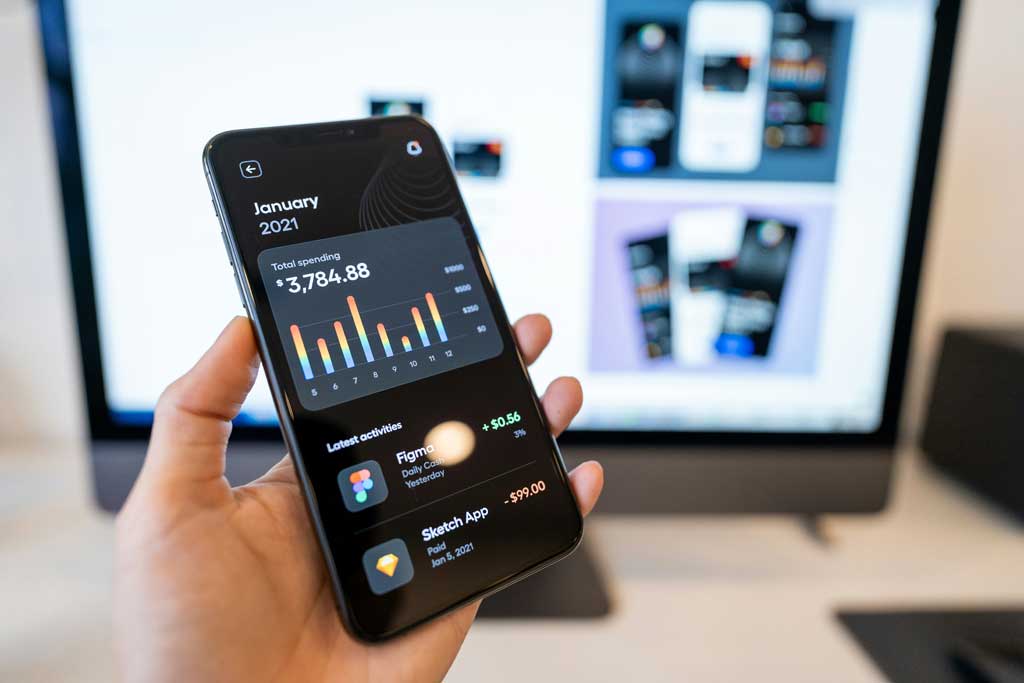
 Photo by Tran Mau Tri Tam on Unsplash
If you already have a mobile app in your arsenal or are just considering developing one, you should also think ahead about ways to earn additional income. Your main revenue may come from selling goods, services, or receiving commissions on transactions. However, modern mobile applications (even small and primitive ones) have many monetization strategies.
Developers and owners of such apps have a wide range of opportunities open to them. For example, you can use programmatic SSP to sell advertising or simply implement paid subscriptions. Due to the wide variety of revenue models, it can be difficult for beginners to make the right choice. That's why in this article, we would like to describe in more detail five options for generating additional revenue from a small mobile app!
The first monetization strategy we want to share with you is in-app purchases. They remain among the most suitable mechanisms of small mobile applications in 2026 when the entry barrier is zero. So, how does it work? The users will opt to use an app at no cost and only pay after evident value is created. The most popular types of purchases are consumables such as credits or boosts, permanent unlocks, and cosmetic effects.
Timing and relevance are more important to success. Offers must not be random, but they must come at a time when the users will require them. The pricing must be dynamic, with cheap entry-level offerings. Explicit descriptions and immediate perks enhance the conversion rates. In-app purchases can lead to stable income when done properly without affecting user loyalty or undermining their trust.
As you may have already realized, mobile apps have been growing in popularity recently. For example, you can check this out for yourself by looking at the statistics on mobile app downloads worldwide over the past few years. This figure is constantly growing, and in 2025, a total of about 173 billion apps were downloaded from Google Play and the App Store. Sounds pretty amazing, doesn't it? This is one of the main reasons why you should think about selling ad space in your app. Here are a few ways to do it:
Find advertisers on your own, negotiate the details, and take care of the technical implementation of the deal.
Participate in media networks or join a supply-side platform to sell advertising space.
Prepare a presentation describing your mobile app and post it on the exchange.
Your potential earnings depend on the type of advertising (video, banner, or native ads) and the target audience, GEO, and many other factors. We recommend working with well-known players in the advertising market, such as SmartyAds, to maximize your passive income.
Another powerful monetization model is to sell advanced features. Free versions must address simple needs, and paid versions should be used by those who wish to have more control, faster, or more detailed. Some of these are increased limits, sophisticated analytics, automation, priority service, or professional settings. The model is particularly effective with productivity, financial, and utility applications.
Users will be willing to pay more when it is clear that premium features are saving time or leading to better results. A great example is the world-famous game Clash of Clans, where players can get special advantages for a fee. Do not conceal vital operations behind money. Rather, position-paid features should be presented as extensions.
The partnerships with investors enable small app teams to monetize based on growth instead of immediate user monetization. In case your application demonstrates good retention, it can be financed by investors as part of the development and marketing at an equity or revenue cut-off. This is the most suitable method in applications that have the potential for scaling in the long run.
What else? Outside capital will speed up product enhancement and the gaining of users. It also allows trying out alternative models of monetization without cash pressure. It must have good metrics, a vision, and responsibility, though. Founders should be prepared to distribute the decision-making process and provide updates on the progress. So, collaboration with investors is rational when strategic expansion is worth more than a short-term monetization.
If you would like to discover another approach to monetization, consider how charitable organizations operate. They do not issue invoices or compel guests to pay. Instead, they simply collect voluntary donations from anyone who wishes to contribute, which is quite similar to the principles of crowdfunding for small mobile applications. Let's take a look at how it works.
User donations should be effective with such small applications that have an engaged and active audience. This model is based on the principles of trust and transparency and emotional engagement instead of aggressive monetization. The donations may be made on a one-time basis, monthly, or based on the support of a particular feature or an update. It is effective especially with open source tools, community-driven applications, or niche products. The donations do not usually substitute the basic sources of revenue, but may provide operations or fund the improvement.
Which of the above-mentioned methods should you choose? A lot depends on the type of application, target audience, functionality, and other parameters. For example, if you are creating a mobile game, try selling advertising inventory by partnering with the best SSP providers, such as SmartyAds and others. For small informational projects, a crowdfunding system is well-suited, where all profits come from engaged users.
We would like to emphasize once again that there are many options for additional income. Even small applications can monetize from $500 per month using the right strategy. The most important thing is to choose what works best for you. Don't focus on all five methods at once. Instead, try one method first, and if it is successful, move on to other strategies.


Discover our other works at the following sites:
Danetsoft is a global web agency headquartered in Indonesia, specializing in web development, managed hosting, and web publishing platform.


 [email protected]
 Magelang, Central Java
 © 2026 Danetsoft. Powered by HTMLy