 Image by westechwater.com
Clarification removes suspended solids from water. Most designs handle mixing, flocculation, and settling in separate tanks. Solids contact clarification does all three in one basin. That saves space and speeds up treatment. Here's how the process works and where it delivers value.
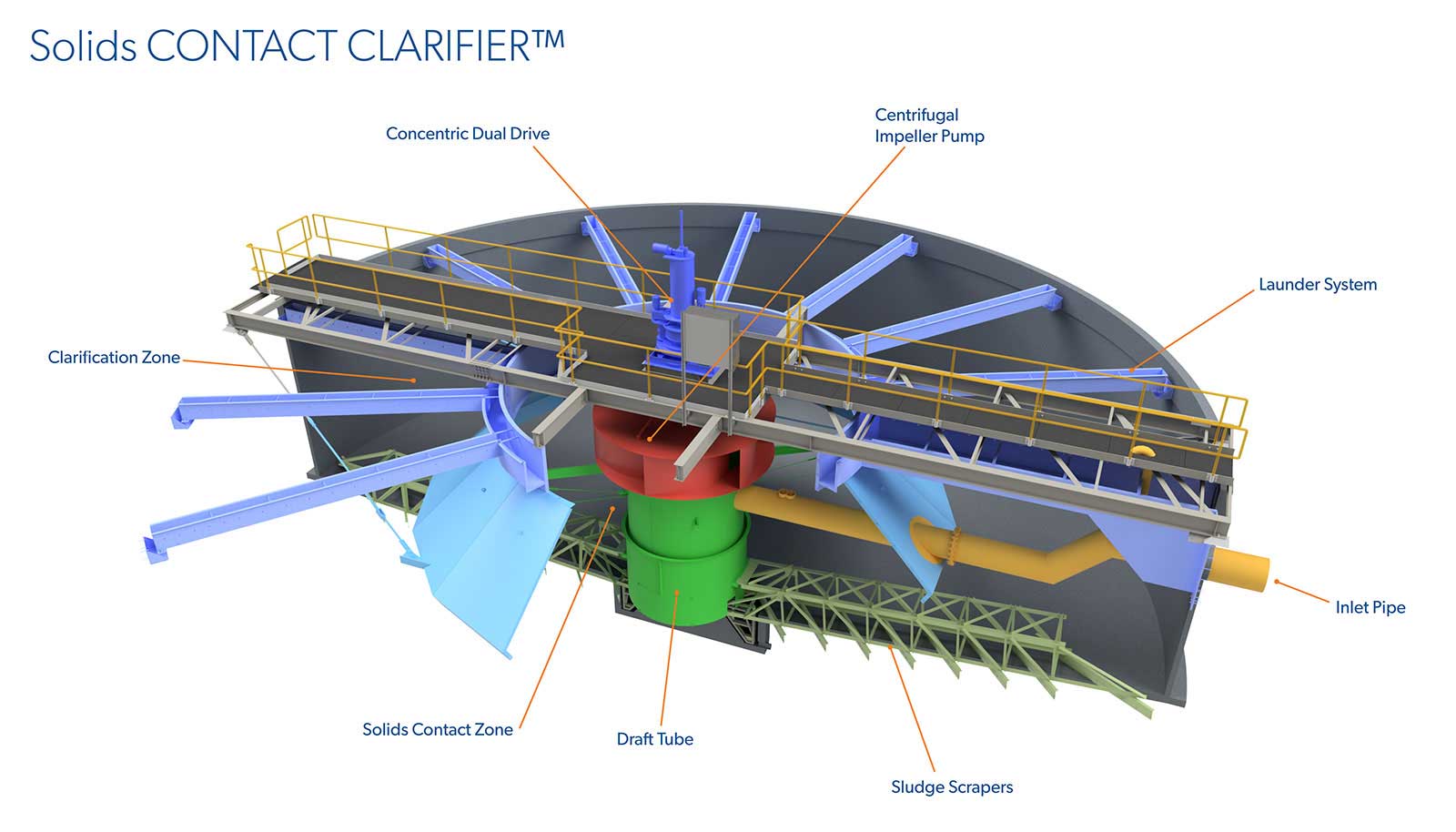
A solids contact clarifier combines chemical reaction, flocculation, and sedimentation in a single tank. Incoming water enters a central reaction well and mixes with chemicals and previously settled solids. Clarified water rises to the surface. Concentrated solids collect at the bottom.
The design treats settled sludge as a resource, not just a byproduct. Reusing that sludge inside the tank is what sets the process apart.
The core of the process is internal solids recirculation. An impeller draws sludge from the tank bottom, up through a draft tube, and into the reaction well. It moves high volumes of solids at low shear, so the floc stays intact.
This recycle stream runs up to 10 times the incoming flow. It carries a suspended solids level near 10,000 parts per million (ppm). Incoming particles contact this dense, pre-formed floc instead of settling on their own. The result is faster, more complete solids removal.
Conventional treatment uses separate basins for flocculation and clarification. Solids contact clarification handles both in the same tank. This eliminates separate flocculation basins and reduces the size of the clarifier itself.
For plants working within a fixed footprint, that matters. A compact design frees up space for other equipment. It can also simplify the retrofit of aging or failing basins.
WesTech's Solids CONTACT CLARIFIER™ serves several markets and treatment goals. Common applications include:
The high internal recycle rate helps in each case. It absorbs swings in flow and solids loading that would upset a conventional clarifier.
Solids collect at the bottom of the clarifier as underflow. That underflow is denser than the incoming feed, typically 3 to 4% solids. From there, the sludge flows to a thickener, then to dewatering equipment.
Removing water early keeps downstream equipment smaller and more economical. It's one reason solids contact clarification pairs well with an integrated treatment train.
Clarifiers run for decades. We design them for reliable performance across that lifespan. We also support them with parts, service, retrofits, and drive upgrades. When an existing basin underperforms, a retrofit can often restore capacity without a full rebuild.
No two water streams are identical. The right clarification approach depends on your influent, your chemistry, and your treatment targets. We evaluate the full process before recommending equipment, so the design matches the application.
Solids contact clarification is one proven tool among many. When it fits the water and the goal, it delivers clarified water in a compact, reliable footprint.


Discover our other works at the following sites:
Danetsoft is a global web agency headquartered in Indonesia, specializing in web development, managed hosting, and web publishing platform.


 [email protected]
 Magelang, Central Java
 © 2026 Danetsoft. Powered by HTMLy