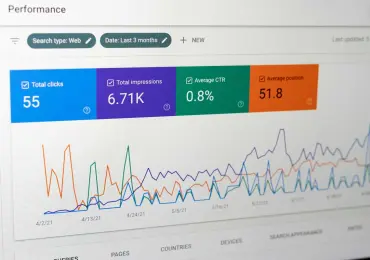
 Photo by Myriam Jessier on Unsplash
Industrial manufacturing SEO is a digital marketing strategy that helps manufacturers appear in search results when engineers, procurement managers, plant leaders, and distributors look for technical products, suppliers, and production support online.
That matters because B2B buying is no longer controlled only by trade shows, referral networks, and sales calls. Gartner reported in March 2026 that 67% of B2B buyers prefer a rep-free buying experience, which means many buyers want to research, compare, and shortlist suppliers before speaking with anyone.
For manufacturers, SEO is not just about traffic. It is about being visible when a buyer searches for a specific machine, material, certification, process, tolerance, industry application, or replacement supplier.
This guide explains how industrial manufacturers can use SEO to attract better B2B leads, build technical authority, improve product visibility, support long sales cycles, and turn search intent into quote requests.
SEO is important for industrial manufacturers because serious B2B buyers now use search engines to find suppliers before they contact sales teams.
A buyer looking for a press brake, industrial lighting system, contract manufacturer, factory audit partner, or energy equipment supplier usually does not start with a cold call. They start with a search. Then they compare product pages, technical guides, certifications, case studies, lead times, locations, and supplier credibility.
This makes SEO a direct part of the industrial sales pipeline. A well-optimized website can capture buyers while they are still defining the problem. It can also support buyers later when they compare specifications, request quotes, or justify a supplier internally.
In manufacturing, trust builds slowly. SEO gives buyers the technical evidence they need before they are ready to speak.
B2B buyers search for industrial suppliers by combining product terms, technical specifications, industry problems, certifications, and location-based needs.
An engineer may search by process, such as CNC laser cutting or powder coating. A purchasing manager may search by supplier type, such as a third-party inspection company or sheet metal fabrication partner. A plant manager may search by pain point, such as reducing downtime, improving bending accuracy, or lowering power consumption.
These searches are often specific because industrial buyers already understand part of the problem. They do not usually search the way casual consumers do. They search with constraints.
That is why a manufacturer’s website must clearly explain products, include technical details, and answer practical buying questions. Good SEO connects the buyer’s search language to the manufacturer’s real capabilities.
Buyers use high-intent keywords before contacting sales, and those keywords usually describe a product, process, problem, or supplier requirement.
For example, a metal fabrication buyer may search for press brake machines when comparing bending equipment for sheet metal production. Another buyer may search for fiber laser cutting machines, CNC laser cutting, laser cutting accuracy, press brake bending, or tube-cutting laser machines when evaluating production methods.
In heavy industry, buyers may search for oil and gas production, upstream oil and gas, natural gas processing, mineral extraction, or petroleum industry suppliers when researching industrial energy topics. A relevant resource, such as "What is Oil and Gas Production," can fit naturally into discussions of industrial markets with complex search behavior.
The strongest keywords are not always the highest-volume terms. They are the terms closest to a buying decision.
Manufacturing SEO is a collection of on-page, technical, content, and local optimization methods that help industrial websites rank for commercial and technical searches.
On-page SEO improves product pages, titles, headings, internal links, image alt text, and calls to action. Technical SEO improves crawlability, loading speed, mobile usability, structured data, indexation, and security. Content SEO builds authority through guides, comparisons, case studies, troubleshooting articles, and application pages. Local SEO helps factories, distributors, and regional service teams appear in map and location-based searches.
The best results usually come from combining all four. A technically weak site may struggle even with good content. A fast site may still underperform if product pages are thin. A strong SEO system connects performance, relevance, and buyer trust.
Building an industrial SEO strategy involves identifying buyer intent, improving technical pages, publishing expert content, and tracking lead quality.
There are four main steps involved in this process:
Identify high-intent buyer keywords.
Start with the words buyers use when they are close to action. These include product names, machine types, materials, tolerances, certifications, industry applications, and supplier searches. Examples include factory audits, supplier evaluations, laser cutting technology, CNC press brakes, or pre-shipment inspection services.
Optimize product and service pages.
Each product or service page should explain the solution, how it works, who uses it, and why it matters. Add specifications, applications, photos, industries served, FAQs, and quote request buttons.
Publish expert content regularly.
Technical guides help buyers understand problems before they request a quote. A manufacturer can publish comparison pages, process explainers, maintenance guides, material guides, and application-focused articles.
Measure leads, not just rankings
Traffic is useful, but quote requests, RFQs, form submissions, phone calls, and qualified sales conversations matter more.
Manufacturers should publish content that answers technical buying questions, explains processes, proves capability, and reduces buyer uncertainty.
This content must be practical. Industrial readers want accuracy, not fluff. They want to know whether a supplier can solve a real production problem, meet a tolerance, pass an audit, reduce downtime, or deliver within a required lead time.
There are six main content types that work well for manufacturing SEO:
Create product guides that explain machine types, specifications, materials, and buying considerations.
Publish process explainers that define technical processes such as CNC laser cutting, press brake bending, supplier evaluation, or manufacturing audit procedures.
Build comparison pages that help buyers compare technologies, suppliers, materials, or production methods.
Share case studies that show measurable results, such as reduced scrap, faster setup, improved quality control, or shorter delivery times.
Write troubleshooting articles that answer urgent problems buyers may search for during production issues.
Add quality and inspection content on topics such as supplier evaluation, factory audit process, third-party factory inspection services, and pre-shipment inspection services.
SEO helps industrial manufacturers attract qualified leads, educate buyers, reduce sales friction, and build long-term authority.
Unlike paid ads, organic visibility can keep working after the first investment. A well-crafted technical article or product page can attract buyers for months or years if it answers a real search need. This is especially useful in manufacturing, where purchase decisions may involve engineers, finance teams, operators, compliance officers, and procurement managers.
There are seven main benefits of SEO for industrial manufacturers:
Attract qualified buyers who are already searching for your product, process, or service.
Increase quote requests by making product and service pages easier to find.
Support long sales cycles by giving buyers useful information at each decision stage.
Build technical trust through detailed guides, specifications, and case studies.
Reduce reliance on referrals by establishing a steady stream of inbound leads.
Improve distributor and dealer visibility through location and application pages.
Strengthen niche authority in specific sectors, including sheet metal fabrication, industrial energy, packaging, food processing, and quality control.
SEO creates long-term visibility, while paid ads provide faster, but temporary, visibility.
Both can work for industrial manufacturers, but they behave differently. Paid ads can help a company appear quickly for competitive keywords, launch a new product, or test market demand. SEO usually takes longer, but it can produce compounding returns because each optimized page becomes a reusable asset.
In manufacturing, the best strategy often uses both. Paid ads can capture urgent demand while SEO builds authority around product categories, technical guides, comparison terms, and industry applications.
| Factor | SEO | Paid Ads |
|---|---|---|
| Speed | Slower to start | Faster to launch |
| Cost pattern | Builds over time | Stops when budget stops |
| Buyer trust | Often higher because results feel earned | Depends on ad quality and landing page |
| Best use | Long-term lead generation | Fast testing and campaign support |
| Content value | Creates reusable assets | Usually tied to campaign spend |
| Manufacturing fit | Strong for technical searches | Strong for urgent commercial searches |
Manufacturers fail to rank when their websites are technically weak, thin on useful information, or disconnected from how buyers search.
Many industrial sites look professional, but do not explain enough. They may list products without specifications. They may use broad language that sounds good but says little. They may hide important information in PDFs that search engines and buyers do not easily scan.
There are six common SEO mistakes that stop manufacturers from ranking:
Ignore buyer intent by targeting broad terms instead of specific product, process, and application keywords.
Publish thin product pages that lack specifications, industries served, FAQs, and quote prompts.
Neglect technical SEO by allowing slow pages, broken links, poor mobile layouts, or crawl errors.
Overuse generic claims such as high quality, reliable, or world-class without proof.
Forget internal linking between product pages, guides, case studies, and quote forms.
Avoid case studies, which make it harder for buyers to trust real-world performance.
Industrial SEO usually takes 3 to 6 months for early traction and 6 to 12 months for stronger lead generation results.
The timeline depends on website condition, competition, content depth, backlink profile, search demand, and the rate at which new pages are published. A manufacturer with an old website, weak product pages, and technical errors may need several months of cleanup before growth becomes clear.
However, early progress can happen more quickly with niche keywords. A detailed page targeting a specific machine, inspection service, material, or industry application may rank sooner than a broad keyword like manufacturing company.
SEO should be treated like a production system. It needs inputs, maintenance, measurement, and continuous improvement.
Manufacturing SEO often costs between $1,500 and $8,000 per month in the US, or roughly £1,200 to £6,500 per month in the UK, depending on scope and competition.
Small manufacturers may only need technical fixes, core page optimization, and a few content pieces each month. Larger manufacturers with multiple product lines, distributor networks, international markets, or complex technical catalogs need a deeper program.
There are five main factors that affect manufacturing SEO cost:
Define website size because large catalogs require more technical and on-page work.
Increase content depth when products need detailed specifications, engineering explanations, and application pages.
Expand keyword competition when the company sells high-value machines or services in crowded markets.
Add technical requirements when the site has crawl issues, poor speed, duplicate pages, or an outdated structure.
Include reporting needs when sales teams require lead tracking, CRM attribution, and ROI dashboards.
Manufacturing SEO metrics are performance indicators that show whether organic search is producing visibility, engagement, and qualified leads.
Rankings matter, but they are not enough on their own. A manufacturer can rank for informational searches and still generate few sales opportunities. The better question is whether SEO brings the right buyers to the right pages and turns them into real conversations.
Important metrics include organic traffic, keyword rankings, quote requests, contact form submissions, phone calls, catalog downloads, RFQ completions, assisted conversions, conversion rate, and cost per lead. Manufacturers should also track which pages create pipeline value.
A guide may not convert immediately, but it may introduce a buyer who later returns through a product page. This is why SEO reporting should connect search visibility to sales activity.
Yes, industrial manufacturers can use case studies to generate more leads by turning technical claims into proof.
A case study shows the problem, the solution, the process, and the measurable result. For example, a sheet metal equipment supplier might show how a customer reduced setup time after installing a CNC press brake. A quality control provider might show how a factory audit uncovered supplier risks before production began. An energy supplier might explain how better documentation improved decision-making in an industrial project.
Good case studies are specific. They include the industry, challenge, solution, timeline, and result. They also help SEO because buyers often search for real applications before they trust a supplier.
Industrial manufacturers can use SEO to win more B2B leads by matching technical content with real buyer intent.
The strongest manufacturing SEO programs do not chase random traffic. They build visibility around machines, processes, applications, certifications, supplier questions, quality control needs, and industry problems. That is where serious buyers search.
A manufacturer that explains its products clearly, publishes useful technical content, improves site performance, and measures quote activity can turn search engines into a dependable sales channel. SEO will not replace sales teams, distributors, or referrals. It strengthens them by making the company visible earlier in the buying journey, before the shortlist is already closed.


Discover our other works at the following sites:
Danetsoft is a global web agency headquartered in Indonesia, specializing in web development, managed hosting, and web publishing platform.


 [email protected]
 Magelang, Central Java
 © 2026 Danetsoft. Powered by HTMLy