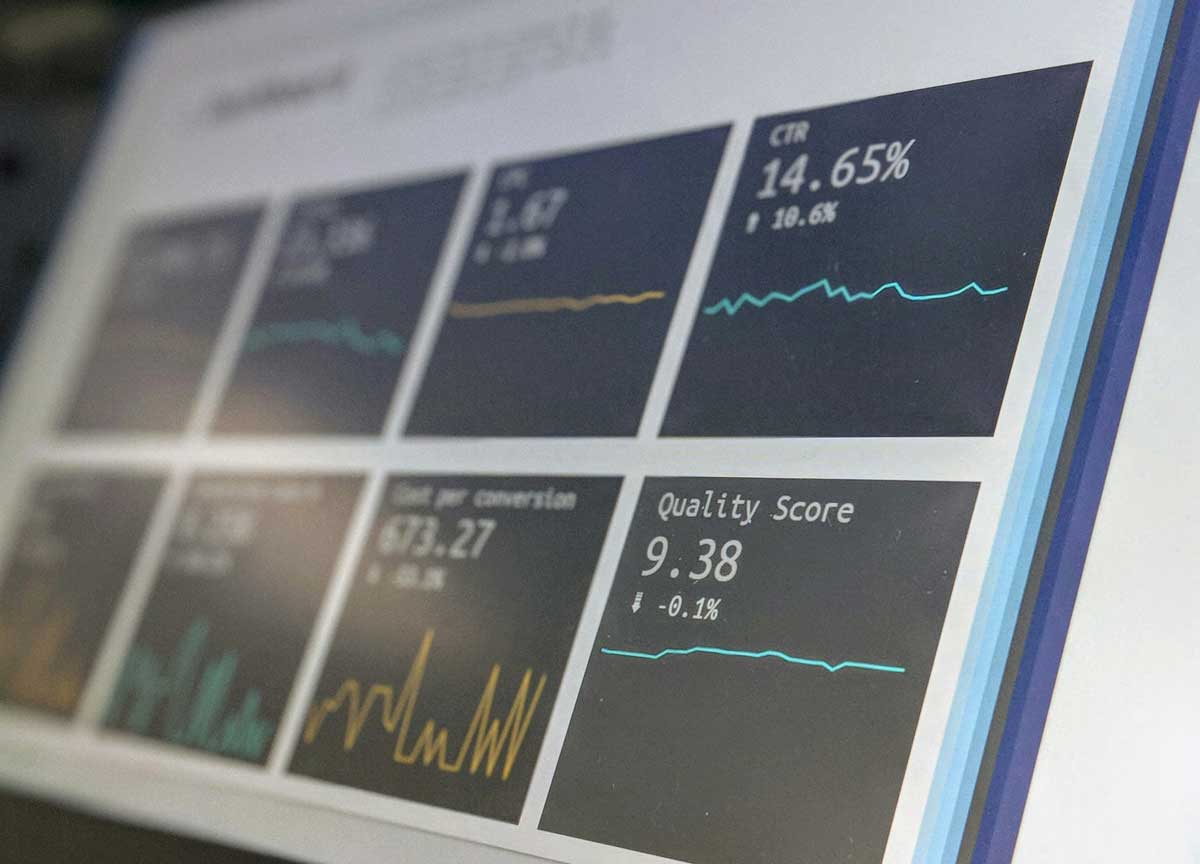
 Photo by Stephen Dawson on Unsplash
In marketing, intuition still has a role, but it is no longer enough on its own. Agencies now work in a world where every click, scroll, share, search, and purchase creates a trail of useful information. That trail, when handled well, becomes Big Data, and it can reshape how we plan campaigns, understand audiences, and measure success.
For agencies, the real advantage of Big Data is not the size of the dataset, it is what we do with it. Data can help us move beyond broad assumptions and into decisions grounded in real behavior. Instead of guessing what an audience wants, we can see patterns, test ideas faster, and make more confident choices. That shift can improve everything from targeting and messaging to budgeting and optimization.
In this article, we will look at how agencies can use Big Data in practical ways, why it matters for modern marketing, and what challenges we need to keep in mind while using it.
Marketing has become more complex than it was a decade ago. People interact with brands across websites, apps, email, social media, search engines, and offline channels. Each interaction adds another piece to the puzzle. On its own, one action may not mean much. But when we combine thousands or millions of interactions, clearer patterns begin to appear.
This is where Big Data becomes useful. It allows us to see the bigger picture, not just isolated actions. We can identify what drives attention, what leads to conversions, which segments respond best to certain messages, and where campaigns are losing momentum.
For agencies, this matters because clients expect results that are measurable and practical. Big Data helps us connect strategy with evidence, which makes our work more effective and more credible.
The first step is not analysis, it is collection. Agencies need to gather data from multiple channels to build a useful view of the audience. Common sources include:
Each source adds a different layer of understanding. Social media can show interests and engagement patterns. Website data can reveal what visitors read, click, or ignore. Purchase history can show buying habits, while app usage can highlight frequency and retention.
But collecting more data is not always better if the data is messy, incomplete, or disconnected. Agencies need systems that can organize information properly from the start. Clean data is far more valuable than a huge pile of unreliable numbers.
We also need to be careful about relevance. If a dataset does not support a business goal, it can become noise. Good data collection means gathering what we need, not just everything we can get.
Raw data is only the beginning. The real value comes when we analyze it and convert it into something meaningful. This is where agencies move from storage to strategy.
Data analysis helps us spot patterns that would otherwise be easy to miss. For example, we might learn that one audience segment responds better to video content than static visuals, or that conversion rates rise on certain days of the week. We might discover that a campaign performs strongly on mobile but weakly on desktop, or that repeat customers behave very differently from first-time visitors.
These insights can guide decisions in a more precise way. Instead of building campaigns around general ideas, we can base them on actual behavior. That makes planning more efficient and often more successful.
Useful insight usually comes from asking practical questions, such as:
When we frame analysis around these kinds of questions, Big Data becomes a strategic tool rather than a technical buzzword.
One of the strongest uses of Big Data is segmentation. Instead of treating an audience as one large group, we can divide it into smaller segments based on shared traits and behaviors.
Traditional segmentation often focuses on broad demographics like age, gender, or location. Big Data lets us go further. We can segment people by:
This matters because different groups need different messages. A new visitor may need education and trust-building. A returning customer may respond better to an upsell or loyalty offer. Someone who browsed but did not buy may need a reminder, while a loyal customer may prefer exclusive deals.
With better segmentation, we can create campaigns that feel more relevant. That usually leads to stronger engagement and better conversion rates. People are more likely to pay attention when a message seems built for them, not for everyone at once.
Personalization is one of the most visible benefits of Big Data. When agencies understand user behavior, we can tailor experiences in a way that feels useful rather than intrusive.
Personalization can appear in many forms:
The goal is not to over-customize every detail. The goal is to make interactions more relevant. A simple change, like showing content that matches a user’s interest, can improve performance significantly.
Personalization also helps build stronger relationships. When people feel that a brand understands them, they are more likely to stay engaged. Over time, that can support loyalty, repeat purchases, and better brand perception.
At the agency level, personalization also gives us a stronger way to prove value. We are no longer just sending messages, we are shaping experiences.
Big Data is especially useful because it allows us to monitor performance continuously. Marketing does not have to wait until a campaign ends to learn what worked. We can watch results as they happen and make changes along the way.
This is a huge advantage. If an ad set is underperforming, we can adjust the targeting. If a message is not getting clicks, we can revise the creative. If one channel is driving weak results, we can shift the budget elsewhere.
Real-time optimization helps us save time and money. It also reduces the risk of running an entire campaign on assumptions that turn out to be wrong.
Some of the metrics agencies can track for optimization include:
The more closely we monitor these numbers, the faster we can improve performance. Big Data gives us the visibility we need to react quickly and intelligently.
When agencies use Big Data well, decision-making becomes more grounded and more transparent. Instead of relying on opinions alone, we can back our recommendations with evidence.
This creates value in several ways. First, it reduces guesswork. Second, it improves confidence in strategy. Third, it makes it easier to explain why a certain approach was chosen.
Clients often appreciate this clarity. When we can show the logic behind a campaign, it builds trust. They are more likely to understand the process, support the direction, and see the agency as a strategic partner rather than only an execution team.
Data-driven decisions can influence many areas:
In each case, the goal is the same, use facts to guide action.
Agencies rarely work with Big Data manually. We need tools that can collect, store, clean, and analyze information efficiently. That may include analytics platforms, CRM systems, customer data platforms, dashboard tools, and machine learning software.
Technology helps us deal with volume and complexity. It can also speed up reporting, improve data visualization, and uncover trends that would take too long to find by hand.
But software alone does not create value. Tools are only as effective as the strategy behind them. A strong process is just as important as the platform. Agencies need people who know how to ask the right questions, interpret the numbers, and apply the findings in a meaningful way.
In other words, technology supports the work, but thinking still drives the strategy.
Big Data offers major advantages, but it also comes with real challenges. Agencies need to be aware of these issues so we can avoid common mistakes.
If the data is inaccurate, incomplete, or outdated, the insights will be weak. Bad data can lead to bad decisions, even when the analysis looks sophisticated.
Having more data is not always helpful. When teams are overwhelmed by numbers, it becomes harder to identify what matters. We need to focus on useful data, not every available metric.
Agencies must handle user data responsibly. Privacy regulations and consent requirements matter a lot. If data collection is not transparent and compliant, trust can be lost quickly.
When data is spread across different platforms that do not communicate well, analysis becomes harder. Integration is often one of the biggest technical barriers.
Not every team has analysts or data specialists who can work with advanced datasets. Agencies may need training, new hires, or outside support to use Big Data effectively.
These challenges do not make Big Data less valuable, they simply remind us that it requires discipline and structure.
Agencies do not need to transform everything overnight. A practical Big Data strategy often starts small and grows over time. The most effective approach is usually built on clear goals.
We can begin by identifying a business problem, then collecting the right data to study it. For example, if conversion rates are low, we can examine user behavior at key stages of the funnel. If engagement is weak, we can analyze content performance by audience segment. If retention is falling, we can study repeat behavior and churn signals.
This goal-focused method keeps data work relevant. It also prevents teams from getting lost in dashboards that look impressive but do not lead to action.
A good process often includes:
This cycle keeps strategy flexible and responsive.
Agencies that use Big Data well can move faster, target better, and communicate more effectively. That creates a real competitive edge.
Instead of relying on broad assumptions, we can make decisions based on audience behavior and campaign performance. Instead of sending the same message to everyone, we can speak to different groups in a more relevant way. Instead of waiting for a campaign to end, we can improve it while it is still running.
That kind of agility matters in a crowded market. Clients want outcomes, and Big Data helps agencies deliver them with more confidence.
Big Data is not just a trend, it is now part of how modern agencies work. It helps us collect stronger signals, understand audiences more deeply, segment more precisely, personalize at scale, optimize campaigns continuously, and make decisions with greater accuracy.
The agencies that succeed with Big Data are not necessarily the ones with the most data. They are the ones that know how to turn data into insight, and insight into action. When we use it thoughtfully, Big Data becomes more than a resource, it becomes a foundation for smarter strategy, better results, and stronger client relationships.


Discover our other works at the following sites:
Danetsoft is a global web agency headquartered in Indonesia, specializing in web development, managed hosting, and web publishing platform.


 [email protected]
 Magelang, Central Java
 © 2026 Danetsoft. Powered by HTMLy