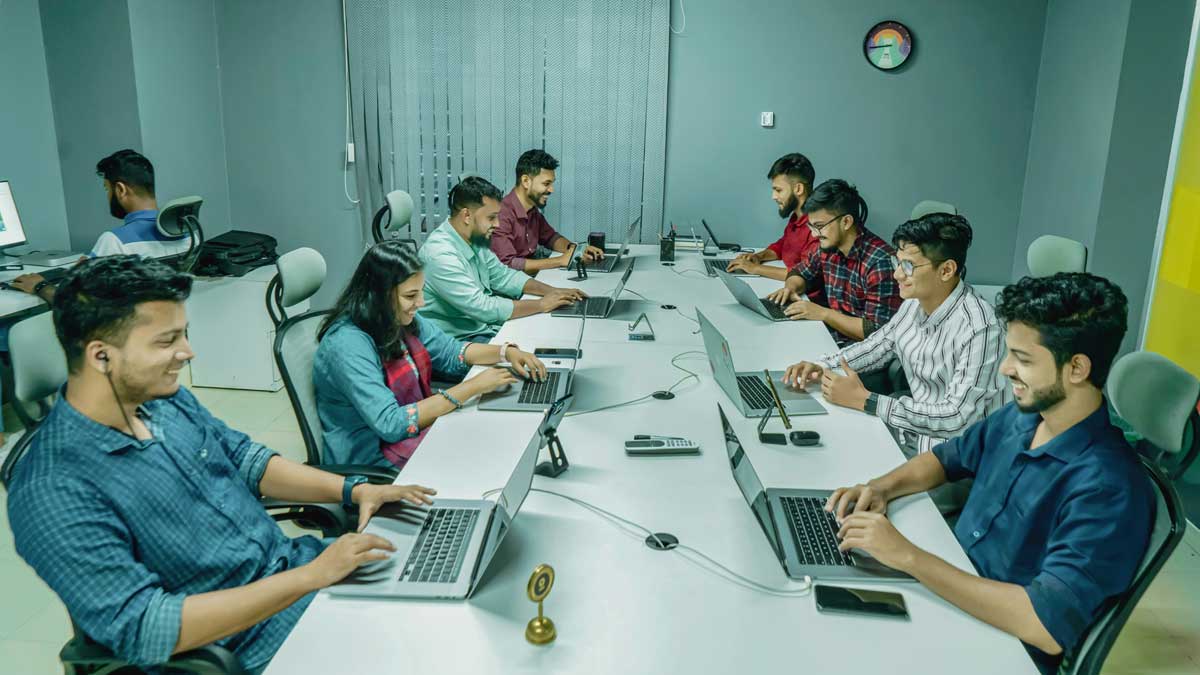
 Photo by Ofspace LLC on Unsplash
Core HR software is no longer just a digital filing cabinet for employee details. In 2026, it plays a much bigger role in how we manage hiring, onboarding, records, compliance, time off, workflows, and reporting. The right system can save us hours every week, reduce errors, and make HR feel far more organized.
As more teams work across locations, devices, and time zones, HR departments need software that keeps everything connected. We need tools that make employee data easy to manage, support compliance, and work smoothly with payroll, benefits, and other systems. That is why choosing core HR software has become such an important decision.
In this guide, we break down what core HR software does, what features matter most in 2026, and which platforms stand out for different types of businesses.
At its core, this type of software acts as the main system of record for employee information. It gives us one place to store and manage the details that HR teams rely on every day.
Typical core HR functions include:
When these tools work well, HR teams do not need to chase down forms, dig through spreadsheets, or rely on scattered documents. Instead, we get faster access to accurate information and a cleaner process overall.
Not every HR platform is built for the same kind of workplace. Some are better for small companies that want simplicity, while others are designed for larger teams with complex needs. In 2026, the best platforms tend to share a few important qualities.
A system should feel natural to use. If admins and employees struggle to find basic information, adoption drops quickly. A clean dashboard, clear menus, and simple workflows make a big difference.
The best core HR software helps us maintain a single source of truth. That means records stay organized, role changes are easy to update, and documents are stored in a way that actually makes sense.
Manual HR work adds up fast. Good software should handle routine tasks like onboarding steps, reminder emails, approvals, and form collection without constant intervention.
We should not have to build every report from scratch. Strong platforms make it easy to view headcount, turnover, absences, and organizational changes without extra effort.
Core HR rarely works alone. It should connect with payroll, benefits, time tracking, performance management, and ATS tools so we are not re-entering the same data in multiple systems.
HR systems hold sensitive personal data, so security matters. Access controls, audit trails, encryption, and compliance features should be part of the package, not optional extras.
A platform should support us now and later. If a system works for 30 employees but breaks down at 300, it is not really a long-term fit. Scalability is a major factor in 2026.
Here are some of the strongest core HR platforms in 2026, based on usability, feature depth, automation, integrations, and value.
Zelt is an all-in-one HR software built for small and medium-sized businesses. It combines core HR, payroll processing, PAYE compliance, benefits administration, scheduling, and employee records in a single platform, removing the need for multiple disconnected tools.
Small to medium-sized businesses that need HR and payroll in one place.
Zelt is a strong fit for SMBs that want an affordable, easy-to-use platform where payroll and HR are managed in one place, without the complexity or cost of enterprise solutions.
PeopleForce is an all-in-one HR platform built for growing companies that want core HR, recruiting, performance, and engagement in one system instead of a patchwork of tools. It covers the full employee lifecycle — from applicant tracking and onboarding to time off, eSignatures, surveys, and people analytics — with an AI assistant layered on top.
Growing SMBs and mid-market companies (50–1,000 employees) that want to replace scattered tools with a single HR system.
PeopleForce hits a practical middle ground: broader than lightweight record-keeping tools, but far simpler and more affordable than enterprise suites. Teams get recruiting, core HR, and performance in one place without paying for modules they do not use, since the platform is modular by design. It is not built for companies that need a native payroll engine, but for everything around it, PeopleForce keeps HR operations in one clean system.
BambooHR remains one of the most well-known choices for small and mid-sized companies. It is often praised for being easy to use, straightforward, and friendly for both HR teams and employees.
Small and mid-sized businesses that want core HR software without a complicated setup.
BambooHR does a nice job of keeping the core functions clear and accessible. It is not overloaded with unnecessary complexity, which makes it easier for HR teams to adopt and maintain. If we want a platform that covers the essentials well, BambooHR is still a strong option in 2026.
UKG Ready is a better fit for organizations that need more than just basic employee recordkeeping. It offers a broader operational toolkit that includes HR, payroll, time, and workforce management features.
Mid-sized and larger organizations with more demanding HR and workforce needs.
UKG Ready is useful when HR and payroll need to work together closely. It gives us more visibility into workforce activity and helps connect attendance, scheduling, and payroll-related tasks in one environment. For businesses with more moving parts, that kind of connection can be a big advantage.
Rippling has made a strong name for itself by combining core HR with payroll, IT, and app management. That broader approach makes it especially appealing for companies that want to automate a lot of admin work.
Growing companies that want HR connected with other parts of the business.
Rippling is especially useful when we want one platform to manage employee setup across multiple tools. It can reduce the amount of switching between systems and cut down on manual work. That makes it a smart choice for teams that care about speed, automation, and operational efficiency.
Paycor offers a practical combination of HR and payroll features, with an emphasis on managing the full employee lifecycle. It is a solid choice for organizations that want everyday HR tasks to feel more connected.
Businesses that want HR and payroll in a tightly linked system.
Paycor is a strong operational platform for teams that need dependable day-to-day processes. It is especially helpful when payroll accuracy, employee access, and compliance support are high priorities. For many businesses, that balance makes it very practical.
ADP Workforce Now is one of the most established names in HR software. It is especially known for payroll, but it also provides a broad set of core HR and workforce management tools.
Mid-sized and enterprise organizations that need a trusted, scalable platform.
ADP has a long history in payroll and workforce services, and that experience shows in the platform. It is a strong option for organizations that need stability, compliance support, and room to scale. If payroll is a major concern, ADP often earns a spot on the shortlist.
Workday HCM is one of the most powerful enterprise platforms available in 2026. It goes far beyond core HR and is built for large organizations with complex structures and advanced reporting needs.
Large enterprises and global organizations.
Workday is a strong fit when we need depth, flexibility, and visibility across a large workforce. It is not the simplest platform to implement, but it offers a serious level of control. For companies with complex reporting and organizational needs, that depth can be worth it.
Personio continues to be a standout for small and mid-sized companies, especially in Europe. It combines core HR features with support for regional requirements that matter in local markets.
European SMBs and growing companies with local compliance needs.
Personio strikes a good balance between usability and practical HR support. It helps teams stay organized while also addressing the regulatory and workflow needs that come with operating in Europe. For companies that need local relevance as well as simplicity, it is a strong choice.
HiBob, often called Bob, stands out for its modern design and people-focused experience. It is built for companies that want core HR to feel intuitive and engaging, not just functional.
Fast-growing companies that care about employee experience and culture.
HiBob feels fresh and easy to use, which can help with adoption across the company. It is a good fit for teams that want HR software to support both operations and the employee experience. If we want something modern and people-friendly, HiBob is worth a serious look.
| Software | Best For | Main Strength |
|---|---|---|
| Zelt | Medium-sized businesses | All-in-one hr software |
| PeopleForce | Growing SMBs and mid-market | All-in-one HR at accessible pricing |
| BambooHR | SMBs | Ease of use |
| UKG Ready | Mid-market | Workforce management |
| Rippling | Growing companies | Automation and integration |
| Paycor | HR plus payroll | Operational simplicity |
| ADP Workforce Now | Larger organizations | Payroll and compliance |
| Workday HCM | Enterprise | Depth and scalability |
| Personio | European SMBs | Local compliance |
| HiBob | Modern teams | User experience |
The best HR software depends on what our team needs most and where the biggest bottlenecks are today.
BambooHR and HiBob are both strong options. They offer approachable design and solid core HR features without overwhelming us.
Zelt, Paycor, ADP Workforce Now, and UKG Ready deserve attention. These platforms are built for organizations that want stronger operational alignment.
Rippling stands out for companies that want to reduce repetitive work and connect more of the employee lifecycle in one place.
Workday HCM is a serious enterprise solution that can support deep reporting, structure, and global requirements.
Personio is a smart fit for businesses that need localized HR support and compliance awareness.
Choosing HR software can feel overwhelming, especially when every product claims to do everything. A few mistakes come up often.
The cheapest option may cost more later if it creates extra manual work or does not scale well.
If the system is hard to use, adoption suffers. HR software should be easy for both admins and employees.
A platform that does not connect well with payroll, benefits, or ATS tools can create more work than it removes.
It is smart to plan ahead, but the software also has to work for us right now. The best choice should balance current needs and future growth.
Data privacy and labor rules matter. We should make sure the platform supports the regions and regulations that apply to us.
Core HR software in 2026 is about much more than storing employee records. It is the system that helps us keep people data accurate, reduce admin work, and support the day-to-day flow of HR operations.
For smaller companies, BambooHR and HiBob offer a simple and approachable experience. For businesses that need stronger payroll and workforce support, Zelt, UKG Ready, Paycor, and ADP Workforce Now are strong contenders. Rippling stands out for automation and broad operational control, while Workday HCM remains one of the most capable enterprise options. Personio is especially relevant for European companies that need local support and compliance awareness.
The best platform is the one that fits how we work, how fast we are growing, and how much complexity we need to manage. A good core HR system should help us move faster, stay organized, and give HR more time to focus on people instead of paperwork.


Discover our other works at the following sites:
Danetsoft is a global web agency headquartered in Indonesia, specializing in web development, managed hosting, and web publishing platform.


 [email protected]
 Magelang, Central Java
 © 2026 Danetsoft. Powered by HTMLy