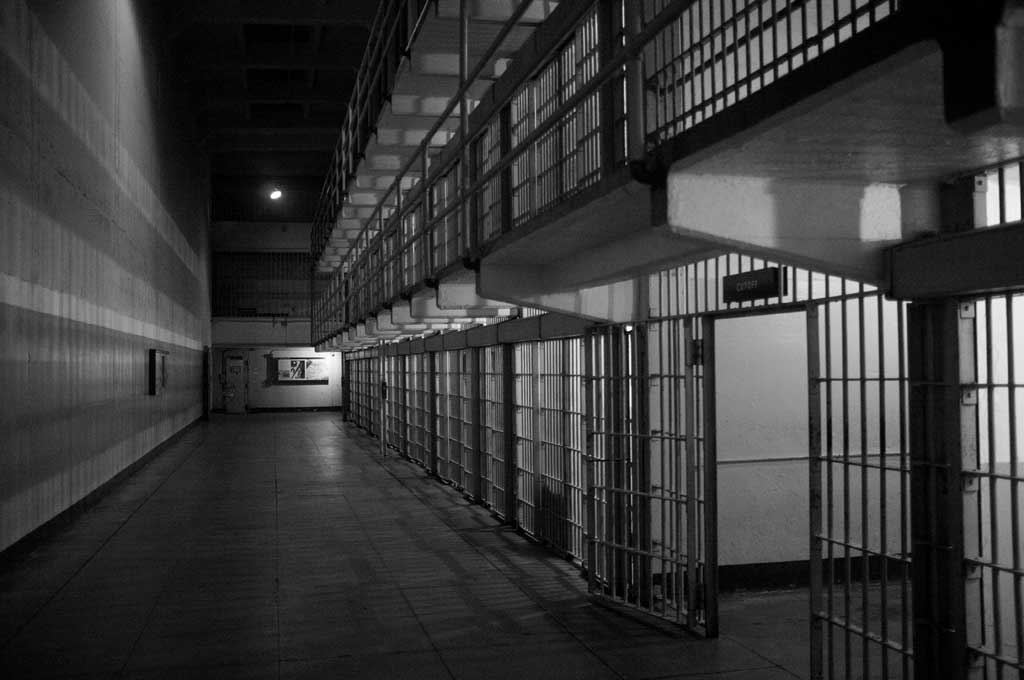
 Photo by Emiliano Bar on Unsplash
Most people are aware that the United States has one of the largest prison systems in the world, but the scale becomes startling when you look at the actual numbers. As Statista shows, there were over 1.8 million incarcerated individuals in the country. This puts it at the top of the list, surprisingly more than high-population countries like China and India.
A system that large begins to operate on momentum rather than intention, and the pressure shows up in everything from staffing shortages to safety concerns. However, there are a few countries that get things right, with Norway being one of them.
When you take a closer look at how it organizes its prisons, trains its officers, and shapes the rhythm of daily life inside its facilities, you begin to see how some choices can drastically shift outcomes. Today, let’s find out if there’s anything we can pick up to improve the rehabilitation of prisoners in America.
One of the most overlooked parts of a prison system is how its basic structure sets the tone for everything that follows. Norway keeps its facilities small and manageable, which gives staff room to work with people instead of scrambling to contain chaos.
Data shows that Norway’s total prison population sits at around 3,010 inmates. It also has an incarceration rate of about 54 per 100,000 people. This puts it well within the country’s official 3,616 prison capacity.
Staying within that range means the system does not fight overcrowding on a daily basis, and that stability becomes the foundation for nearly every rehabilitative effort that follows.
This is also where modern prison management systems like JailCore can make a real difference. They can use such systems to track behavior more easily, notice small changes, and address tension before it spreads. When officers and administrators have tools that help them anticipate problems, document incidents clearly, and coordinate with counselors or educators, the entire environment becomes more predictable.
Of course, this type of environment also means that you are able to keep things under control at all times. Since JailCore involves over a hundred Android devices, locking them down was a function that Hexnode, a Unified Endpoint Management firm, was fundamental to ensuring.
A calm and predictable environment gives people a chance to step out of survival mode and actually engage with programs. However, given the overflowing state of American prisons, the question becomes, “What is realistically possible to achieve given the differences in population and challenges compared to Norway?”
The way authority is expressed inside a prison shapes the entire emotional climate of the facility. In the United States, there is a long history of relying on physical control even when official training materials recommend otherwise.
Business Insider had obtained training documents for 37 state departments of correction, which recommend the minimum amount of force for maintaining order. However, they found that in many cases, courts have sanctioned extreme violence against prisoners through dismissals of excessive-force cases. This ends up setting the foundation that staff and inmates use to operate in the system.
Norway approaches authority from a different angle. Officers spend time with the people they supervise, talk to them throughout the day, and focus on building professional relationships. It takes patience and training, but it also gives staff a type of influence that does not rely on intimidation. Conflicts still happen, yet they are handled with a mindset that centers communication rather than power.
When people feel constantly threatened, they tend to shut down or react defensively. This is why rehabilitation struggles in that type of environment. It’s because no one can focus on long-term change while living in fear. At the same time, officers also need to feel supported in using communication and consistency instead of force. It’s a two-way street that needs to be walked.
A common reaction to Norway’s model is the belief that it only works in a Scandinavian context. It’s a homogenous, high-trust society where many believe even the criminals hold themselves to certain standards as well. Yet, recent experiments in the United States tell a different story.
Some states in America, like Oregon, have tested out the Norwegian model with interesting results. They found that the rate of assaults fell by almost 74% among those who interacted with teams trained in the Norwegian techniques. Likewise, the use of force by staff was reduced by 86%.
What this suggests is that the approach succeeds because of human psychology, not cultural identity. Essentially, we saw that culture inside a prison is not fixed. It is able to move in the direction that leadership encourages. After all, even a single pilot program was able to change the atmosphere of a unit in the above example. It’s too much of a stretch to believe that the results can then influence the rest of the institution.
There is no single method that works for everyone, but programs that combine education, mental health support, and consistent mentorship tend to have the strongest impact. When people learn real skills, understand their triggers, and feel supported, their chances of returning to crime drop noticeably.
A good example is a structured vocational program where someone learns a trade, gets coaching, and practices the skills in a real work setting. It helps them build confidence, gain experience, and walk out with something they can actually use to earn a living.
Norwegian prisons focus on creating normal, stable environments rather than high-tension ones. Officers spend time building professional relationships with inmates, facilities stay small and manageable, and the daily routine revolves around education, responsibility, and personal growth. This creates safer conditions and better long-term outcomes.
At the end of the day, Norway’s approach to rehabilitation works because several pieces come together at once. The system is structured in a way that avoids constant crisis, and officers use authority through presence instead of force. In addition, the culture inside the facilities rewards steady behavior rather than fear.
Yes, America faces challenges that Norway does not, especially when it comes to scale. This is a legitimate factor that makes things more difficult. Even so, every system benefits from clearer structure, better training, and a culture that supports human growth. When those elements begin to align, rehabilitation becomes something people can actually experience rather than just hear about in theory.


Discover our other works at the following sites:
Danetsoft is a global web agency headquartered in Indonesia, specializing in web development, managed hosting, and web publishing platform.


 [email protected]
 Susukan, Grabag
 © 2026 Danetsoft. Powered by HTMLy